Start here: this article is part of our cash offers collection. For the full picture, read our complete guide, What Is a Fair Cash Offer for My House? How to Know If You're Getting a Good Deal.
Quick answer: Many direct cash buyers pay the standard seller closing costs — SilverCrest Estates covers them, so the offer number is very close to the check you receive. In a traditional sale, sellers typically pay 6%–10% of the price in commissions, title, transfer taxes, and concessions. Always get in writing exactly which line items "we pay closing costs" covers.
"Closing costs" is a bundle of different charges, and who pays what is negotiable in every deal. Let's open the bundle.
What's actually inside "closing costs"
For a seller, the typical closing statement includes:
- Title insurance (owner's policy) — protects the buyer; customarily paid by the seller in many states, the buyer in others.
- Escrow or settlement fee — the neutral third party running the closing.
- Transfer taxes / documentary stamps — state, county, or city taxes on the sale; vary enormously by location.
- Recording fees — small county charges to record the deed.
- Prorations — your share of property taxes and HOA dues up to the closing date.
- Payoffs — your mortgage, any liens or judgments, which come out of proceeds in every sale type.
- Agent commissions — the big one: traditionally around 5%–6%, more openly negotiable since the 2024 NAR settlement, and only in agented sales.
Who typically pays what: traditional listing vs. direct cash sale
| Line item | Traditional financed sale | Direct cash sale (SilverCrest) |
|---|---|---|
| Agent commissions | Seller (~5%–6%) | None — no agents |
| Owner's title policy | Seller (custom varies) | Buyer covers |
| Escrow / settlement fee | Split or seller | Buyer covers |
| Transfer taxes | Seller (custom varies) | Buyer covers |
| Repairs / credits | Often negotiated after inspection | None — sold as-is |
| Mortgage & lien payoffs | Seller (from proceeds) | Seller (from proceeds) |
| Prorated taxes / HOA | Seller to closing date | Seller to closing date |
The three meanings of "we pay closing costs"
When a cash buyer advertises this, it can mean:
- Everything except payoffs and prorations (the most common honest version) — they cover title, escrow, transfer taxes, and recording; your mortgage payoff and taxes owed to closing day still come out of proceeds, as they would in any sale.
- Some line items only — a marketing line that quietly excludes transfer taxes or title. Ask for a sample net sheet.
- Nothing extra at all — the "closing costs" line is baked into a lower offer. Not dishonest if disclosed, but you should know which you're looking at.
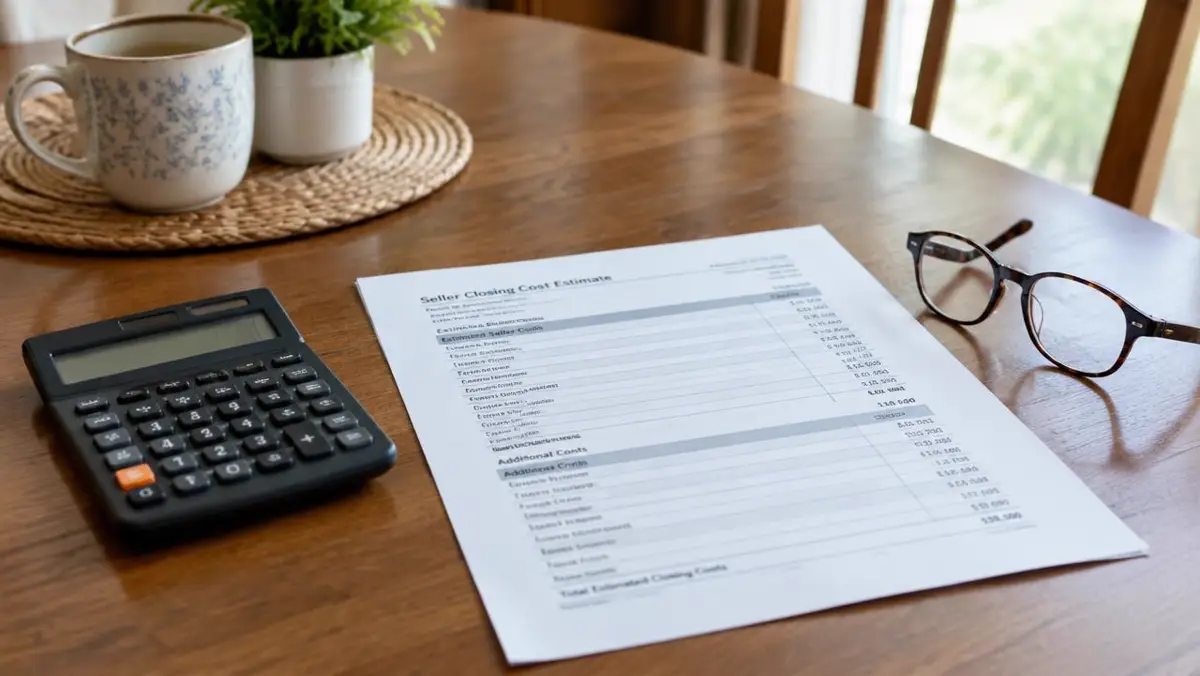
The only safe move: ask for a written net sheet — offer price minus every specific deduction, showing your estimated check. At SilverCrest Estates, the written offer spells out that we cover standard seller closing costs, so the number you agree to is the number you plan around.
Why this matters more than the headline price
A $250,000 traditional sale with 6% commissions, $3,000 in seller concessions, and $2,500 in title and transfer costs nets about $238,500 before your mortgage payoff. A $245,000 cash offer with buyer-paid closing costs nets $245,000. The "lower" offer put $6,500 more in the seller's pocket — before counting repair credits or months of carrying costs. This is exactly the comparison our closing costs guide and full cost breakdown walk through.
What you'll still pay in any sale
No buyer, cash or otherwise, can make these disappear:
- Your mortgage payoff and any second liens, judgments, or tax liens — these attach to the property and are settled from proceeds at closing.
- Prorated property taxes and HOA dues up to the day you close.
- Any agreed credits you negotiate.
A $250,000 traditional sale with 6% commissions, $3,000 in seller concessions, and $2,500 in title and transfer costs nets about $238,500 before your mortgage payoff.
When paying your own closing costs makes sense
Honest fit check: if your home is move-in ready, your market favors sellers, and you have time, a traditional listing — even paying commissions and your share of closing costs — may net more in absolute dollars. A cash sale with buyer-paid costs is about certainty, speed, and zero prep. If maximizing every last dollar is the goal and you can wait, listing is often the better path, and we'll say so.
Key takeaways
- Many cash buyers pay standard seller closing costs; get the specific line items in writing.
- "Closing costs" bundles title, escrow, transfer taxes, recording, and prorations — ask for a net sheet.
- Mortgage payoffs and tax prorations come out of proceeds in every sale type.
- Compare nets, not prices: a lower offer with buyer-paid costs can beat a higher listing price.
- Since the 2024 NAR settlement, commissions are negotiable — but they only exist in agented sales.
When a cash sale may not be your best option
A cash sale trades some price for speed and certainty, and that trade isn't right for everyone. If your home is move-in ready, you have three or more months before you need to move, and your goal is the highest possible price, listing with a good agent will often net more. The same is true in a low-inventory market where updated homes draw multiple offers. Run both numbers side by side — our cash vs. listing comparison and closing cost calculator show the math — and choose the path with the better net for your timeline. SilverCrest Estates will tell you plainly when listing looks like the better fit.
Transfer taxes: the line item that surprises sellers most
Of all closing costs, transfer taxes vary the most and shock sellers the hardest. Some states charge nothing at all. Others charge a few dollars per thousand of sale price. A handful of states and cities stack state, county, and municipal transfer taxes that together exceed 1%–2% of the price — on a $400,000 sale, that's $4,000–$8,000 sellers didn't budget for. Because custom differs on whether buyer or seller pays, this is exactly the line item to get in writing before you compare offers.
The same goes for title insurance customs: in some states the seller traditionally buys the owner's policy; in others the buyer does; in a few, it's split. None of this is standardized nationally, which is why any blanket claim about "who pays closing costs" should be treated as a starting point for negotiation, not a fact.
How to read a net sheet in two minutes
Whether it comes from an agent or a cash buyer, a net sheet has one job: show your check. Read it bottom-up:
- Start at the bottom line — "estimated seller proceeds."
- Work up through every deduction and ask what each one is. Legitimate line items: commissions, title policy, escrow fee, transfer tax, recording, prorations, payoff. Question anything labeled vaguely ("admin fee," "service fee").
- Check the prorations. Property taxes are prorated to closing day; if you prepaid, you get money back — make sure credits appear too.
- Compare bottom lines, not top lines. A $310,000 listing with $28,000 in total deductions nets less than a $290,000 offer with $5,000 in deductions.
At SilverCrest Estates the written offer shows the full deduction picture upfront, and since we cover standard seller closing costs, the agreed number is the number you plan around. If any buyer — cash or otherwise — won't put the line items in writing, that tells you what you need to know.
A line-item example on a $280,000 sale
To make this concrete, here's an illustrative traditional-sale closing statement: $280,000 price, minus ~$15,400 in commissions, $1,800 owner's title policy, $900 escrow fee, $1,400 transfer taxes, $2,800 in buyer concessions negotiated after inspection, and $1,100 in tax prorations — netting roughly $256,600 before the mortgage payoff. The same home sold directly for $268,000 with buyer-paid closing costs nets $268,000 minus only the payoff and prorations. Sellers who compare the two headline prices ($280,000 vs. $268,000) reach the wrong conclusion; sellers who compare bottom lines often choose the cash path.
Negotiating closing costs in any sale
Everything on a closing statement is negotiable, in both directions. In hot markets sellers sometimes shift title costs to buyers; in slow markets buyers demand concessions. The two rules that always apply: get the final allocation written into the purchase agreement, and ask the title company for an estimated settlement statement a few days before closing so nothing on the final numbers is a surprise.
One more line sellers forget: concessions are closing costs too. When a financed buyer asks you to cover $5,000 of their closing costs, that comes straight out of your net exactly like a price cut — but it rarely shows up in the "we pay closing costs" marketing comparisons. In a direct cash sale there are no buyer concessions to negotiate, which is part of why the written offer number stays stable from signature to closing.
Frequently asked questions
Do cash buyers really pay all closing costs?
It depends on the buyer and what they mean. Reputable direct buyers like SilverCrest Estates cover the standard seller closing costs — title, escrow, transfer taxes, and recording fees. Your mortgage payoff, any liens, and prorated property taxes up to closing day still come out of your proceeds, as they would in any sale. Always ask for a written net sheet listing every line.
How much are seller closing costs in a traditional sale?
Sellers in a traditional agented sale typically pay 6%–10% of the sale price in total costs: agent commissions (historically 5%–6%, now more negotiable), owner's title policy, escrow fees, transfer taxes, and often repair credits or concessions after inspection. On a $300,000 sale that's commonly $18,000–$30,000 before the mortgage payoff.
Who pays transfer taxes in a cash home sale?
Custom varies by state and even by county — in some places the seller customarily pays, in others the buyer, and in some it's split. In a direct sale to SilverCrest Estates, transfer taxes are part of the standard closing costs we cover. Because rates differ widely by location, your written offer will show the exact treatment for your property.
Can I negotiate closing costs with a cash buyer?
Yes — everything in a real estate contract is negotiable. With a direct cash buyer the conversation is simple because there are no commissions or lender fees: the main variables are the price, who pays which closing line items, and the closing date. Get the final allocation in writing in the purchase agreement, not just in a verbal promise.
Sources & further reading
Primary sources we consulted for this article. Rules vary by state and change over time — always confirm against the original source.
- 1Closing Disclosure explainer
Consumer Financial Protection Bureau
The federal form that itemizes every closing cost line.
- 2
- 3What Are Closing Costs?
U.S. Department of Housing and Urban Development
HUD's overview of settlement charges in a home sale.

About the author
Emily Roberts
Seller Success Manager
Emily Roberts works with the SilverCrest Estates acquisitions team, helping homeowners across 50+ US markets understand their options and close on their own timeline.
Disclaimer: This article is for general information only and is not legal, tax, or financial advice. Real estate rules vary by state and change over time. Consult a licensed attorney, tax professional, or financial advisor about your specific situation before acting.