Start here: this article is part of our seller questions collection. For the full picture, read our complete guide, Can You Sell a House With a Mortgage? Everything You Need to Know.
One of the biggest surprises for home sellers is the total closing costs at the end of a sale. Understanding these costs upfront helps you plan accurately and make better decisions about how to sell.
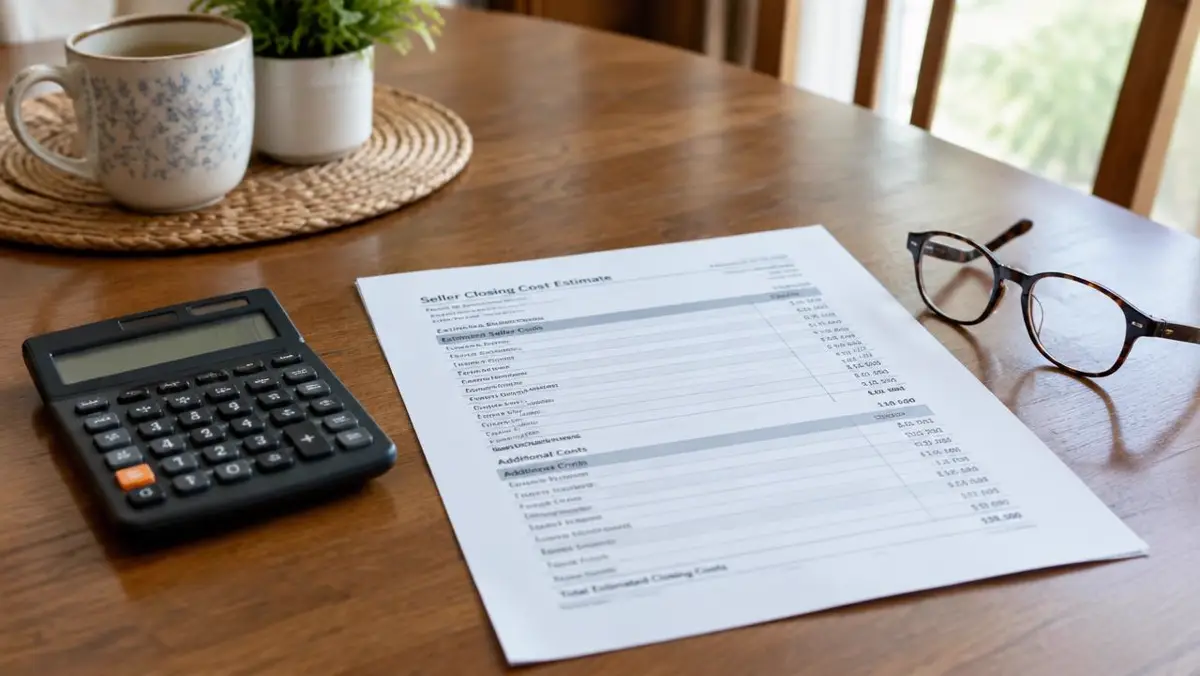
Example seller closing costs on a $300,000 sale
| Cost | Typical range | Example |
|---|---|---|
| Agent commissions | Negotiable | $16,500 (5.5%) |
| Title / escrow | Varies by state | $2,000 |
| Transfer tax | $0 to 1%+ by state | $1,000 |
| Prorated taxes & fees | Varies | $1,500 |
| Example total | $21,000 |
Overview: What Sellers Pay at Closing
Total Seller Closing Costs: 8-10% of Sale Price
For a $300,000 home, expect to pay $24,000-30,000 in total selling costs.
Breaking Down Every Cost
1. Real Estate Agent Commissions: 5-6%
The largest single cost for most sellers.
| Commission Structure | Amount (on $300,000 sale) |
|---|---|
| Total (6%) | $18,000 |
| Listing Agent (3%) | $9,000 |
| Buyer's Agent (3%) | $9,000 |
How to reduce:
- Negotiate with your agent
- Use a discount broker
- Sell FSBO (still may pay buyer's agent)
- Sell to a cash buyer ($0 commission)
2. Title Insurance: 0.5-1%
Protects the buyer against title defects.
On $300,000 sale: $1,500-3,000
This is typically the seller's responsibility in most states.
3. Escrow/Closing Fees: $500-2,000
Paid to the company handling the closing.
Includes:
- Document preparation
- Transaction coordination
- Wire transfers
- Notary services
4. Transfer Taxes: Varies by Location
Taxes on transferring property ownership.
| Location | Rate |
|---|---|
| California | $1.10 per $1,000 |
| New York | 0.4% (varies by county) |
| Florida | $0.70 per $100 |
| Texas | None |
| Illinois | $0.50 per $500 |
Example: $300,000 sale in California = $330
5. Attorney Fees: $500-1,500
Required in some states, optional in others.
States requiring attorney:
- New York
- Massachusetts
- Georgia
- South Carolina
- Others
6. Prorated Property Taxes
You pay taxes through the closing date.
Example:
- Annual taxes: $6,000
- Closing on June 30: Pay $3,000 (half year)
7. HOA Transfer Fees: $200-500
If your property is in an HOA:
- Transfer fee
- Document fee
- Potential dues proration
8. Mortgage Payoff Costs
If you have a mortgage:
- Recording release of lien: $50-100
- Wire fee for payoff: $25-50
- Potential prepayment penalty (rare): Varies
9. Home Warranty (If Offered): $400-600
Buyers sometimes request this in negotiations.
10. Buyer Concessions: 1-3%
Buyers may negotiate for you to pay:
- Their closing costs
- Points to buy down rate
- Repairs or credits
On $300,000 sale: $3,000-9,000 (if concessions given)
Complete Example: $300,000 Home Sale
| Cost | Amount |
|---|---|
| Agent commissions (6%) | $18,000 |
| Title insurance (0.7%) | $2,100 |
| Escrow fees | $1,200 |
| Transfer tax | $330 |
| Attorney fee | $800 |
| Prorated taxes | $1,500 |
| Buyer concessions (2%) | $6,000 |
| Total Costs | $29,930 |
| Net Proceeds | $270,070 |
On a traditional sale, expect to pay 8-10% of the sale price in total costs.
Costs You Don't Pay
Seller Typically Doesn't Pay:
- Buyer's loan origination fees
- Buyer's prepaid taxes/insurance
- Buyer's appraisal
- Buyer's inspection
- Buyer's recording fees
Negotiating Closing Costs
What's Negotiable:
Agent Commission:
- Market conditions affect leverage
- Selling and buying with same agent
- Higher-priced homes may negotiate
Buyer Concessions:
- Depends on market conditions
- Multiple offers reduce concessions
- Single offers may require more
Title Company:
- Can shop around
- Compare fees carefully
- Ask for itemized quote
What's Usually Fixed:
- Transfer taxes (set by law)
- Recording fees (set by county)
- Required insurance
Cash Buyer Closing Costs
When selling to a cash buyer like SilverCrest Estates:
| Cost | Amount |
|---|---|
| Agent commissions | $0 |
| Buyer's closing costs | $0 (we pay) |
| Title insurance | $0 (we pay) |
| Escrow fees | $0 (we pay) |
| Repairs | $0 |
| Concessions | $0 |
| Your costs | $0 |
What you keep: The full cash offer amount
Planning for Closing Costs
Calculate Your True Net Proceeds
Before accepting any offer:
- Start with sale price
- Subtract mortgage payoff
- Subtract all closing costs
- That's your actual money
Get a Net Sheet
Any agent or title company can prepare a "seller's net sheet" showing:
- All estimated costs
- Your projected proceeds
- Based on specific sale price
Factor in Holding Costs
If sale takes 3 months:
- 3 months mortgage: $6,000
- 3 months taxes: $1,500
- 3 months insurance: $300
- 3 months utilities: $600
- Holding costs: $8,400
Common Cost Surprises
Unexpected Repairs
Inspection finds issues requiring credits or repairs.
Extended Timeline
Market takes longer, carrying costs mount.
Buyer Demands
Last-minute negotiation for additional credits.
Title Issues
Problems require attorney fees to resolve.
Market Price Drop
Sale price lower than expected, costs percentage stays same.
How to Minimize Closing Costs
1. Negotiate Commission
Ask agents to reduce, especially in hot markets.
2. Shop Title Companies
Compare quotes from multiple companies.
3. Limit Concessions
Price appropriately to attract buyers who don't need them.
4. Sell Faster
Less carrying costs with quicker sale.
5. Consider Cash Buyers
Zero traditional closing costs.
When a cash sale may not be your best option
A cash sale trades some price for speed and certainty, and that trade isn't right for everyone. If your home is move-in ready, you have three or more months before you need to move, and your goal is the highest possible price, listing with a good agent will often net more. The same is true in a low-inventory market where updated homes draw multiple offers. Run both numbers side by side — our cash vs. listing comparison and closing cost calculator show the math — and choose the path with the better net for your timeline. SilverCrest Estates will tell you plainly when listing looks like the better fit.
Who pays what varies by state
Local custom decides much of the split. In some areas the seller traditionally pays for the owner's title policy; in others the buyer does. Transfer taxes range from nothing at the state level (Texas, for example, has no state transfer tax) to multiple stacked state, county, and city charges in places like parts of New York and Pennsylvania. Attorney states require a lawyer to conduct the closing. Ask your title company or attorney for a seller net sheet early so you know your local numbers.
Read your settlement statement line by line
A day or two before closing, you'll receive a settlement statement or Closing Disclosure listing every charge. Check that:
- The sale price and closing date are right.
- Your mortgage payoff matches your lender's payoff letter.
- Property tax prorations use the correct dates.
- Commission matches your listing agreement.
- No unexpected fees were added.
Question anything you don't recognize before you sign. Compare costs side by side in our net proceeds calculator.
Closing costs in a direct sale
When you sell directly to SilverCrest Estates, there's no commission, and we pay standard closing costs on our side, so the offer is close to what you keep.
Related questions sellers ask next
For the cash-sale side of closing costs, see whether cash home buyers pay closing costs and whether cash home buyers are legitimate.
The Bottom Line
Closing costs significantly impact your net proceeds. On a traditional sale, expect to pay 8-10% of the sale price in total costs.
When comparing a cash offer to a traditional sale, factor in ALL costs:
- Commissions
- Closing costs
- Repairs
- Carrying costs
- Buyer concessions
A lower cash offer often nets similar or better proceeds than a higher traditional sale price.
Get your free, no-obligation cash offer from SilverCrest Estates and see your true bottom line.
Related Guides
- How Much Does It Cost to Sell a House?
- What Happens on Closing Day
- Can You Sell a House With a Mortgage?
- Glossary: closing costs
Weighing a cash sale? See what your home is worth — free and no obligation.
Frequently asked questions
What closing costs does a seller normally pay?
In a traditional sale, sellers typically cover agent commissions, title and escrow fees, transfer taxes, prorated property taxes, and any repair credits negotiated after inspection — commonly 7% to 10% of the price all in. Your Closing Disclosure itemizes every line, and the CFPB publishes a walkthrough of what each entry means.
How do I find out exactly what I'll walk away with?
Ask for a net sheet or estimated settlement statement and pair it with a current payoff quote from your lender. The payoff includes interest through the closing date and any escrow shortfall, which is why the number moves if closing slips. Once you have both documents the net figure is arithmetic, not a guess.
Are closing costs negotiable?
Some are. Commissions, who pays transfer tax, and repair credits are negotiated between the parties, while recording fees and state transfer taxes are fixed by statute. In a direct sale to SilverCrest Estates there are no agent commissions and we cover standard closing costs, which is where most of the savings comes from.
Is selling without an agent a good idea?
It can work if you're comfortable pricing the home, marketing it, handling disclosures, and negotiating with buyers' agents. NAR research consistently finds most sellers still use an agent, largely for exposure and paperwork. The middle path many sellers overlook is a direct sale, where there's no listing to manage and no commission on either side.
Sources & further reading
Primary sources we consulted for this article. Rules vary by state and change over time — always confirm against the original source.
- 1Understanding the Closing Disclosure
Consumer Financial Protection Bureau
A line-by-line breakdown of the fees that appear on a real closing statement.
- 2What to expect at closing
Consumer Financial Protection Bureau
The federal consumer-protection walkthrough of the closing appointment and documents.
- 3Title insurance explained
Consumer Financial Protection Bureau
What owner's and lender's title policies cover and who typically pays for them.
- 4

About the author
Sarah Williams
Senior Real Estate Analyst
Sarah Williams works with the SilverCrest Estates acquisitions team, helping homeowners across 50+ US markets understand their options and close on their own timeline.
Disclaimer: This article is for general information only and is not legal, tax, or financial advice. Real estate rules vary by state and change over time. Consult a licensed attorney, tax professional, or financial advisor about your specific situation before acting.