Start here: this article is part of our selling your home collection. For the full picture, read our complete guide, How to Sell Your House Fast: The Complete Homeowner's Guide.
Quick answer: Most cash home buyers start with what the house would sell for after repairs (the after-repair value), then subtract the cost of repairs, the costs of buying, holding, and reselling, and a margin for risk. What's left is the offer. The two numbers that move it most are the after-repair value and the repair estimate — so those are the two to question. A trustworthy buyer will walk you through both.
Sellers are often told a cash offer is "based on the market." That's true but not useful. Here's what's actually inside the number, so you can judge an offer instead of just accepting or rejecting it.
The basic formula
How a typical cash offer is built
- 1
After-repair value
What the home sells for once fixed, based on recent comparable sales
- 2
Minus repairs
Itemized estimate of what the house needs
- 3
Minus transaction costs
Closing costs on purchase and resale, commissions on resale
- 4
Minus holding costs
Taxes, insurance, utilities and financing during the work
- 5
Minus risk margin
Cushion for surprises and the buyer's business
1. After-repair value (ARV)
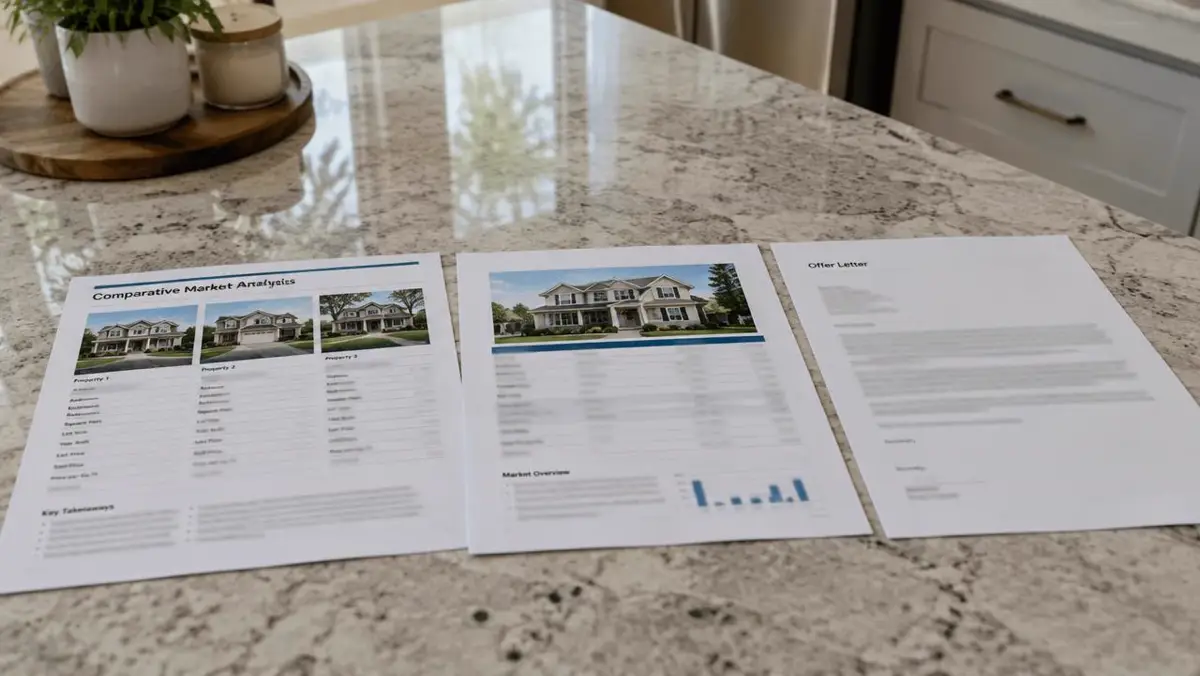
ARV comes from recent sales of similar, updated homes nearby — similar size, age, bedrooms, and neighborhood, ideally sold in the last few months. Buyers also look at automated valuations from sites like Zillow and Redfin, but those don't see inside your house. Ask which comparable sales were used. If a buyer won't tell you, that's a warning sign. Our guide on how much your house is worth explains comparables.
2. Repair estimate
This is where offers differ most. A good estimate is itemized: roof, HVAC, kitchen, flooring, paint, and so on. Ask for it. If you already have contractor bids, share them — real bids can move an inflated estimate down.
3. Transaction and holding costs
Buyers pay costs to buy your house and again to resell it later, plus taxes, insurance, and utilities in between. These are fairly predictable and usually add up to a meaningful percentage of value.
4. Risk margin
Every buyer builds in a cushion for surprises behind the walls and market changes during the project. Reasonable margins exist; unreasonable ones are why some "we buy houses" offers come in shockingly low.
Illustrative offer build on a home worth $300k after repairs
What raises (or lowers) an offer
- Condition: fewer repairs means a higher offer.
- Comparable sales: strong recent sales nearby lift ARV.
- Title and liens: clean title closes faster and with less risk.
- Occupancy: tenants or belongings can affect timing.
- Flexibility: a closing date that works for both sides helps.
How to check an offer in five minutes
- Ask for the ARV and the comparable sales behind it.
- Ask for the repair estimate, itemized.
- Confirm who pays closing costs and whether there are fees.
- Check whether the offer can change after inspection.
- Compare against a listing net. See is selling to a cash buyer worth it.
How SilverCrest Estates does it
We start from recent sales and multiple online valuations, review your photos or a walkthrough, and show you the numbers. You decide with no obligation. Get your offer, or read what makes a fair cash offer.
When a cash sale may not be your best option
A cash sale trades some price for speed and certainty, and that trade isn't right for everyone. If your home is move-in ready, you have three or more months before you need to move, and your goal is the highest possible price, listing with a good agent will often net more. The same is true in a low-inventory market where updated homes draw multiple offers. Run both numbers side by side — our cash vs. listing comparison and closing cost calculator show the math — and choose the path with the better net for your timeline. SilverCrest Estates will tell you plainly when listing looks like the better fit.
You may hear that investors offer 70% of ARV minus repairs.
A full example, line by line
Let's walk through a realistic offer on a hypothetical three-bedroom house.
Step 1: After-repair value. Three renovated homes nearby sold in the last six months for $295,000, $305,000, and $310,000. They're similar in size and age. The buyer estimates an ARV of about $300,000.
Step 2: Repairs. A walkthrough finds an outdated kitchen, worn flooring, a 20-year-old roof, and a failing water heater.
| Repair | Estimate |
|---|---|
| Kitchen refresh | $18,000 |
| Flooring throughout | $9,000 |
| Roof replacement | $12,000 |
| Water heater | $1,800 |
| Paint, fixtures, cleanup | $6,200 |
| Total | $47,000 |
Step 3: Transaction and holding costs. The buyer will pay closing costs on purchase and resale, an agent commission when they resell, and carry taxes, insurance, utilities, and financing for about five months. Say that totals $27,000.
Step 4: Risk margin and profit. The buyer needs a margin for surprises and a return for the work and capital. Say $30,000 here.
Offer: $300,000 − $47,000 − $27,000 − $30,000 = $196,000.
Every buyer's numbers differ, but the structure is the same. Once you see it, you can ask good questions about each line.
About the "70% rule"
You may hear that investors offer 70% of ARV minus repairs. In this example, that would be $300,000 × 0.70 − $47,000 = $163,000, well below the offer above. The 70% rule is a rough screening shortcut, not a law, and it ignores local costs and market speed. Buyers with lower costs, faster resale markets, or a plan to rent the home may pay more than the rule suggests. If someone tells you a number is "the formula," ask them to show their actual line items.
Why two buyers can be far apart
- Different ARV assumptions. Picking the most expensive comps raises ARV; picking dated or distant ones lowers it.
- Different repair scopes. One buyer replaces the roof; another plans a repair.
- Different exit plans. A buyer who keeps the home as a rental values it on rent rather than resale price.
- Different cost structures. Buyers with in-house crews and title services can carry lower costs.
- Re-trading. Some buyers offer high and lower the price after the inspection period. Ask any buyer how often their price changes after a walkthrough.
Questions to ask about your offer
- What ARV did you use, and which sales support it?
- What repairs did you budget for, and roughly how much?
- Who pays closing costs, title, and transfer taxes?
- Can the price change after inspection, and under what conditions?
- Can you show proof of funds?
At SilverCrest Estates we share our reasoning with sellers who ask. Compare any offer against your own net from listing using our net proceeds calculator.
How condition changes the math
The bigger the repair list, the more the offer depends on the buyer's estimate. Two buyers can see the same house and land $20,000 apart on repairs alone. Ask each buyer for their repair assumptions, and if you have contractor bids, share them.
Why speed and certainty have value
A cash offer below your hoped-for price may still be the better choice if it closes on your date with no financing risk. Weigh the offer against your full cost of waiting, not just the list price.
What to do this week
Look up three recent sales of renovated homes near yours to estimate your after-repair value. Make a rough list of the repairs a buyer would need. Then request a cash offer and ask the buyer to walk you through their numbers. If their ARV and repair estimate are reasonable, the offer probably is too. If something looks off, ask why.
Key points to remember
- Offers start from after-repair value.
- Repairs, costs, and risk are subtracted.
- The 70% rule is a shortcut, not a law.
- Ask buyers to show their numbers.
- Compare against your real net from listing.
Frequently asked questions
What percentage of market value do cash buyers offer?
There's no single percentage. Offers depend on the after-repair value, repair costs, and transaction and holding costs, so a move-in ready home receives a much higher share of value than one needing major work. Be wary of any buyer quoting a flat percentage without looking at your home.
What is after-repair value in a cash offer?
After-repair value, or ARV, is the estimated price your home would sell for once repairs and updates are finished. It's based on recent sales of similar updated homes nearby. It's the starting point most cash buyers use before subtracting repairs and costs.
Can I negotiate a cash offer on my house?
Yes. The most effective way is to challenge specific inputs: share contractor bids that are lower than the buyer's repair estimate, or point to comparable sales that support a higher after-repair value. Flexibility on closing date or occupancy can also help.
Sources & further reading
Primary sources we consulted for this article. Rules vary by state and change over time — always confirm against the original source.
- 1House Price Index
Federal Housing Finance Agency
How home values in your area have moved, useful for checking value assumptions.
- 2Selling Guide: Comparable Sales
Fannie Mae
Industry standards for selecting comparable sales in valuations.
- 3New Residential Sales
U.S. Census Bureau
Official monthly data on homes for sale and months of supply.

About the author
Michael Thompson
Seller Success Manager
Michael Thompson works with the SilverCrest Estates acquisitions team, helping homeowners across 50+ US markets understand their options and close on their own timeline.
Disclaimer: This article is for general information only and is not legal, tax, or financial advice. Real estate rules vary by state and change over time. Consult a licensed attorney, tax professional, or financial advisor about your specific situation before acting.