Start here: this article is part of our selling your home collection. For the full picture, read our complete guide, How to Sell Your House Fast: The Complete Homeowner's Guide.
Quick answer: Selling a house near power lines requires separating visibility, recorded easement rights and actual local market reaction. There is no universal price discount to subtract. SilverCrest Estates can evaluate an as-is offer; compare it with supported comparable sales and written net proceeds, while checking title restrictions and financing conditions.
| What you see | What to verify |
|---|---|
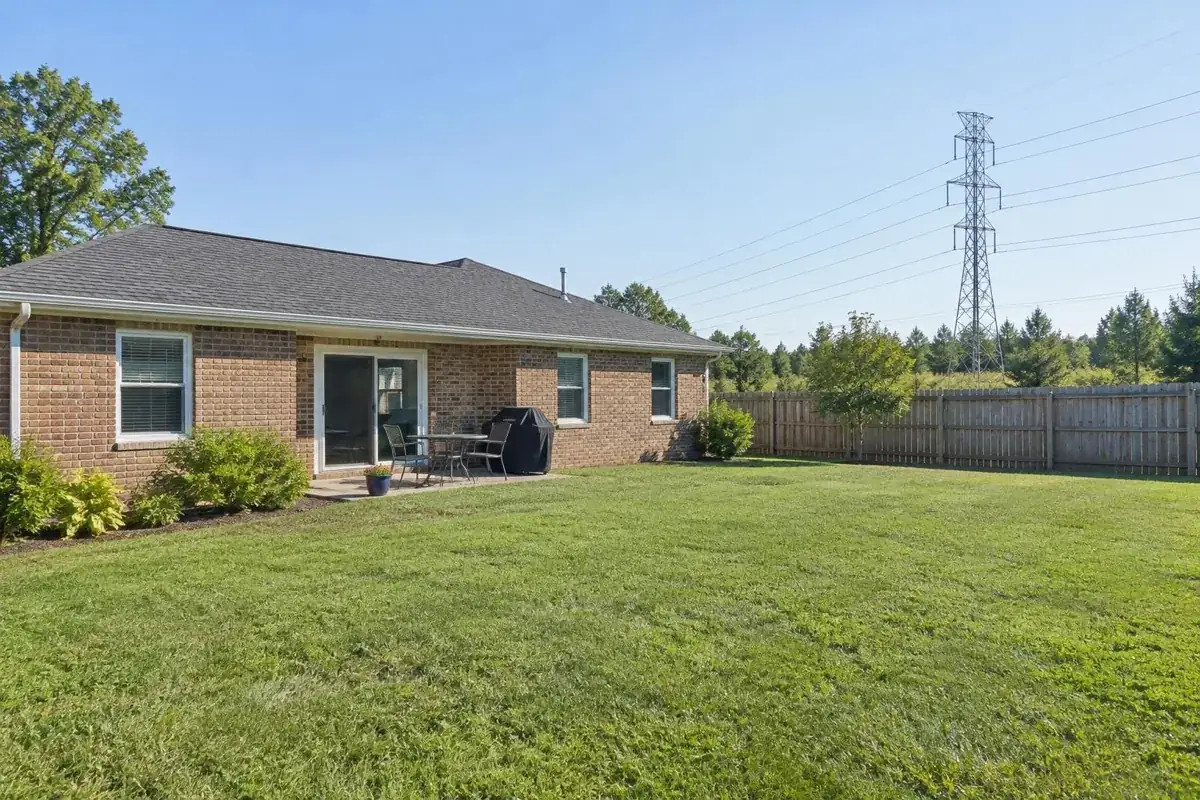
| Lines beyond the property | Visibility and comparable buyer reactions |
| A corridor crossing the yard | Recorded easement location and permitted uses |
| A structure near the corridor | Survey, rights and possible encroachment |
| A buyer asking about health | Official evidence, not personal safety promises |
Selling a house near power lines: separate three questions
Visible power lines, an easement on your parcel and a structure within that easement are different situations. Identify which applies before discussing price or promising that the buyer can build anywhere in the yard.
A visible line may sit outside your boundary. Conversely, a recorded utility right may affect the parcel even if the tower stands elsewhere. Neither a listing photograph nor an online map establishes the precise legal extent of that right.
Create a file with the title report, recorded instrument, available survey and relevant utility correspondence. Keep physical-location questions separate from interpretation of the document. Our seller-disclosure guide covers the broader disclosure packet; this article focuses on the power-line-specific decisions.
How a power-line easement affects a home sale
An easement grants specified rights; its actual wording determines what the holder may do and what uses may be restricted. Do not assume every utility corridor grants identical access or construction rights.
Ask the title company for the recorded easement and any amendments identified in its search. Note the holder, legal description, access provisions and restrictions. Compare the description with an available survey showing the parcel and improvements.
Fannie Mae's title-exception guidance describes conditions for certain acceptable utility easements. Those conditions do not mean every easement is automatically acceptable for every loan. Let the buyer's lender and title professional assess the actual documents.
If the house, garage or fence appears within the affected area, avoid moving it or removing vegetation without advice. A surveyor can help locate boundaries; a title professional or local real-estate attorney can address the recorded rights. Ask the utility about applicable access and vegetation-management requirements in writing.
A document-first checklist before you price the home
Collect the records first, then evaluate comparable sales and sale options. That sequence prevents a visible tower from becoming an unsupported blanket deduction.
Power-line sale: separate facts before pricing
- 1
Separate
Distinguish line visibility from recorded rights.
- 2
Map
Compare the easement with the improvements.
- 3
Price
Use supported comparable sales.
- 4
Compare
Review written net proceeds and conditions.
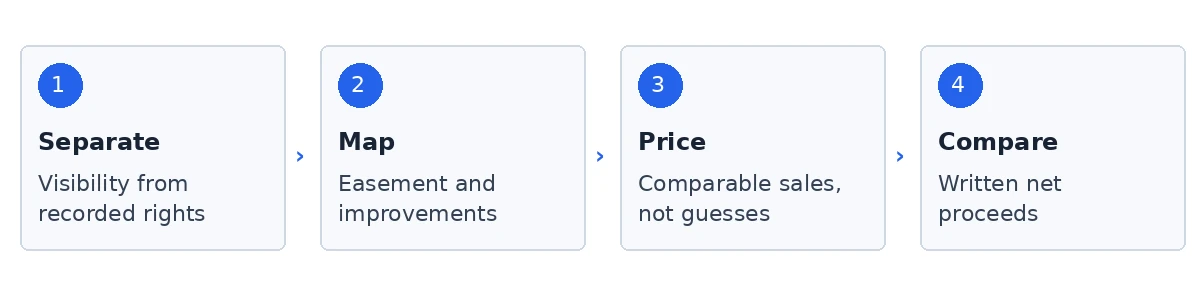
Resolve document questions before applying a market adjustment.
Before accepting an offer, check that the named buyer has reviewed the available title information, understands any unresolved location question and states its inspection and financing conditions. Do not rely on a conversation that never makes it into the purchase agreement.
If a sale supports an upcoming move, use the relocation hub to plan dates. Closing in as little as 21 days is SilverCrest Estates' benchmark when requirements allow, not a promise to finish an unresolved title investigation within that time.
Closing in as little as 21 days is SilverCrest Estates' benchmark when requirements allow, not a promise to finish an unresolved title investigation within that time.
Do power lines reduce the selling price?
Any adjustment should come from the property's market evidence, not an internet percentage. Condition, yard use, line visibility and competing homes can affect buyer reactions in different ways.
Fannie Mae's site-appraisal guidance requires appraisers to reflect easements and encroachments in their analysis and evaluate effects on marketability. It does not prescribe one universal power-line discount.
Ask an agent or appraiser for relevant recent sales. Homes with similar corridor exposure can be more informative than homes selected solely because their bedrooms match. Compare condition, lot characteristics, sale timing and other material differences before attributing a price gap entirely to the lines.
A smaller usable yard raises a different question from an unobstructed yard with a distant tower. Keep those cases separate. If there are no suitable sales, acknowledge uncertainty rather than presenting a precise deduction as established fact. Our house-worth guide explains the role of comparable properties.
Should i buy a house near power lines?
For a seller hearing this question, help the buyer distinguish records, market evidence and personal preferences. It is not your role to decide their health concerns or certify the property's exposure from its distance to a tower.
Provide the recorded information and links to official research. Buyers can obtain specialist advice for their own circumstances and confirm their lender's requirements. A transparent packet is more useful than an argument that their concerns are unreasonable.
What can you responsibly say about health concerns?
Use official research and acknowledge its limits; do not claim a particular home is safe or dangerous from a photograph. Power-line fields are not the same as ionizing radiation such as X-rays.
The National Cancer Institute's electromagnetic-fields fact sheet describes extremely low-frequency, non-ionizing fields, research findings and uncertainties. Some studies have reported associations involving higher residential magnetic-field exposures and childhood leukemia, but association is not proof that a particular home's lines cause illness.
Distance affects fields, but a straight-line measurement alone is not an exposure assessment. Avoid quoting a universal safe-distance rule or claiming that one consumer meter settles every scientific question. Let buyers consider official evidence and seek qualified advice rather than supplying your own health guarantee.
Keep this discussion separate from electrical safety. For activities near overhead conductors, follow the utility's clearance instructions and applicable safety requirements. Do not encourage ladders, tree trimming or drone photography near the wires just to improve listing images.
What should you disclose about power lines?
Use the applicable state form and answer known easement, title and property-condition questions accurately. This article does not assert a nationwide disclosure duty for the mere sight of lines beyond your parcel.
Provide requested documents through the closing professional and keep copies of what you deliver. An as-is sale does not justify concealing known restrictions or falsely saying the property has no easements. If a question is unclear, ask a local real-estate attorney how the rule applies to your situation.
Photographs should show the actual setting rather than hide the corridor. Give buyers enough context to understand the house, yard and view. Accurate presentation reduces the chance that a later visit or title review reveals a surprise and restarts negotiations.
Worked example: compare listing and a cash offer
Calculate proceeds from written terms instead of subtracting a guessed power-line penalty. The following figures are illustrative only, not company results, local averages or appraisal conclusions.
Suppose supported listing expectations are $325,000, estimated selling costs are $23,000, optional preparation costs are $4,000 and carrying costs are $3,000. That gives $295,000 before mortgage payoff and taxes. A cash offer of $300,000 with $2,000 in remaining seller expenses gives $298,000 before the same deductions.
Replace those amounts with your own quotes using the closing-cost calculator. The better path can change if the listing sells higher, title questions take longer or a buyer seeks additional concessions. Compare cancellation rights and unresolved conditions alongside price.
When a cash sale may not be your best option
Listing may be better when the home is move-in ready, title information is clear and comparable sales support strong demand. Power-line proximity alone does not justify abandoning market exposure or accepting an unsupported discount.
Compare the cash-sale versus listing guide. An as-is offer may fit if you value fewer preparations or a more convenient date, but make the decision from written net proceeds and actual obligations.
Key takeaways
- Visible lines and recorded easement rights are separate facts.
- Obtain the instrument and check the location of improvements.
- Price from comparable sales, not a universal discount.
- Use official research without making personal health guarantees.
- Compare net proceeds, deadlines and unresolved conditions.
The bottom line
A documented property is easier to evaluate than an uncertain one. Gather records and compare listing with an as-is cash offer. SilverCrest Estates can assess your home's setting and condition without treating every nearby power line as the same pricing problem.
Frequently asked questions
Should i buy a house near power lines?
A seller should provide recorded easement information, relevant market evidence and official research rather than decide this for a buyer. Personal preferences and financing requirements differ, so buyers need their own assessment.
Do power lines reduce the selling price?
There is no universal discount supported by the appraisal guidance cited here. Use relevant comparable sales and property-specific restrictions to evaluate marketability instead of applying an internet percentage.
Can I sell a house near power lines for cash?
A cash buyer can evaluate the property, but title restrictions and known conditions still matter. Compare written net proceeds, cancellation terms and unresolved document questions before accepting an offer.
Sources & further reading
Primary sources we consulted for this article. Rules vary by state and change over time — always confirm against the original source.
- 1Electromagnetic Fields and Cancer
National Cancer Institute
Official explanation of non-ionizing fields, research findings and evidence limitations.
- 2Site Section of the Appraisal Report
Fannie Mae
Property-specific analysis of easements, encroachments, value and marketability.
- 3Title Exceptions and Impediments
Fannie Mae
Conditions relevant to certain acceptable utility easements, not a blanket approval.

About the author
Emily Roberts
Property Acquisition Specialist
Emily Roberts works with the SilverCrest Estates acquisitions team, helping homeowners across 50+ US markets understand their options and close on their own timeline.
Disclaimer: This article is for general information only and is not legal, tax, or financial advice. Real estate rules vary by state and change over time. Consult a licensed attorney, tax professional, or financial advisor about your specific situation before acting.