Start here: this article is part of our seller questions collection. For the full picture, read our complete guide, Can You Sell a House With a Mortgage? Everything You Need to Know.
Quick answer: You can usually sell a house with a lis pendens, but most buyers and title insurers will not close until the notice is released, expunged or the lawsuit is resolved. SilverCrest Estates sees four realistic paths: settle the claim, get the notice removed, close with court-approved terms, or wait out the case. Each depends on what the lawsuit actually seeks.
| Path | When it fits |
|---|---|
| Settle and release | The claim is about money or a resolvable dispute |
| Ask the court to remove it | The suit does not truly affect title or possession |
| Sale subject to the case | Rare; buyer accepts the risk with full disclosure |
| Wait for the outcome | The dispute is about who owns the property |
What a lis pendens actually does to a sale
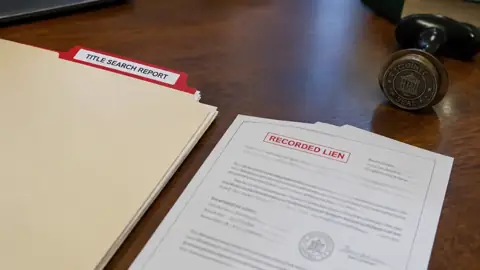
A lis pendens is a recorded notice that a lawsuit may affect the property. It does not decide the case, but anyone who buys afterward generally takes the property subject to the outcome.
That is why the notice matters so much to buyers. The Cornell Legal Information Institute explains that the notice warns prospective purchasers that title is in litigation. A buyer who ignores it can lose the property or face a judgment later. Title companies therefore list a recorded lis pendens as an exception or refuse to insure until it is cleared.
Our glossary entry for lis pendens covers the definition. This guide focuses on the seller's question: what you can do to get to a closing.
Find out what the lawsuit is really about
Start by reading the complaint behind the notice. The type of claim decides which exit is realistic, so guessing wastes time.
Common sources of a lis pendens include foreclosure actions, partition suits between co-owners, boundary or easement disputes, contractor lien foreclosures, divorce cases involving the home and claims that a prior deed was invalid. Ask the county recorder or clerk for the recorded notice and the case number, then pull the court file.
Look for three facts: who filed and what relief they seek, whether the claim concerns ownership or only money, and the current stage of the case. A money claim that mentions the house differs sharply from a suit to transfer title.
Is the claim about ownership or only about money?
This is the single most useful question. Claims about title or possession justify the notice; pure money claims often do not.
Many states only allow a lis pendens when the lawsuit involves a real property claim. California, for example, lets an owner ask the court to expunge the notice if the claimant cannot show a real property claim with probable validity under Code of Civil Procedure section 405.31. Other states use different standards and procedures, so check the statute where the house sits.
Four ways sellers get to closing
Most sales with a lis pendens close through one of four routes. Pick the route that matches the claim, not the one that sounds fastest.
1. Settle and obtain a recorded release
When the dispute is about money, settlement is often the cleanest route. The claimant records a release or withdrawal once paid.
Settlement funds can sometimes be paid from sale proceeds at closing. The title company will want a signed settlement agreement and a release ready to record, and the claimant must agree in writing that the notice will be withdrawn. Without the recorded release, the buyer's title insurer will usually still show the notice.
2. Ask the court to remove the notice
If the notice lacks a valid basis, a motion to expunge, cancel or discharge it may be available. Timing and standards vary by state.
Florida limits how long certain notices stay effective. Under Florida Statutes section 48.23, a notice not founded on a duly recorded instrument generally is not effective beyond one year from the start of the action unless the court extends it, and the court can control or discharge it. Your attorney in the case can tell you whether an expiration, bond or discharge argument applies.
3. Close subject to the lawsuit
Some buyers will purchase knowing a case is pending, but only with full disclosure and a price that reflects the risk. This route is uncommon.
A buyer who closes subject to the notice is generally bound by the result.
4. Wait for the case to end
When the suit is about who owns the house, waiting may be the only honest option. A court judgment or dismissal will define what can be sold.
If the case is dismissed, ask the court or the claimant's attorney for the document that removes the notice from the record. A dismissal in the court file does not always clear the county land records by itself.
A homeowner owes $160,000 on a mortgage and receives a $220,000 cash offer.
A worked example: a contractor's notice after a dispute
The numbers below are an example, not a SilverCrest Estates case. A homeowner owes $160,000 on a mortgage and receives a $220,000 cash offer. A contractor has filed suit to foreclose a $14,000 lien and recorded a lis pendens.
Selling a house with a lis pendens: decision path
- 1
Read the complaint
Find what relief is asked.
- 2
Classify the claim
Title, possession or money.
- 3
Choose an exit
Settle, remove, wait, disclose.
- 4
Record the release
Title confirms it is cleared.
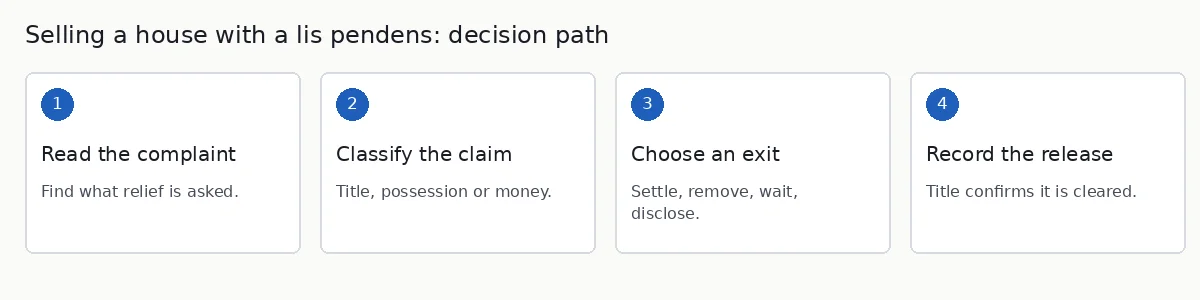
Match the exit to the claim behind the notice.
Because the claim is about money, the seller negotiates a $10,500 settlement. The title company collects the signed agreement and release in advance and pays the contractor from closing funds. After the mortgage payoff of $160,000, the settlement and an assumed $4,000 in other closing charges, the example seller nets about $45,500. Without the settlement, the sale could not close at any price.
What to tell buyers and your title company
Disclose the recorded notice early. The title search will find it anyway.
Give the title company the recorded notice, the case number, the complaint and the name of the claimant's attorney. Ask what the insurer needs to remove the exception: a recorded release, a court order or a bond. Your state's seller disclosure rules may also require you to disclose known lawsuits affecting the property; our seller disclosure guide explains the general framework.
When foreclosure is the source of the notice
A foreclosure lawsuit in a judicial foreclosure state normally comes with a lis pendens. Selling can still be possible before the sale date.
The lender's payoff, plus fees and costs, must be paid at closing for the notice to be released. Request a written payoff statement early and confirm the auction date with the court docket. Our guide to avoiding foreclosure covers loss mitigation options that can buy time, and the liens and judgments hub collects related guides.
When a cash sale may not be your best option
A cash sale does not make a lis pendens disappear. If the case is about ownership, no buyer can safely close until it is decided.
If the claim is small and the home is in good condition, settling the claim and listing with an agent may produce a higher price. Compare cash offers with listing once you know the cost to clear title. A cash buyer is most useful when the house also needs repairs or you need a defined closing date after the notice is resolved.
Key takeaways
- A lis pendens warns buyers that a lawsuit may affect the property.
- Read the complaint; the type of claim decides the exit.
- Money claims can often be settled and released at closing.
- Some states let owners ask a court to remove an unsupported notice.
- Ownership disputes usually must be decided before a sale.
The bottom line
Treat the notice as a title problem with a specific legal cause. Identify the claim, choose the exit that fits it and get a recorded release before closing day. When the path is clear, request a written cash offer to compare timing and net proceeds; SilverCrest Estates can close in as little as 21 days once title is insurable.
Frequently asked questions
Can you sell a house with a lis pendens?
Usually yes, but most buyers and title insurers will not close until the notice is released, removed by the court or the lawsuit is resolved. The type of claim behind the notice decides which of those paths is realistic.
How do I get a lis pendens removed?
Common routes are a recorded release after settlement, a court order expunging or discharging the notice, or dismissal of the lawsuit followed by a recorded withdrawal. Standards and timing depend on the state where the house sits.
Does a lis pendens expire?
Some states limit how long certain notices stay effective. Florida, for example, generally limits notices not based on a recorded instrument to one year from the start of the action unless the court extends them. Other states use different rules.
Sources & further reading
Primary sources we consulted for this article. Rules vary by state and change over time — always confirm against the original source.
- 1Lis pendens
Cornell Legal Information Institute
Defines the notice and its effect on later purchasers.
- 2Code of Civil Procedure section 405.31
California Legislative Information
Expungement when no real property claim with probable validity is shown.
- 3Florida Statutes section 48.23
The Florida Senate
One-year limit for notices not founded on a recorded instrument.

About the author
Jennifer Martinez
Real Estate Transaction Specialist
Jennifer Martinez works with the SilverCrest Estates acquisitions team, helping homeowners across 50+ US markets understand their options and close on their own timeline.
Disclaimer: This article is for general information only and is not legal, tax, or financial advice. Real estate rules vary by state and change over time. Consult a licensed attorney, tax professional, or financial advisor about your specific situation before acting.