Start here: this article is part of our cash offers collection. For the full picture, read our complete guide, What Is a Fair Cash Offer for My House? How to Know If You're Getting a Good Deal.
Quick answer: Most sellers who list a house as-is see offers roughly 5%–20% below what the same home would fetch fully repaired — but that gap is not what you "lose." Once you subtract the repair bills, extra months of mortgage, taxes, insurance, and the risk of a financed deal collapsing, selling as-is to a direct buyer like SilverCrest Estates often nets within a few thousand dollars of a fixed-up listing, and sometimes more.
The question "how much do I lose" assumes the fixed-up sale price is money you'd actually keep. It isn't. Let's walk through the real arithmetic.
The three numbers that decide what you actually keep
Every as-is decision comes down to three figures:
- As-is value today — what a buyer pays for the house in its current condition.
- After-repair value (ARV) — what it would sell for once fixed.
- Cost to get from #1 to #2 — repairs, plus the carrying costs of the months those repairs and the sale take.
Your true "loss" is never ARV minus the as-is offer. It is ARV minus repair costs minus carrying costs minus selling costs, compared against the as-is offer minus its (usually smaller) selling costs.
Illustrative example: $320,000 after-repair value, $28,000 in needed repairs
Why the as-is discount is bigger than the repair bill
Buyers don't subtract just the repair estimate — they subtract the repairs, plus a risk premium, plus their profit or sweat-equity margin. A $20,000 roof and HVAC job routinely produces a $30,000–$40,000 price reduction on the open market, because:
- Financed buyers can't always buy it. FHA and conventional appraisers can flag peeling paint, roof life, or safety issues, shrinking your buyer pool.
- Inspection fear is priced in. Buyers assume hidden problems are worse than visible ones.
- Days on market compound. A house that sits reads as a house with problems, inviting lower offers.
That means the "loss" from selling as-is is frequently smaller than the discount a retail buyer would demand — especially when you sell directly to a cash buyer whose business is doing the repairs efficiently.
When selling as-is costs you the least
- Repairs are mostly cosmetic. Paint, carpet, and landscaping rarely return dollar-for-dollar, so skipping them costs little.
- Your market is hot. In low-inventory markets, buyers overlook condition.
- The buyer is a direct cash purchaser. No lender, no appraisal condition, no repair renegotiation after inspection.
- You'd have to borrow to fix it. A $25,000 repair on a credit card or HELOC can erase the entire upside.
When fixing first is worth it
Be honest with yourself here, because this is where a cash sale may not be your best option:
- The home needs only light, cheap work (under ~$5,000) and you have the cash and time.
- You're in no rush and can manage contractors.
- The neighborhood supports top-dollar retail sales and homes move quickly.
If that's your situation, listing after light prep usually nets more, and we'd rather tell you that than buy a house we shouldn't. Our sell as-is or fix up first guide walks the decision in more detail.
Assumes ~5.5% commissions, $7,500 carrying costs during repairs and listing, and a $250,000 as-is cash offer with buyer-paid closing costs.
A five-minute worksheet you can run today
Grab a notepad and fill in:
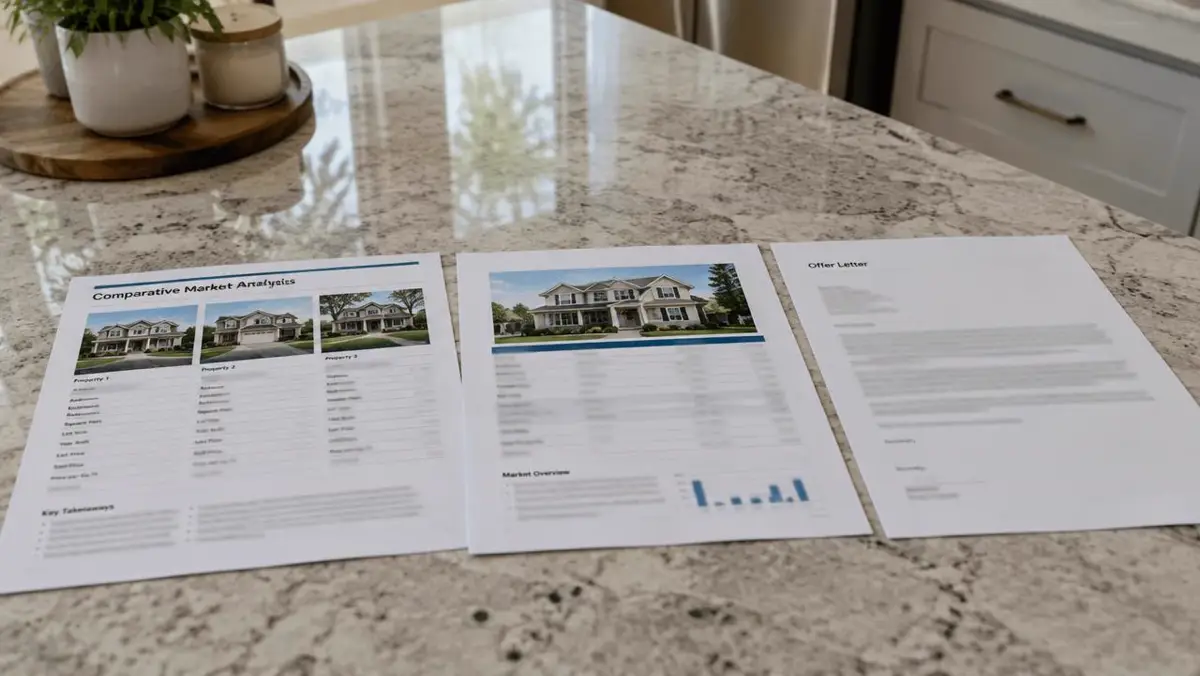
- Realistic fixed-up sale price (ask an agent for a comparative market analysis — free).
- Itemized repair estimate (get one real contractor bid, not a guess).
- Monthly carrying cost: mortgage + taxes + insurance + utilities + HOA.
- Months to repair and sell (be honest — add one).
- Selling costs: commissions, concessions, your closing costs.
Fixed-up net = (1) − (2) − (3 × 4) − (5). Now request a no-obligation cash offer and compare it against that net, not against the fantasy list price. Sellers who do this exercise are often surprised the gap is a few thousand dollars — a sum many happily trade for four months of their life back.
Key takeaways
- The as-is "loss" is the gap between nets, not the gap between prices.
- Retail buyers discount as-is homes by more than the repair cost — direct cash buyers often discount less.
- Carrying costs of $2,000–$3,000 per month quietly eat the upside of fixing first.
- Light cosmetic repairs can be worth doing; major systems rarely pay back before a sale.
- Always compare a real cash offer against a real net sheet, never against a list price.
When a cash sale may not be your best option
A cash sale trades some price for speed and certainty, and that trade isn't right for everyone. If your home is move-in ready, you have three or more months before you need to move, and your goal is the highest possible price, listing with a good agent will often net more. The same is true in a low-inventory market where updated homes draw multiple offers. Run both numbers side by side — our cash vs. listing comparison and closing cost calculator show the math — and choose the path with the better net for your timeline. SilverCrest Estates will tell you plainly when listing looks like the better fit.
A room-by-room look at what buyers actually discount
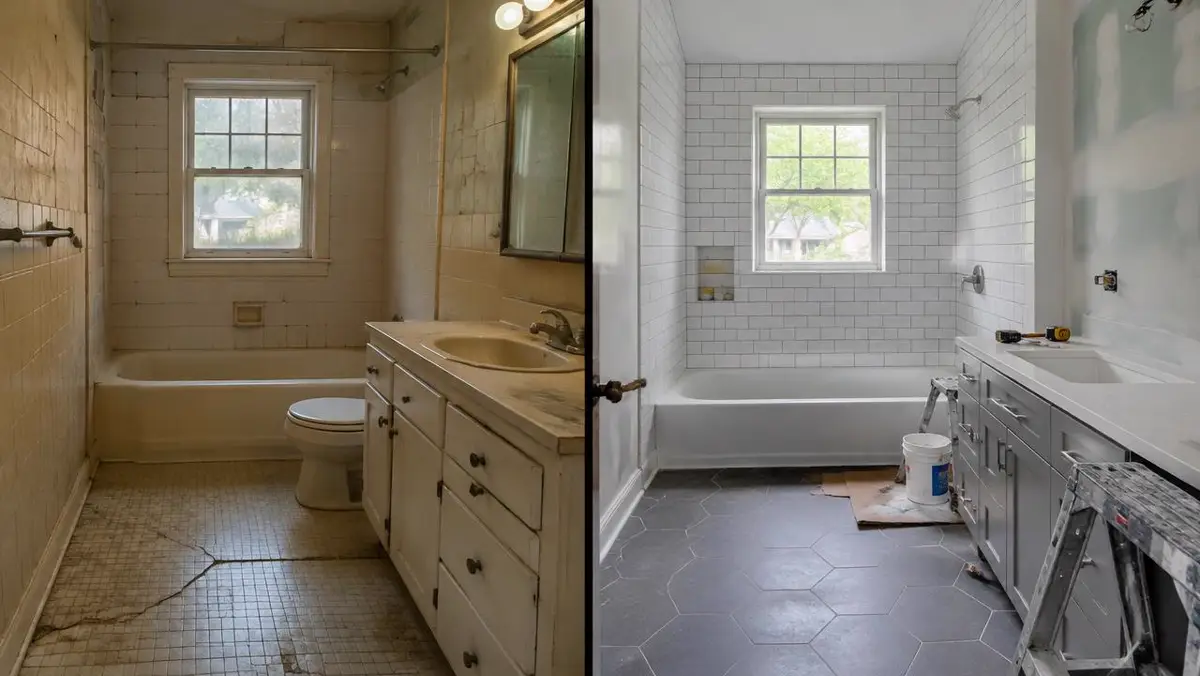
Not all defects cost you equally. Buyers and appraisers react to some problems far more strongly than their repair cost justifies, and barely notice others. Understanding the difference tells you where the as-is discount really comes from.
Problems buyers over-discount (fear premium):
- Foundation cracks or movement. A $8,000 piering job routinely knocks $20,000–$30,000 off offers because buyers hear "foundation" and imagine the worst. See our deep dive on selling a house with foundation issues.
- Roof age. Even a watertight 18-year-old roof triggers insurance and lender concerns, so buyers price a full replacement.
- Old electrical panels (Federal Pacific, Zinsco, knob-and-tube). A $3,000 panel swap can read as "fire hazard" and block financing entirely.
- Any sign of water. A stained ceiling from a long-fixed leak still triggers mold fears.
Problems buyers barely price in:
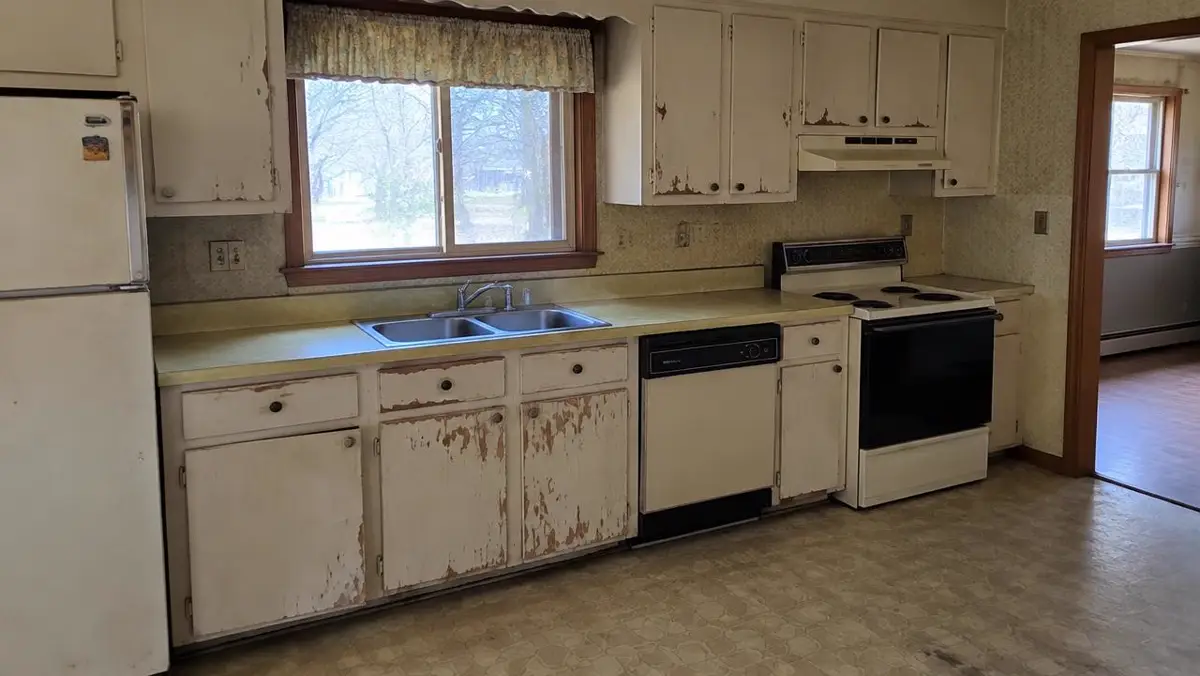
- Dated kitchens and baths (they expected to update anyway)
- Worn carpet and paint
- Old but functional HVAC
- Cosmetic yard neglect
The practical lesson: if your home's issues are in the second group, the as-is discount is small and listing may serve you well. If they're in the first group, retail buyers will punish you far beyond the repair cost — and a direct cash buyer, who prices actual repair scope rather than fear, often comes out ahead.
The carrying-cost clock nobody counts
Every month between "decide to sell" and "check in hand" costs real money. A typical $300,000 home carries roughly $2,000–$2,800 per month once you add the mortgage payment, property taxes, homeowner's insurance, utilities, lawn care, and HOA dues. A fix-and-list plan that takes five months burns $10,000–$14,000 before the first buyer walks through — and that money never appears in the "sale price" people compare against a cash offer.
Add the transaction friction on the listing side: pre-listing prep, photography, showings that disrupt your life for weeks, an inspection renegotiation, an appraisal that may come in low, and a financed buyer whose loan can still collapse in week six. Each of those has an expected cost, even if it doesn't happen to you. When sellers say they "lost money" selling as-is, they usually compared the cash offer to a list price. When they compare it to the net they would actually have received, the story changes.
A worked example with real line items
Putting it all together for an illustrative $300,000 (fixed-up) home needing $22,000 of work: list it fixed up and you might gross $300,000 — minus ~$16,500 commissions, $22,000 repairs, $6,000 in concessions, and roughly $11,000 in five months of carrying costs, netting about $244,500. List it as-is and retail buyers might pay $265,000 — minus commissions and a post-inspection credit, netting near $243,000 after four months. A direct cash offer of $250,000 with buyer-paid closing costs nets $250,000 in two weeks. In this example the "discounted" cash path is the highest net of the three. That won't always be true — run your own numbers — but it is true often enough that every seller should get the real cash number before deciding.
How market conditions shift the answer
In a seller's market with low inventory, as-is discounts shrink because buyers compete for anything available. In a buyer's market, the same condition issues get punished twice — once in the offer, once in the inspection renegotiation. If you're selling into a slow market, certainty itself carries a premium that doesn't show up in any spreadsheet.
Frequently asked questions
What percentage do you typically lose selling a house as is?
There's no fixed percentage, but as-is listings commonly sell 5%–20% below their repaired value depending on condition and market. The meaningful number is your net: after subtracting repair costs, months of carrying costs, commissions, and concessions, the real difference between fixing and selling as-is is often only a few thousand dollars either way.
Do I have to disclose problems if I sell as is?
Yes. Selling as-is means you won't make repairs — it does not exempt you from state disclosure laws. Nearly every state requires sellers to disclose known material defects, and federal law requires lead-based paint disclosure for homes built before 1978. Hiding a known defect can unwind a sale or create liability after closing.
Is it better to sell as is to a cash buyer or list as is with an agent?
Listing as-is exposes you to retail buyers who discount heavily for risk and may demand credits after inspection, while a direct cash sale prices condition once, upfront, with no lender or appraisal risk. Listing can still win if the home needs only cosmetic work and your market is fast. Compare a real cash offer against an agent's net sheet to decide.
What repairs are worth doing before selling?
Cheap, high-visibility items tend to pay back: deep cleaning, decluttering, fresh neutral paint, and basic yard work. Major projects — roofs, kitchens, foundations — rarely return their full cost at sale and add months of carrying costs. If the repair list runs into five figures, pricing as-is usually makes more financial sense.
Sources & further reading
Primary sources we consulted for this article. Rules vary by state and change over time — always confirm against the original source.
- 1Lead-Based Paint Disclosure Rule
U.S. Environmental Protection Agency
Federal disclosure duties that apply even in as-is sales.
- 2Closing Disclosure explainer
Consumer Financial Protection Bureau
How seller closing costs are itemized at settlement.
- 3NAR Settlement FAQs
National Association of Realtors
Current rules on agent compensation that affect listing-side net.

About the author
Michael Thompson
Seller Success Manager
Michael Thompson works with the SilverCrest Estates acquisitions team, helping homeowners across 50+ US markets understand their options and close on their own timeline.
Disclaimer: This article is for general information only and is not legal, tax, or financial advice. Real estate rules vary by state and change over time. Consult a licensed attorney, tax professional, or financial advisor about your specific situation before acting.