Start here: this article is part of our distressed sales collection. For the full picture, read our complete guide, Can You Sell a House With Foundation Problems? Your Complete Guide.
Quick answer: You can sell a house with a bad roof three ways: replace it before listing, offer the buyer a price reduction or credit, or sell as-is to a cash buyer. Financed buyers often have trouble because FHA and other loans require a roof that keeps moisture out and has remaining useful life. SilverCrest Estates buys homes with worn or damaged roofs as-is, with no repairs and no inspection renegotiation.
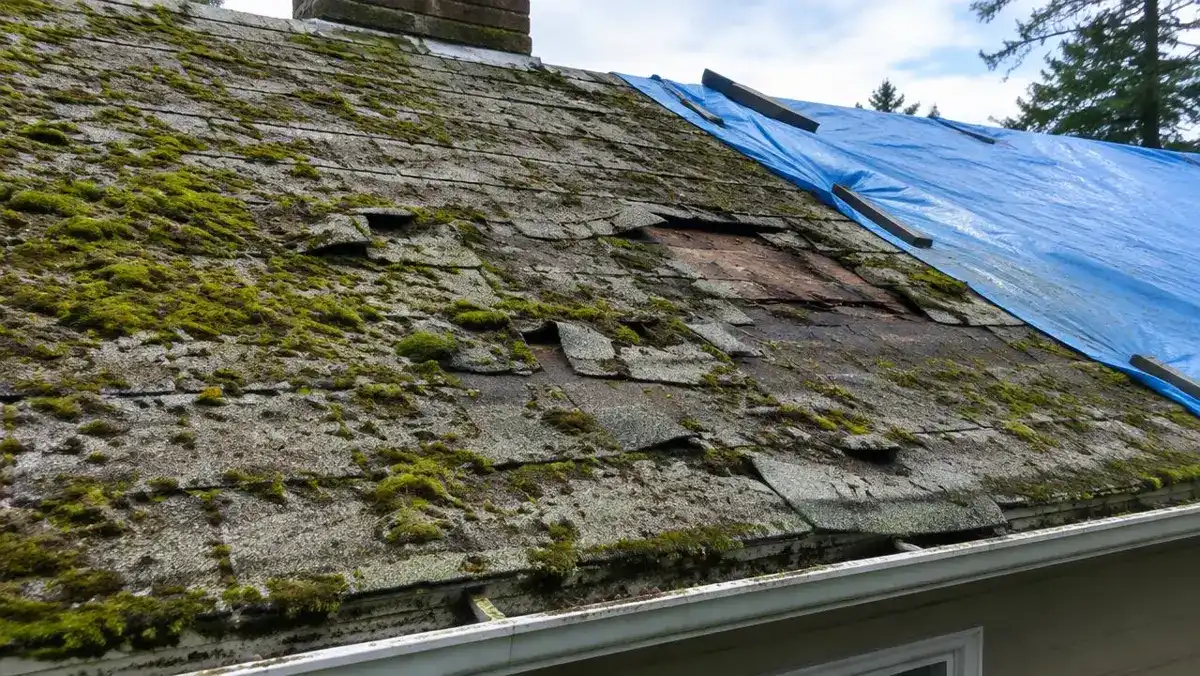
The roof is one of the first things inspectors, appraisers, and insurers look at. Missing shingles, sagging decking, active leaks, or simply an old roof near the end of its life can trigger loan conditions, insurance refusals, or a long list of repair requests.
Why a roof can stop a financed sale
- Appraisal conditions. FHA's minimum property requirements call for a roof that prevents moisture entry and has a reasonable remaining life. Appraisers flag roofs that don't, and the loan can't close until the issue is fixed.
- Insurance. Many insurers won't write a new policy on an old or damaged roof, and lenders require insurance to fund.
- Inspection leverage. Even when the loan goes through, buyers commonly ask for the full replacement cost as a credit.
Option 1: Replace before you sell
A new roof is a selling point, but you rarely recover the full cost in price. National cost-versus-value surveys consistently show roof replacements returning only part of their cost at resale. Replacement also takes cash or financing up front and a few weeks of scheduling.
Option 2: Offer a credit or price reduction
You list as-is and price the roof in, or agree to a credit at closing. This works when the roof is old but not leaking. If it's actively failing, the appraisal may still block the loan, credit or not.
Option 3: Sell as-is for cash
A cash buyer has no lender requirements, so the roof's condition is just a line in the repair estimate. No appraisal condition, no insurance scramble, no last-minute renegotiation.
Bad roof: which path fits?
| Option | Cash needed | Timeline | Best when |
|---|---|---|---|
| Replace, then list | Full replacement cost | Weeks to schedule + listing time | You have cash and time; rest of house is updated |
| List with credit | Credit at closing | 60–120 days | Roof is old but not leaking |
| Sell as-is for cash | None | As little as 21 days | Active leaks, other repairs, or a deadline |
Illustrative roof replacement cost by home size (asphalt shingle)
If storm damage caused it, check your insurance first
Wind and hail damage are often covered by homeowner's policies, while normal wear and age are not. File promptly, since many policies have reporting deadlines. Ask whether the policy pays replacement cost or actual cash value (which subtracts depreciation). If you sell before repairs, confirm with your insurer and mortgage lender how claim funds are handled.
Disclose what you know
Leaks, prior roof repairs, and insurance claims are typically disclosure items. Water stains on ceilings are hard to hide and inspectors look for them. See how home inspections affect a sale.
When a cash sale may not be your best option
If the repairs are small (paint, fixtures, a minor roof patch) and you have the cash and time to finish them, fixing up and listing can return more than the repair cost. That's also true when the house is in a neighborhood where updated homes sell quickly at a premium. A cash, as-is sale makes the most sense when repairs are large, uncertain, or you'd have to borrow for them. Compare an as-is cash offer with listing using real contractor bids — not guesses — before you decide.
Don't spend $15,000 on a roof just to get a buyer's loan approved without comparing the alternative.
How to tell how much life your roof has left
Before deciding anything, find out what you're actually dealing with. Signs a roof is near the end of its life include:
- Curling, cracked, or missing shingles, especially after storms.
- Granules collecting in gutters or at downspouts.
- Sagging areas on the roof deck.
- Water stains on ceilings or in the attic, or daylight visible through attic boards.
- Age: asphalt shingle roofs commonly last roughly 15 to 30 years depending on material, climate, and installation.
A roofer's written inspection with photos is worth getting even if you plan to sell as-is. It tells you whether you're facing a full replacement or a repair, and it gives buyers a concrete number instead of a worst-case guess.
Lender and insurance rules that come up
Government-backed loans have property standards. FHA guidance, for example, requires that a roof keep moisture out and have reasonable remaining life; an appraiser who sees active leaks or obvious failure can make repairs a condition of the loan. VA and many conventional loans have similar expectations.
Insurance can be just as important. In some states, insurers ask for a roof certification or a four-point inspection (roof, electrical, plumbing, HVAC) before writing a policy on an older home, and may decline coverage on roofs past a certain age. If your buyer can't get insurance, their lender won't fund the loan. Ask a local insurance agent what your buyers are likely to face.
Repair, replace, or credit: a decision guide
| Situation | What usually makes sense |
|---|---|
| A few missing shingles or a small leak | Repair it before listing; cost is modest and removes a red flag |
| Roof is old but not leaking | Disclose its age, get a roofer's estimate, and offer a credit if a buyer asks |
| Active leaks, rot, or sagging deck | Replace before listing, or sell as-is to a buyer who will replace it |
| Storm damage with an open insurance claim | Work the claim first, then decide; the payout may cover most of the cost |
If you replace, keep the permit, the invoice, and the warranty. Transferable manufacturer or workmanship warranties are a genuine selling point.
Don't overlook what a leak did inside
A bad roof rarely stays a roof problem. Long-term leaks can damage attic insulation, ceilings, wall framing, and electrical wiring, and can lead to mold. Buyers' inspectors will look in the attic. If you've had leaks, check for stains, soft spots, and musty smells, and disclose what you find. Our water damage guide covers that side in detail.
If replacing the roof isn't realistic, SilverCrest Estates buys homes with roof problems as-is. Request an offer and share any roofer estimates you have.
What to disclose about roof history
Most state disclosure forms ask about leaks, repairs, and roof age. Answer based on what you know, and include repairs you've made and insurance claims you've filed. If you've patched a leak, say so and share the invoice. Buyers trust documented repairs more than silence.
What to do this week
Call two licensed roofers for inspections and written estimates, and ask each whether a repair or full replacement is needed. Check your insurance policy and claims history to see if storm damage could be covered. Look in your attic for stains or daylight. Then decide: repair and list, credit the buyer, or sell as-is. Keep every estimate. Even if you don't fix the roof, buyers will offer more confidently when they can see a real number than when they assume the worst.
Key points to remember
- Get a roofer's written inspection before deciding anything.
- Financed buyers' lenders and insurers often require a sound roof.
- Small repairs before listing can remove a major red flag cheaply.
- Credits are often simpler than replacing the roof yourself.
- Check for storm coverage and disclose leaks and repairs honestly.
The bottom line
Don't spend $15,000 on a roof just to get a buyer's loan approved without comparing the alternative. Get one roofing estimate, then request an as-is cash offer. Our foundation, roof and mold page explains how we handle major repair items.
Frequently asked questions
Can you sell a house that needs a new roof?
Yes. You can replace the roof first, offer the buyer a credit or lower price, or sell as-is to a cash buyer. Financed buyers may face appraisal or insurance problems if the roof is leaking or near the end of its life, which is why many sellers choose an as-is sale.
Will FHA approve a loan on a house with a bad roof?
FHA requires the roof to keep moisture out and have reasonable remaining life. If the appraiser finds it doesn't, the loan is conditioned on repair before closing. That can force a seller to replace the roof or lose the buyer, unless the buyer switches to a different loan type.
Is it worth replacing a roof before selling a house?
Sometimes. A new roof can widen your buyer pool, but resale surveys show you usually recover only part of the cost. It makes the most sense when the rest of the house is updated. If other repairs are also needed, an as-is sale often nets a similar amount with far less risk.
Sources & further reading
Primary sources we consulted for this article. Rules vary by state and change over time — always confirm against the original source.
- 1Single Family Housing Policy Handbook 4000.1
U.S. Department of Housing and Urban Development
FHA minimum property requirements, including roof condition.
- 2Selling Guide: Property Condition and Quality
Fannie Mae
Conventional loan standards for property condition and required repairs.
- 3Lead-Based Paint Disclosure Rule for Real Estate
U.S. Environmental Protection Agency
Federal disclosure required for most homes built before 1978.

About the author
Alex Chen
Seller Success Manager
Alex Chen works with the SilverCrest Estates acquisitions team, helping homeowners across 50+ US markets understand their options and close on their own timeline.
Disclaimer: This article is for general information only and is not legal, tax, or financial advice. Real estate rules vary by state and change over time. Consult a licensed attorney, tax professional, or financial advisor about your specific situation before acting.