Start here: this article is part of our selling your home collection. For the full picture, read our complete guide, How to Sell Your House Fast: The Complete Homeowner's Guide.
Quick answer: Selling a house with a private well starts with records, testing and local transfer rules. EPA recommends annual checks for four indicators: total coliform, nitrates, dissolved solids and pH. SilverCrest Estates can assess an as-is sale, but cash payment does not waive required testing, disclosure or document review.
| Seller question | First action |
|---|---|
| What supplies the home? | Locate the well and confirm whether it is shared |
| What must be tested? | Ask the local health department and certified laboratory |
| Does a sale require testing? | Check state rules, the contract and lender requirements |
| What if a result fails? | Get a diagnosis and compare written sale options |
Selling a house with a private well: start with the records
A private well needs its own sale-preparation file; a plumbing inspection is not a water-quality test. Identify the water source before scheduling inspections or promising a buyer that the home has public water.
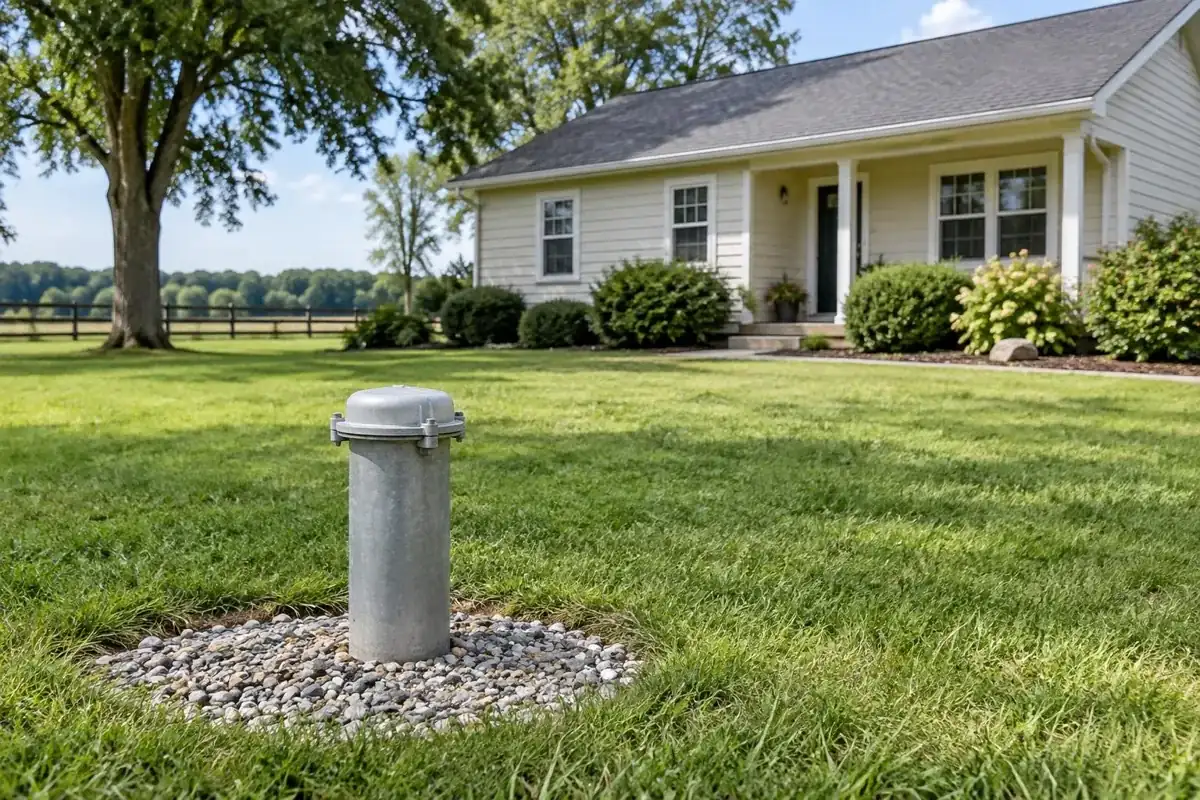
Locate the capped wellhead, available construction log, pump service history and treatment equipment. Include previous laboratory reports with collection dates, sample locations and tested substances. If there are several wells, identify which supplies the house and whether any are unused. A shared well raises additional questions about access, maintenance and arrangements with neighboring owners.
Do not guess missing information on a disclosure form. Ask the installer, local health department or relevant state agency whether records exist. Keep unanswered questions visible in your file so the buyer understands what still needs verification. Our home-inspection guide explains how specialist checks differ from a general inspection.
What should a private-well water test include?
EPA recommends testing annually for total coliform bacteria, nitrates, total dissolved solids and pH. Its private-well protection guidance also recommends additional testing when local conditions suggest other contaminants.
Choose a state-certified drinking-water laboratory and ask your local health department which panel fits the property. A nearby agricultural area, a known groundwater problem or changes in water appearance can affect the recommended scope. Do not assume a low-cost basic panel checks every chemical a buyer might ask about.
Follow the laboratory's sample-collection instructions precisely. Confirm whether a trained collector is needed and whether the sample should be untreated water or water after filtration. Label that distinction on the report. A treatment system can change what reaches the kitchen tap without resolving contamination at its source.
How often should private wells be tested?
EPA recommends annual testing for those four indicators, with extra testing when circumstances change. Flooding, well-system repairs and changes in water taste, smell or appearance warrant checking its guidance and contacting the health department rather than waiting for the next anniversary.
Annual maintenance guidance is not a universal transaction deadline. Your sale may require a different panel, sampling procedure or report age. Ask before ordering a test so you do not pay for a report the buyer's lender cannot use.
Compare testing, repair and an as-is sale
Gather the required information before choosing your sale method. A cash buyer can accept certain repair responsibilities, but cannot erase applicable transfer requirements.
Private-well sale: document-first decisions
- 1
Locate
Identify the well and gather existing records.
- 2
Check
Confirm transfer rules and laboratory scope.
- 3
Compare
Price repairs, credits and an as-is sale.
- 4
Close
Complete required review and documentation.
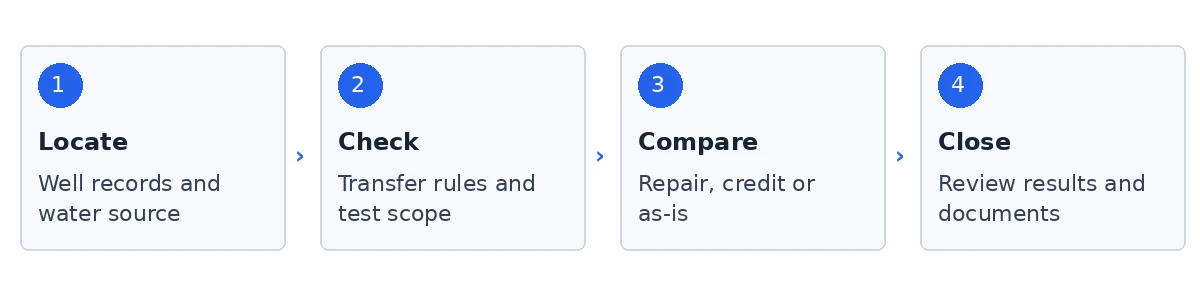
The order matters: verify required testing before comparing financial options.
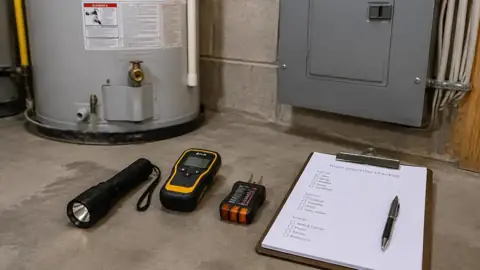
Use this checklist before signing: identify the required panel; obtain collection instructions; confirm who pays; schedule any result review; and agree in writing how an unexpected result will be handled. Avoid a vague promise to “fix the well” when nobody has identified the actual problem.
For a money comparison, use your contractor's quote and our closing-cost calculator. Keep required testing separate from optional improvements and any negotiated seller concession. That distinction prevents an attractive offer from hiding expenses you still must cover.
Suppose a listing might sell for $300,000, with $20,000 in selling expenses, $3,000 in quoted well work and $2,000 in additional carrying costs.
What a water-test report can and cannot tell a buyer
A report describes the submitted sample and tested substances, not every possible contaminant or all future conditions. Water that looks clear is not proof of drinking-water quality.
EPA's contaminant guidance distinguishes microorganisms, nitrate, metals and other potential concerns. Interpretation depends on the actual result, units and test method. Keep the complete laboratory report rather than paraphrasing it as “passed” without naming the panel.
Ask the laboratory or health department what a concerning result means and what corrective action and follow-up testing are appropriate. A pump problem, low pressure and contaminated water are different findings. The cheapest treatment device advertised online may not address the substance in your report.
Do not alter a sample to obtain a reassuring number. If equipment is serviced or disinfected, document the work and follow the recommended retesting procedure. Buyers need an understandable sequence of the original result, correction and follow-up.
State differences when selling a home with well water
Transfer requirements are not identical nationwide. Confirm the current state rule, any local requirement and the buyer's contract or loan conditions before setting your closing schedule.
New Jersey's Private Well Testing Act guidance explains testing and review obligations for covered transactions. That is different from relying on a homeowner's routine annual panel. Use the agency's current instructions to determine coverage and required testing rather than borrowing another state's checklist.
This article does not claim that every state requires the same tests or that a cash sale is exempt. For a New Jersey home sale, identify the property's water supply early and discuss the applicable requirements with the closing professional. Elsewhere, your state environmental or health agency and local health department are the starting points.
A well and septic system are also separate systems. If the home uses both, see our failed-septic selling guide; a satisfactory water sample does not establish that wastewater treatment functions correctly.
Worked example: compare proceeds without hiding well costs
Compare written net proceeds, not just headline prices. Include only real quotes and obligations for your property; these numbers are illustrative, not market averages or SilverCrest results.
Suppose a listing might sell for $300,000, with $20,000 in selling expenses, $3,000 in quoted well work and $2,000 in additional carrying costs. The example net before loan payoff and taxes is $275,000. An as-is offer of $278,000 with $2,000 in remaining seller expenses gives $276,000 before the same deductions.
Neither result predicts your sale. Required tests may apply to both paths, and a credit changes the proceeds calculation. Replace every figure with written information and ask who assumes each expense. Include uncertainty: contractor availability and buyer financing conditions can matter even when a quoted price looks favorable.
When a cash sale may not be your best option
Listing may be better when the home is otherwise move-in ready, the well records are complete and you have time to maximize market exposure. A private well alone is not a reason to accept less than supported local value.
Compare selling as-is or fixing first and the structural-condition hub. An as-is route may suit a seller who wants to avoid coordinating repairs, but it still needs an honest explanation of known conditions and applicable closing requirements.
Key takeaways
- Locate the well and gather reports before choosing a sale method.
- Annual EPA guidance and transaction testing rules are different.
- Use a certified lab and locally appropriate testing scope.
- Keep required testing separate from optional repairs.
- Compare net proceeds with written responsibility for every cost.
Wells and cesspools on the same lot
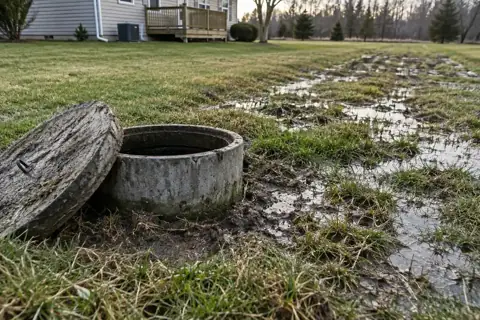
Buyers check the distance between a well and any onsite wastewater system. If the house uses a cesspool, read selling a house with a cesspool before you order inspections.
The bottom line
A well-supplied home can have a straightforward sale when its records, testing and responsibilities are clear. Request a cash offer if you want to compare an as-is option with listing. SilverCrest Estates can close in as little as 21 days when requirements allow, or you can choose a later date.
Frequently asked questions
How often should private wells be tested?
EPA recommends annual testing for total coliform, nitrates, total dissolved solids and pH. Local conditions may justify additional tests, and a transaction may require a different panel or report age.
Do I have to test well water to sell my house?
Requirements depend on state and local rules, the purchase contract and the buyer’s lender. Confirm the required panel and collection procedure before ordering a test; cash payment does not waive applicable requirements.
Can I sell a house with a private well as-is?
An as-is offer may allocate certain repair responsibilities to the buyer. It does not eliminate applicable testing, disclosure or review requirements, which should be confirmed before choosing a closing date.
Sources & further reading
Primary sources we consulted for this article. Rules vary by state and change over time — always confirm against the original source.
- 1Protect Your Home’s Water
U.S. Environmental Protection Agency
Annual testing indicators, additional testing triggers and certified laboratories.
- 2Potential Well Water Contaminants and Their Impacts
U.S. Environmental Protection Agency
Different contaminant types require appropriate testing and interpretation.
- 3Private Well Testing Act
New Jersey Department of Environmental Protection
Official transfer-related testing and review guidance for covered New Jersey transactions.

About the author
Emily Roberts
Property Acquisition Specialist
Emily Roberts works with the SilverCrest Estates acquisitions team, helping homeowners across 50+ US markets understand their options and close on their own timeline.
Disclaimer: This article is for general information only and is not legal, tax, or financial advice. Real estate rules vary by state and change over time. Consult a licensed attorney, tax professional, or financial advisor about your specific situation before acting.