Start here: this article is part of our selling your home collection. For the full picture, read our complete guide, How to Sell Your House Fast: The Complete Homeowner's Guide.
Quick answer: Selling a house with a cesspool is legal in most places, but buyers and lenders often ask for a conversion to a septic system or sewer. Confirm what is in the ground, check your state and county rules, get a written conversion quote, then compare it with a written as-is offer from SilverCrest Estates. Federal rules do not ban a single-family cesspool.
| Check | What to confirm |
|---|---|
| System | Cesspool, septic tank or sewer hookup |
| Rules | State and county requirements at sale |
| Quotes | Written conversion or sewer hookup price |
| Compare | Conversion path versus as-is offer |
Selling a house with a cesspool: what buyers worry about
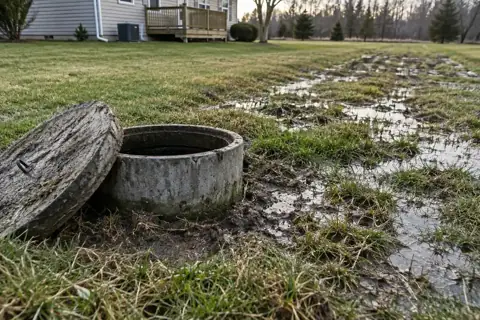
A cesspool is an open-bottomed pit that drains untreated wastewater into the soil. Buyers worry about failure, health rules and the cost of replacing it.
Unlike a septic tank, a cesspool does not hold and settle waste before releasing it. Wastewater soaks straight into the ground around the pit. Older cesspools can collapse, overflow after heavy rain or back up into the house. Many buyers have never heard of one until the inspector writes it up.
Lenders can add another hurdle. Some loan programs and appraisers flag an onsite system that does not meet local health rules, which can stall a financed sale until the system is upgraded.
How do I know if my house has a cesspool?
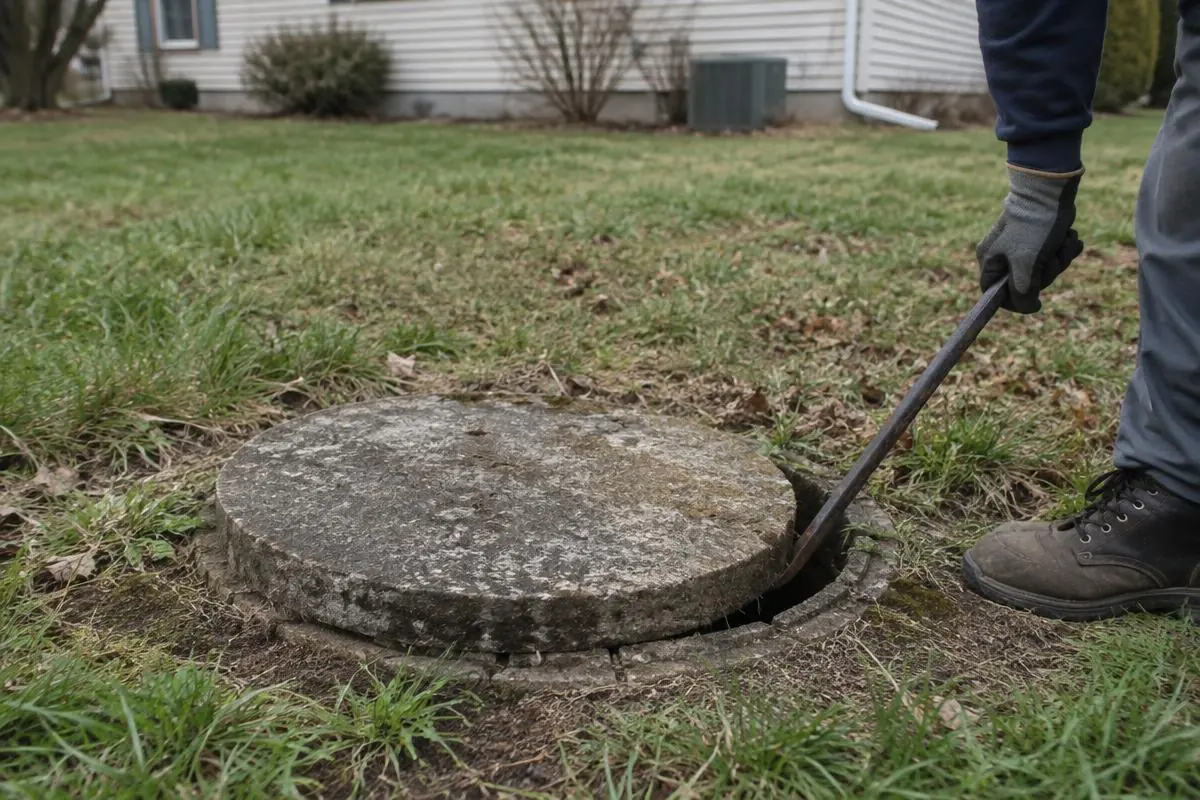
Check the county health department's records, the original permit file or old sale papers. A licensed septic contractor can also locate the system and tell you what it is.
Cesspool versus septic system
The difference is treatment. A septic system settles and treats waste; a cesspool only disposes of it.
| Feature | Cesspool | Septic system |
|---|---|---|
| Tank | None, open-bottomed pit | Sealed tank settles solids |
| Treatment | Little or none | Drain field soil treats liquid |
| Typical age | Often decades old | Varies; many newer |
| Buyer reaction | Usually asks for conversion | Asks for inspection and pumping |
That treatment gap is why health departments push conversions. The Hawaii Department of Health describes cesspools as substandard systems that dispose of wastewater without treating it, often deep in the ground and close to groundwater. A buyer's inspector will usually describe a cesspool the same way, so a written conversion quote in hand helps you answer the question before it becomes a renegotiation.
Federal and state rules
Federal rules target big cesspools, not single homes. States and counties set most of the rules sellers actually face.
The U.S. Environmental Protection Agency's large-capacity cesspool page explains that EPA banned large-capacity cesspools nationwide, with a closure deadline of April 5, 2005. Large-capacity can include duplexes, apartment buildings and homes with a separate in-law unit sharing one cesspool. The underlying regulation, 40 CFR 144.81, lists cesspools as Class V wells but excludes single-family residential cesspools.
So a cesspool serving one house is usually a state and local question. Hawaii is the clearest example. The Hawaii Department of Health estimates about 88,000 cesspools in the state, and Act 125, passed in 2017, requires all of them to be replaced by 2050. Other states and counties have their own sale-time inspection or upgrade rules, so call the local health department before you list.
Get the system inspected and priced
A written inspection and quote turn a scary word into a number buyers can work with.
Hire a licensed septic contractor to pump and inspect the cesspool, measure how far it sits from wells and property lines, and explain what a conversion would need. Ask whether a public sewer line runs along your street; a sewer hookup can cost less than a new septic system in some areas.
Get at least two written quotes. Make sure each one names the system type, permits, soil testing, landscaping repair and the timeline. Our failed septic system guide covers the drain field side of the same decision.
An as-is offer of $345,000 with $3,500 in seller costs leaves $341,500.
Decision tree: convert, credit or sell as-is
Each path should end in a written net figure. Compare those figures side by side.
Cesspool sale: facts before price
- 1
Confirm system
Cesspool, septic or sewer.
- 2
Local rules
State and county sale rules.
- 3
Get quotes
Two written conversion prices.
- 4
Compare
Net proceeds per option.
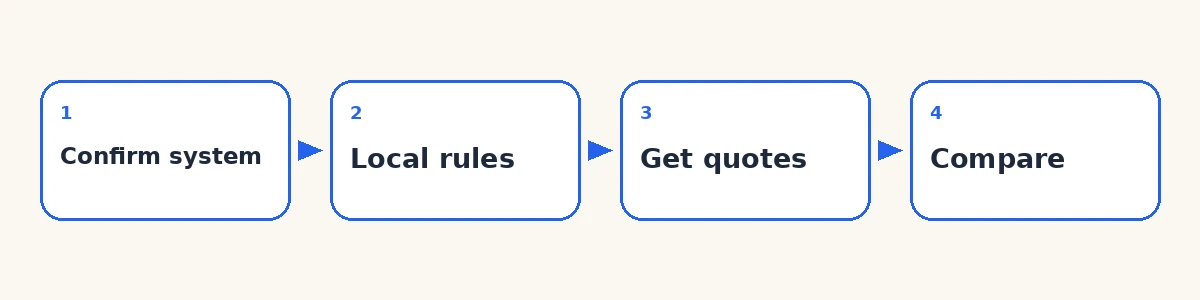
Confirm what is in the ground before anyone prices the fix.
- Working cesspool, no sale rule: disclose it, share the inspection, and expect buyers to price in a future conversion.
- Local rule requires an upgrade at sale: get the conversion quote and ask whether the buyer may take over the work with an escrow holdback.
- Backups or a collapse: compare a full conversion plus yard repair with a written as-is offer.
- Buyer asks for a credit: measure it against your written quotes, not a guess.
Worked example: conversion versus an as-is sale
These figures are labeled examples, not typical prices or SilverCrest results. Replace each number with your own quotes and offers.
Suppose the converted home could list at $395,000 with $24,000 in selling costs, after a $28,000 written septic conversion quote, $3,000 in permits and landscaping and $6,000 in carrying costs while the work and listing run. The example net is $334,000 before any mortgage payoff. An as-is offer of $345,000 with $3,500 in seller costs leaves $341,500.
In this example the as-is path nets more because the conversion and waiting cost more than the price gap. A cheaper sewer hookup could reverse that.
Disclose what you know
Name the system, attach the inspection, and list any backups or repairs. Clear facts protect you better than vague wording.
Describe the system as a cesspool on your seller disclosure form, not "private septic", and note its age, last pumping date and any problems. Our guide to required disclosures when selling a house explains the general rules. If you are selling in Hawaii, see the Hawaii sell page, and expect buyers to ask about the 2050 deadline.
When a cash sale may not be your best option
If a sewer line runs past the house and the hookup quote is modest, connecting first and listing normally may net more.
If the home is otherwise move-in ready and you can wait out a few weeks of yard work, a conversion and a traditional listing is a fair choice. Compare cash offers with listing and see sell as-is or fix up first. Ask any as-is buyer to explain how the cesspool affected their number.
Key takeaways
- A cesspool releases untreated wastewater straight into the ground.
- Federal rules ban large-capacity cesspools, not single-family ones.
- Hawaii requires every cesspool to be replaced by 2050.
- Get an inspection and two written conversion quotes.
- Compare written net proceeds for conversion, credit and as-is paths.
The bottom line
A cesspool calls for records and local rules first, then price. Request a cash offer to see an as-is number, or browse the foundation, roof and mold hub. SilverCrest Estates can close in as little as 21 days when the timing fits your plans.
Frequently asked questions
Can you sell a house with a cesspool?
Yes, in most places. Confirm the system really is a cesspool, check your state and county rules for sales, get a written conversion quote, and compare it with a written as-is offer before you choose a path.
What is the difference between a cesspool and a septic system?
A cesspool is an open-bottomed pit that sends untreated wastewater straight into the ground. A septic system holds waste in a sealed tank first and then sends the liquid to a drain field, which treats it in the soil.
Are cesspools illegal?
Federal EPA rules have banned new and existing large-capacity cesspools since April 2005, but they do not cover a cesspool serving only one single-family home. States such as Hawaii set their own rules, including Hawaii's 2050 replacement deadline.
Sources & further reading
Primary sources we consulted for this article. Rules vary by state and change over time — always confirm against the original source.
- 1Large-Capacity Cesspools
U.S. Environmental Protection Agency
Federal ban on large-capacity cesspools with a closure deadline of April 5, 2005, and the single-family exclusion.
- 240 CFR § 144.81 — Class V injection wells
Legal Information Institute, Cornell Law School
Regulation listing cesspools as Class V wells and excluding single-family residential cesspools.
- 3Cesspools in Hawai'i
Hawaii State Department of Health, Wastewater Branch
About 88,000 cesspools statewide and Act 125 (2017), which requires all cesspools to be replaced by 2050.

About the author
Emily Roberts
Market Analyst
Emily Roberts works with the SilverCrest Estates acquisitions team, helping homeowners across 50+ US markets understand their options and close on their own timeline.
Disclaimer: This article is for general information only and is not legal, tax, or financial advice. Real estate rules vary by state and change over time. Consult a licensed attorney, tax professional, or financial advisor about your specific situation before acting.