Start here: this article is part of our selling your home collection. For the full picture, read our complete guide, How to Sell Your House Fast: The Complete Homeowner's Guide.
Quick answer: Selling a house with meth contamination starts with records, not guesses. Find out whether a health officer has posted or declared the home unfit, get a certified test, and follow your state's cleanup and release process. SilverCrest Estates can make a written as-is offer where state rules allow a sale, so you can compare it with cleaning up first. Check four things: records, testing, cleanup plan and release.
| Step | What to confirm |
|---|---|
| Records | Police report, health notice or unfit order |
| Test | Sampling by a qualified contractor |
| Cleanup plan | Written work plan and cost |
| Release | Clearance or release document on file |
Selling a house with meth contamination: what the problem is
Meth contamination means chemical residue left behind when methamphetamine was made, and sometimes smoked, inside a home. It soaks into drywall, carpet, ductwork and fixtures, and you cannot judge it by looking.
Washington's law on contaminated properties, RCW chapter 64.44, opens with a legislative finding that people can be harmed by residue when properties are rented or sold without being decontaminated. That is the core issue for a seller. The house itself may be sound, but a buyer, lender or insurer will want proof that the residue is gone.
Most sellers in this situation did not cause the problem. It is common after a rental tenant, a relative or a previous owner. The steps below work the same either way.
Find out what is already on record
Start with what officials already know about the property. That decides how much freedom you have to sell as-is.
Ask your local police department whether they responded to a drug lab at the address and request any report. Then call the county or city health department and ask whether they posted a warning, inspected the property or issued an order. Check the county recorder for any recorded notice tied to the parcel.
Under RCW 64.44.020, when Washington law enforcement learns a property is contaminated, it reports to the local health officer. The officer posts a written warning within one working day of notice and inspects within fourteen days. If a landlord believes a tenant contaminated a vacated rental, the owner must contact the local health officer.
What happens if the health officer declares the home unfit?
In Washington, an inspection that finds contamination leads to an order declaring the property unfit and prohibiting its use. That order changes what you can do next.
RCW 64.44.030 says the order is served on occupants and on people with an interest shown in county records, posted on the property, and mailed to anyone with a recorded lien or interest, which includes your mortgage lender. A hearing can be requested within ten days of service. Other states use different rules, so call your own health department rather than assuming Washington's process applies.
Test before you price anything
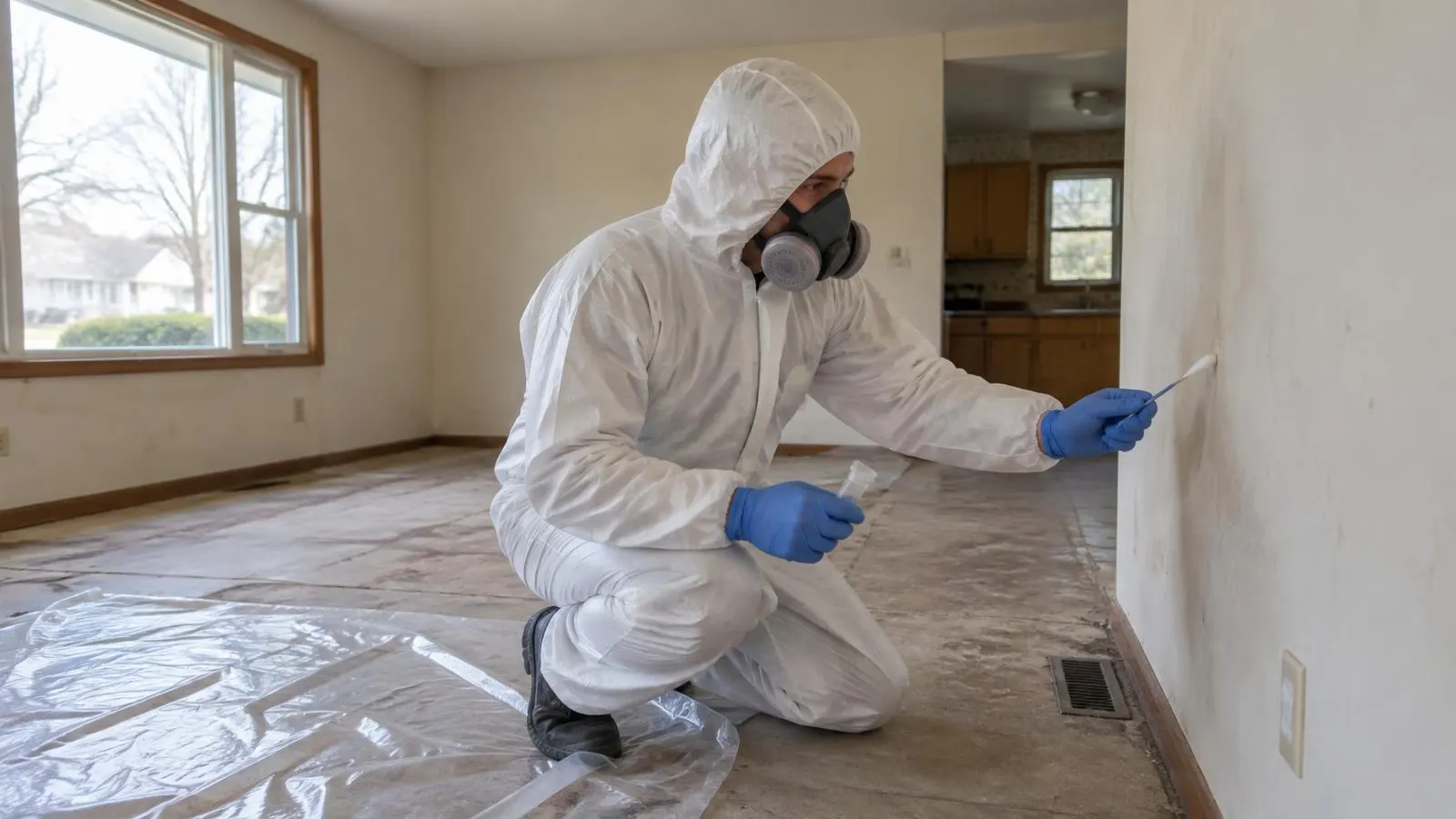
A qualified test tells you whether you are facing a cleanup or a rumor. Without one, every buyer has to guess, and guesses run low.
The EPA's Voluntary Guidelines for Methamphetamine and Fentanyl Laboratory Cleanup (revised August 2021) describe a preliminary assessment, then pre-remediation sampling if needed, before a cleanup plan is written. The same guidelines call for post-remediation sampling to confirm results. The EPA document is voluntary; your state's standard is what counts in a sale.
Hire a contractor your state recognizes for this work. In Washington, RCW 64.44.050 requires an authorized contractor unless the local health officer allows otherwise, and makes the owner responsible for testing and cleanup costs. Ask for the sampling locations, lab results and the standard they tested against, in writing.
Get a written cleanup plan and cost
Price the cleanup from a written scope, not a phone estimate. The scope drives both your repair math and any buyer's offer.
In Washington, the contractor and owner submit a written work plan to the local health officer for approval. After the work is completed, the property is retested and documented, the officer allows reuse, and a release for reuse document is recorded in the property records. A recorded release is the cleanest proof a buyer can get.
Ask each contractor to name what they will remove, what they will clean in place, how they handle the HVAC system, how waste is disposed of and whether final sampling is included. A quote that leaves out ductwork or retesting is not comparable to one that includes them.
The EPA's Local Governments Reimbursement Program can reimburse local governments for some emergency response costs. The EPA guidelines note that long-term remediation, such as hiring a remediation contractor, is generally not eligible. Plan as if the owner pays.
An as-is offer of $262,000 with $2,500 in seller costs leaves $259,500.
Decision tree: clean up first or sell as-is
Each path should end in a written net figure. Compare numbers, not hopes.
Meth contamination: records before price
- 1
Records
Police and health records.
- 2
Test
Qualified sampling results.
- 3
Cleanup plan
Written scope and cost.
- 4
Release
Clearance on file.
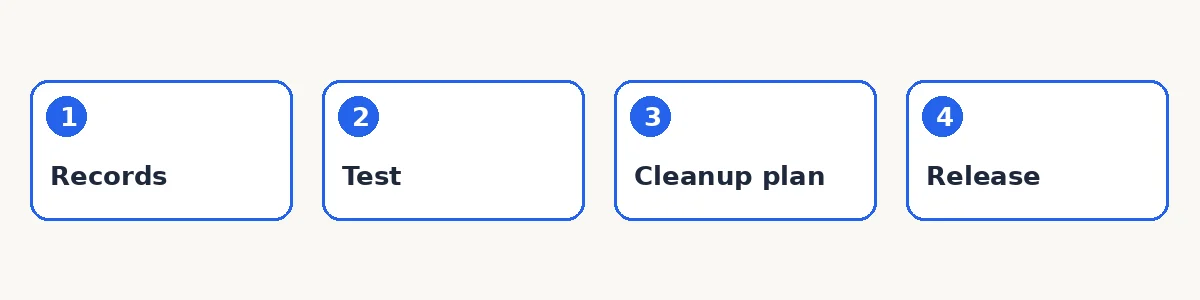
The release document, where your state issues one, is what buyers ask for.
- Order prohibits use: follow the health officer's process; ask whether a sale is allowed before cleanup and what the buyer must do.
- Test shows contamination, no order: compare a written cleanup quote with a written as-is offer.
- Test comes back clean: keep the lab report and share it with buyers.
- No time or cash for cleanup: request a written as-is offer and compare it with the cleaned-up listing figure.
Worked example: cleanup versus an as-is sale
These figures are labeled examples, not typical prices or SilverCrest results. Replace every number with your own quotes and offers.
Suppose a cleaned and released home could list at $310,000 with $20,000 in selling costs, after a $24,000 written cleanup quote that includes testing and HVAC work, plus $6,000 in carrying costs during cleanup and listing. The example net is $260,000 before mortgage payoff. An as-is offer of $262,000 with $2,500 in seller costs leaves $259,500.
In this example the two paths are close. The deciding factors are your time, your cash for the cleanup, and whether the cleanup could reveal more damage. The closing-cost calculator helps you organize the figures.
Disclose with documents
Disclosure rules for drug labs vary by state. Tell the truth on your seller disclosure form and attach records.
Give buyers the police or health records, lab results, the work plan and any release document together. Avoid saying "the house is fine" unless a test supports it. Our guide to required disclosures when selling a house covers the general rules. If the problem started with a renter, selling a house with tenants covers lease and access issues.
If the home is in Washington, the Washington sell page and the Spokane page have local context.
When a cash sale may not be your best option
A cash sale is not automatically the right answer. If testing shows light residue and a cleanup is affordable, finishing it and listing may net more.
If your written figures show a cleaned and released home nets clearly more after carrying costs, that is a sound choice. A buyer making an as-is offer should be able to explain how the contamination affected their number. Compare cash offers with listing and see sell as-is or fix up first for the broader trade-off.
Key takeaways
- Pull police, health and county records before anything else.
- Test with a qualified contractor and keep the lab report.
- Follow your state's cleanup process and get any release document.
- Plan as if the owner pays for testing and cleanup.
- Compare written net proceeds for cleanup and as-is paths.
The bottom line
Meth contamination is a records problem as much as a cleanup problem. Request a cash offer to compare an as-is option, or browse the tired landlord hub if a rental started it. SilverCrest Estates can close in as little as 21 days when title and state requirements allow; choose a later date when you need more time.
Frequently asked questions
Can you sell a house that was a meth lab?
Often yes, but state rules decide how. In Washington, a health officer can declare a contaminated home unfit and prohibit its use until an authorized contractor cleans it and a release for reuse is recorded. Ask your health department what applies before listing.
Who pays for meth cleanup in a house?
Usually the owner. Washington's RCW 64.44.050 makes the owner responsible for testing and decontamination costs. The EPA notes its local government reimbursement program generally does not cover long-term remediation such as hiring a cleanup contractor.
How do I find out if a house was used as a meth lab?
Ask the local police for any drug lab report at the address, ask the county or city health department about warnings or orders, and check county records. A qualified test is the only way to confirm residue levels.
Sources & further reading
Primary sources we consulted for this article. Rules vary by state and change over time — always confirm against the original source.
- 1RCW Chapter 64.44: Contamination by Hazardous Chemicals
Washington State Legislature
Reporting, unfit orders, authorized contractors, owner costs and the recorded release for reuse.
- 2Voluntary Guidelines for Methamphetamine and Fentanyl Laboratory Cleanup
U.S. Environmental Protection Agency
Preliminary assessment, pre- and post-remediation sampling and cleanup plans (revised August 2021).
- 3Local Governments Reimbursement Program
U.S. Environmental Protection Agency
Reimbursement for local emergency response costs; long-term remediation generally not eligible.

About the author
Lisa Anderson
Homeowner Advocate
Lisa Anderson works with the SilverCrest Estates acquisitions team, helping homeowners across 50+ US markets understand their options and close on their own timeline.
Disclaimer: This article is for general information only and is not legal, tax, or financial advice. Real estate rules vary by state and change over time. Consult a licensed attorney, tax professional, or financial advisor about your specific situation before acting.