Start here: this article is part of our distressed sales collection. For the full picture, read our complete guide, Can You Sell a House With Foundation Problems? Your Complete Guide.
Quick answer: Yes, you can sell a house with an unfinished renovation. The two things to sort out are open building permits (which need to be closed, transferred, or disclosed) and financing (most mortgage lenders won't lend on a home missing a working kitchen, bathroom, or safe systems). Selling to a direct cash buyer like SilverCrest Estates avoids the lender problem entirely; we buy mid-project homes as-is.
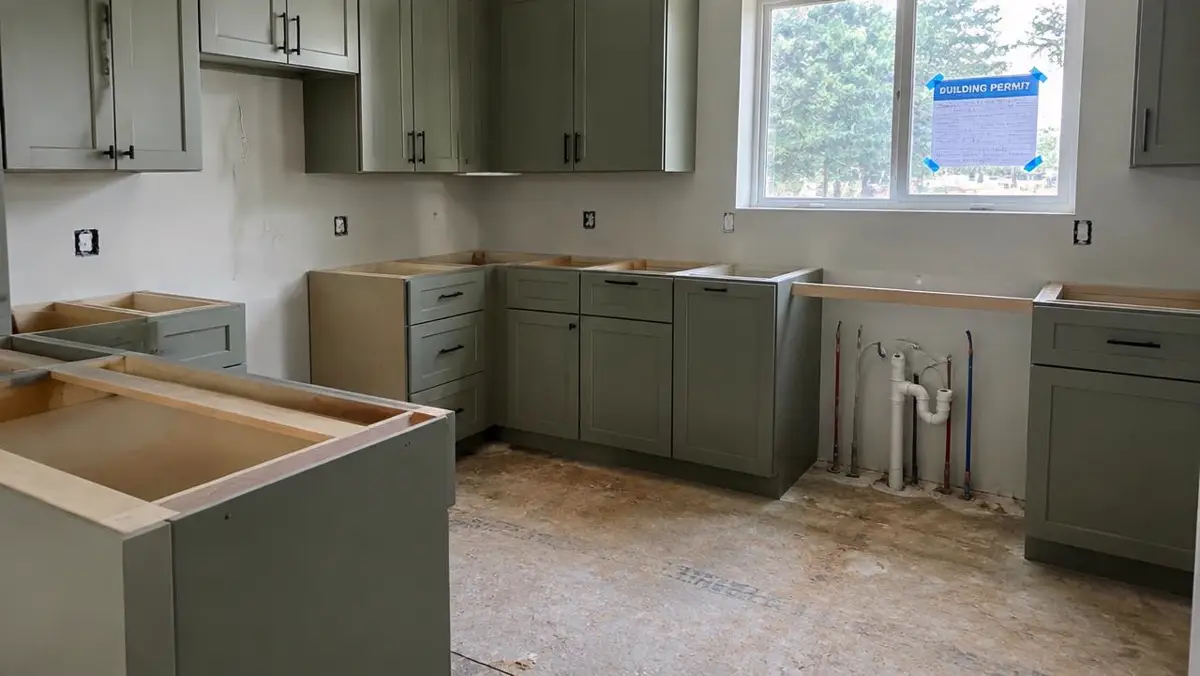
Remodels stall for ordinary reasons. The budget ran out. The contractor disappeared. A divorce, a job change, or a health issue changed the plan. Whatever happened, the house is now half torn apart and the question is whether to keep pouring money in or sell it the way it is.
Step 1: Find out what permits are open
Call your city or county building department, or search its online permit portal by address. You're looking for permits that were issued but never received a final inspection. Each one is in one of these states:
- Open and active — work can still be finished and inspected.
- Expired — the permit lapsed; you may need to renew it or apply again.
- Unpermitted work — work was done without a permit at all, which is handled like a code violation.
Open permits often show up on a buyer's municipal lien search, and title companies or buyers may require them resolved before closing.
Step 2: Understand why lenders hesitate
FHA, VA, and most conventional loans require a home to meet minimum property standards: safe, sound, and with working utilities, kitchen, and bathroom. A stripped kitchen, missing flooring, or exposed wiring can fail an appraisal outright, which removes most financed buyers from your pool. Renovation loans exist, but they take longer and add contractor approvals.
Step 3: Pick your path
Options for a half-finished house
| Option | Cost to you | Timeline | Best when |
|---|---|---|---|
| Finish the project, then list | Remaining budget + holding | 3–9 months | Funds and a reliable contractor |
| Close permits, list as a fixer | Permit and inspection fees | 2–5 months | Work is near done and inspectable |
| Sell as-is to a cash buyer | None | As little as 21 days | Budget is gone or timeline matters |
Finishing makes sense when the remaining work is small and well defined. It rarely makes sense when the remaining scope is unknown, the contractor has walked off, or you'd be borrowing to finish.
Illustrative: finishing a stalled kitchen and bath before listing
Older homes: lead-safe rules
If your home was built before 1978 and the renovation disturbed painted surfaces, federal lead-safe work rules apply to contractors, and sellers must provide the federal lead-based paint disclosure. Keep any records you have.
What to disclose
Be specific: what was started, what was finished, which permits are open, and why the project stopped. Clear disclosure protects you after the sale and builds trust with any buyer. See our guide on required seller disclosures.
When a cash sale may not be your best option
If the repairs are small (paint, fixtures, a minor roof patch) and you have the cash and time to finish them, fixing up and listing can return more than the repair cost. That's also true when the house is in a neighborhood where updated homes sell quickly at a premium. A cash, as-is sale makes the most sense when repairs are large, uncertain, or you'd have to borrow for them. Compare an as-is cash offer with listing using real contractor bids — not guesses — before you decide.
What a half-finished project does to value
An unfinished renovation affects value in two directions. The work that's done may add value; the work that isn't done subtracts more than its repair cost, because buyers price in risk. A buyer looking at a gutted kitchen doesn't just see the cost of cabinets. They see unknowns behind the walls, a permit they'll have to take over, and months without a usable room.
That's why the appraisal gap matters. A lender's appraiser values the house as it stands, not as it will be. If the house can't be financed in its current state, your buyer pool shrinks to people paying cash or using renovation loans, which are slower and come with their own inspections and draw schedules.
Whatever happened, the house is now half torn apart and the question is whether to keep pouring money in or sell it the way it is.
Your three realistic paths, compared
| Path | Best when | Watch out for |
|---|---|---|
| Finish the work, then list | You have the money, time, and a reliable contractor | Cost overruns, contractor delays, carrying costs while you finish |
| Finish only the "must-haves" | One working kitchen or bathroom would make it financeable | You may still have open permits to close |
| Sell as-is to a cash buyer | You're out of money, time, or patience | The price reflects the unfinished work |
The middle path is often overlooked. Sometimes installing a basic, functional kitchen or finishing one bathroom is enough for a buyer's lender to approve a loan. Ask a local agent and a lender what the minimum would be before you spend anything.
Dealing with your contractor
Many unfinished renovations stall because of a contractor dispute. Before you sell, find out:
- Was the contractor paid in full for work done? If not, they may have the right to file a mechanic's lien against the property, which would need to be resolved at closing.
- Is there a written contract? If you're ending the relationship, a written termination and final invoice protects you.
- Who pulled the permit? Some jurisdictions require the permit holder to close it or transfer it. If the contractor pulled it, you may need their cooperation or a new permit.
- Are there warranties on completed work? These may transfer to the buyer and can be a selling point.
If there's already a lien, read our guide on selling a house with a lien.
Documents to gather before you talk to buyers
- Copies of every permit and inspection record from the building department.
- Contractor contracts, invoices, and receipts for materials.
- Plans or drawings, if you had them.
- Photos of the work before walls were closed, which help buyers see what's behind the drywall.
- A list of materials on site that will be included in the sale.
This paperwork makes buyers more comfortable and can improve your offer. A direct buyer like SilverCrest Estates can buy mid-project as-is; see our unfinished remodel page for how that works, or request an offer.
Pricing an unfinished project
Start by estimating the home's value once finished, then subtract the realistic cost to complete, plus a cushion for unknowns and the buyer's time. That's roughly how buyers will think. Getting a contractor's written quote to finish the work helps you make that case.
What to do this week
Call your building department and ask for a list of every open permit on your address. Gather your contractor contracts and invoices, and photograph the current state of each room. Ask one contractor for a written quote to finish just the essentials, and ask a lender what the minimum would be for a buyer's loan. With those three pieces of information, you can compare finishing, partial finishing, or selling as-is with real numbers rather than guesses.
Key points to remember
- Find every open permit before talking to buyers.
- Lenders may not finance homes missing a working kitchen, bathroom, or safe systems.
- Finishing only the essentials can sometimes make a home financeable.
- Resolve contractor payments to avoid mechanic's liens at closing.
- Cash buyers can purchase mid-project homes as-is.
The bottom line
An unfinished remodel is a math problem: the cost and time to finish versus the price you'd get as-is. Get a contractor bid for the remaining work, then get a cash offer for the house as it stands. Our unfinished remodel page explains how we handle open permits and partial work.
Frequently asked questions
Can I sell my house with an open building permit?
Usually yes, but it must be dealt with. You can finish the work and pass final inspection, have the permit transferred to the buyer where the city allows it, or sell as-is to a buyer who accepts the open permit. Disclose it either way, since it often appears on municipal lien searches.
Will a mortgage lender finance a house with an unfinished kitchen?
Often not. FHA, VA, and many conventional loans require a working kitchen, bathroom, and safe systems. A home missing those may fail appraisal, leaving renovation loans or cash buyers as the realistic options. That's why stalled remodels commonly sell to cash buyers.
Should I finish my renovation before selling?
Finish it if the remaining work is small, priced firmly, and you can carry the house for a few months. If the scope is unclear, the contractor left, or you'd need to borrow, compare the full cost of finishing against an as-is cash offer before spending more.
Sources & further reading
Primary sources we consulted for this article. Rules vary by state and change over time — always confirm against the original source.
- 1Single Family Housing Policy Handbook 4000.1
U.S. Department of Housing and Urban Development
FHA minimum property requirements that unfinished homes often fail.
- 2Lead Renovation, Repair and Painting Program
U.S. Environmental Protection Agency
Lead-safe rules for renovating homes built before 1978.
- 3Lead-Based Paint Disclosure Rule for Real Estate
U.S. Environmental Protection Agency
Federal disclosure required for most homes built before 1978.

About the author
Marcus Johnson
Seller Success Manager
Marcus Johnson works with the SilverCrest Estates acquisitions team, helping homeowners across 50+ US markets understand their options and close on their own timeline.
Disclaimer: This article is for general information only and is not legal, tax, or financial advice. Real estate rules vary by state and change over time. Consult a licensed attorney, tax professional, or financial advisor about your specific situation before acting.