Start here: this article is part of our seller questions collection. For the full picture, read our complete guide, Can You Sell a House With a Mortgage? Everything You Need to Know.
Quick answer: You can sell a house where someone died, and in many states you do not have to volunteer a natural death. SilverCrest Estates suggests checking your state's disclosure rule, arranging professional cleaning if the death was unattended, answering any buyer question honestly, and pricing based on the house itself, since most buyers focus on condition more than history.
| Situation | Typical approach |
|---|---|
| Natural death, found quickly | Usually no special steps |
| Unattended death | Professional cleaning first |
| Violent or publicized death | Expect questions; price carefully |
| California, within three years | Consider disclosure |
Why this question matters to sellers
Most people who sell after a death are heirs or surviving family. The house carries memories as well as paperwork.
Many sales in this situation happen alongside probate or an estate settlement. Our guides to selling a house in probate and selling an inherited house fast cover the legal side. This article focuses on disclosure, cleaning and buyer reactions.
Do you have to disclose a death?
The answer depends on your state and the circumstances. No single national rule covers it.
Disclosure duties for real estate are mostly set by state law and the state's seller disclosure form. Many states treat a death as a "stigma" rather than a physical defect, and some have statutes saying sellers need not disclose it. Others are silent, leaving the question to general rules against misrepresentation.
California's three-year rule
California is the clearest example. Civil Code section 1710.2 says a seller and agent are not liable for failing to disclose a death on the property that occurred more than three years before the buyer's offer. The same section says a seller need not disclose that an occupant had or died from HIV/AIDS. It does not protect anyone who makes an intentional misrepresentation in response to a direct question.
Many California sellers disclose deaths within the three-year window, because the statute's protection covers only older deaths.
Never misstate facts
In every state, lying in response to a direct question can create liability. If a buyer asks, answer honestly and briefly.
Disability and fair housing
A person's illness is not a defect in the house. Fair housing law protects people with disabilities.
The HUD fair housing office explains protections against disability discrimination, which courts and agencies have applied to HIV status. That is part of why California's statute specifically addresses HIV/AIDS.
Cleaning after an unattended death
If a death went unnoticed for days, specialized cleaning is needed. It protects health and the house.
Trauma or biohazard cleaning companies remove contaminated materials, treat odors and document the work. Ask for a written scope, a certificate of completion and photos. Some homeowners policies cover part of the cost; call the insurer before hiring. Once cleaning is done, ordinary repairs like new flooring or drywall can be handled by regular contractors.
How buyers react
Buyer reactions vary widely. Most care more about condition, price and location.
A peaceful natural death in an older home rarely changes the sale much. A violent or widely reported event can reduce interest from some buyers and lengthen time on market. Online searches and neighbors mean buyers may learn about high-profile events anyway, so plan your answer.
Worked example: a parent's house after an unattended death
These numbers are an example only, not a SilverCrest Estates case. An elderly father died at home and was found after several days. His two children inherit a $230,000 house with no mortgage in a state with no specific death disclosure rule.
Selling a house where someone died: steps
- 1
Check state law
Death disclosure rules.
- 2
Clean properly
Specialist if needed.
- 3
Answer honestly
Never misstate facts.
- 4
Price and sell
Buyers vary.
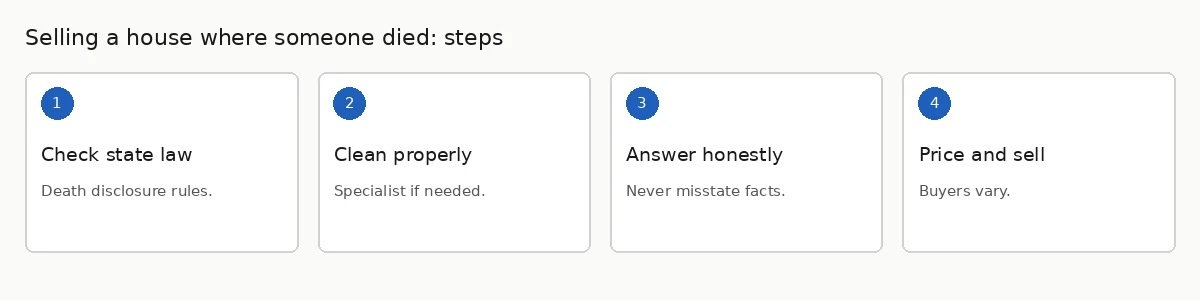
Check your state, then answer honestly.
Professional cleaning costs $6,500, with $2,000 covered by the father's homeowners policy. New flooring in one room costs $3,200. With the house cleaned and refreshed, the children list it and answer honestly when one buyer asks. After an assumed $18,000 in selling costs, they net about $204,000 before estate expenses. Selling as-is without cleaning would likely have drawn far lower offers.
His two children inherit a $230,000 house with no mortgage in a state with no specific death disclosure rule.
Taking care of yourself and family
Selling the house where a loved one died is emotional. Pace the decisions.
Take photos and keep items you want before cleaners or buyers arrive. Ask a friend to handle showings if visits are hard. If siblings disagree about timing, our guide to inherited houses when siblings disagree offers practical steps.
Taxes and title
The death itself also changes the paperwork. Check basis and authority to sell.
Heirs usually receive a basis adjusted to the value at death; see our guide to capital gains on inherited property. The person signing must have authority, such as letters from the probate court or a recorded survivorship affidavit.
What to say if a buyer asks
A short, factual answer works best. You do not need to share private details.
For example: "Yes, the previous owner passed away in the home last year. The house was professionally cleaned afterward, and we have the certificate." Keep medical details private, and never guess about causes you do not know. If an agent represents you, agree on the wording in advance so every buyer hears the same answer.
Questions to ask a cleaning company
Not every cleaner is equipped for an unattended death. Ask before you hire.
- Are you trained and equipped for biohazard and trauma cleanup?
- Will you remove and dispose of contaminated flooring and drywall?
- Do you provide a written scope, photos and a certificate of completion?
- Will you bill the homeowners insurer directly if coverage applies?
Handling belongings and the estate
Personal property often needs attention before the house can be shown. Sort it in stages.
Set aside documents, valuables and family keepsakes first. Then decide what to donate, sell or discard. If the estate is in probate, the personal representative may need court permission before giving away items of value.
When a cash sale may not be your best option
A death in the house does not require a cash sale. If the house is clean, in good shape and the family can wait, listing usually nets more.
A cash sale helps when the house needs cleaning and repairs the family cannot manage, heirs live far away, or a quick, private sale feels better. Compare a cash offer with listing before deciding.
Key takeaways
- Disclosure rules for deaths vary by state.
- California protects sellers for deaths more than three years before the offer.
- Never misstate facts when a buyer asks.
- Use professional cleaners after an unattended death.
- Most buyers focus on condition and price.
The bottom line
Check your state's rule, clean properly, answer honestly and price on the house's merits. Visit the probate and inherited homes hub for related guides, or request a written cash offer; SilverCrest Estates can close in as little as 21 days when title is ready.
Frequently asked questions
Do you have to disclose a death in a house?
It depends on the state. Many states do not require sellers to volunteer a natural death. California's Civil Code 1710.2 protects sellers from liability for not disclosing a death that occurred more than three years before the offer, but sellers must not lie when asked.
Does a death in a house lower its value?
It can for some buyers, especially after a violent or widely reported death. Many buyers care little about a natural death, particularly when the house is clean and well presented.
Who cleans a house after an unattended death?
Specialized trauma or biohazard cleaning companies handle unattended deaths. Homeowners insurance sometimes covers part of the cost, so check the policy before hiring.
Sources & further reading
Primary sources we consulted for this article. Rules vary by state and change over time — always confirm against the original source.
- 1California Civil Code section 1710.2
California Legislative Information
Three-year death disclosure rule.
- 2
- 3Fair Housing and Equal Opportunity
U.S. Department of Housing and Urban Development
Disability protections under fair housing law.

About the author
Emily Roberts
Property Acquisition Specialist
Emily Roberts works with the SilverCrest Estates acquisitions team, helping homeowners across 50+ US markets understand their options and close on their own timeline.
Disclaimer: This article is for general information only and is not legal, tax, or financial advice. Real estate rules vary by state and change over time. Consult a licensed attorney, tax professional, or financial advisor about your specific situation before acting.