Start here: this article is part of our seller questions collection. For the full picture, read our complete guide, Can You Sell a House With a Mortgage? Everything You Need to Know.
Quick answer: You can sell a house with a bad chimney by repairing it, offering the buyer a credit, or selling as-is with the inspection report disclosed. SilverCrest Estates suggests getting a written chimney inspection first, collecting two repair bids, and comparing your net under each route, because a lender may require safety repairs before a financed buyer can close.
| Problem found | Typical response |
|---|---|
| Loose or missing mortar | Repoint; often a modest repair |
| Cracked crown or missing cap | Repair crown, add cap |
| Cracked or damaged flue liner | Reline before use |
| Leaning or separating stack | Rebuild or remove; larger job |
Why chimneys come up in home sales
Chimneys fail slowly and out of sight. Most sellers learn about the problem from the buyer's inspector.
Heating equipment is a leading cause of home fires. The U.S. Fire Administration reports that heating fires remained the second leading cause of home fires in 2021 and recommends having heating equipment and chimneys cleaned and inspected each year by a professional. Because of that risk, buyers, insurers and lenders all pay attention when an inspector writes "chimney" in the summary.
What inspectors usually flag
A general home inspector looks from the roof or ground and recommends a specialist. A chimney professional looks inside.
Common findings include:
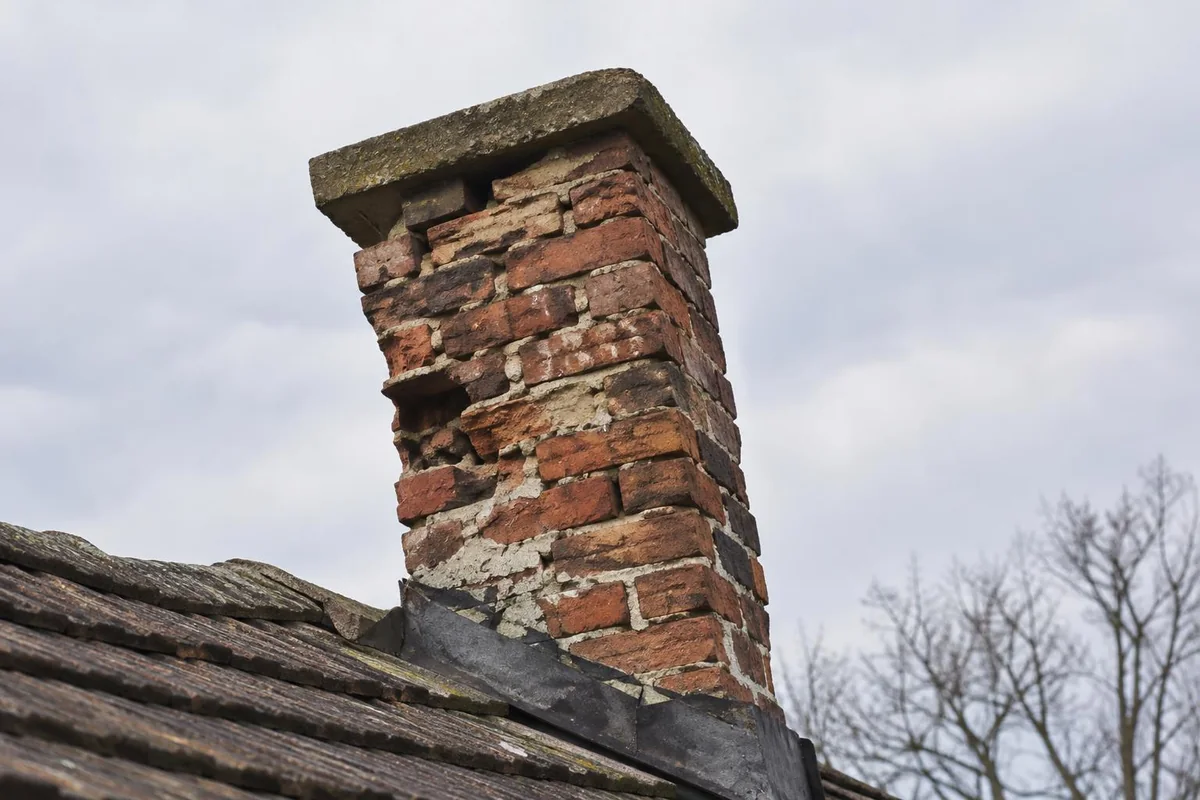
- Spalling or loose bricks from water getting into masonry and freezing.
- Deteriorated mortar joints that let water in and weaken the stack.
- Cracked crown at the top, which sends water down the chimney.
- Missing cap, inviting rain, animals and debris.
- Damaged flue liner, which can let heat or gases reach framing.
- Failed flashing where the chimney meets the roof, a common leak source.
- Creosote buildup in wood-burning flues.
The EPA's Burn Wise program covers safe wood-burning practices and why proper chimney maintenance matters for fireplaces and wood stoves.
Step 1: get a sale-time chimney inspection
A written report turns a vague worry into a priced list. Get one before you set the price.
Chimney sweeps commonly perform a Level 2 inspection when a property changes hands, which usually includes a camera scan of the flue. The report should list each defect, photos, and whether the fireplace is safe to use. Share it with buyers so both sides negotiate from the same facts.
Step 2: price the repair
Chimney repairs range from small to substantial. Two written bids give you a realistic number.
These ranges are examples only, not quotes, and vary widely by region, height and access:
- Repointing a section of mortar: a few hundred to a few thousand dollars.
- New crown and cap: often under a few thousand dollars.
- Stainless steel flue liner: often several thousand dollars.
- Rebuilding the stack above the roof: can run well into five figures.
Ask each contractor whether the bid includes flashing, roof patching and permits.
Step 3: choose repair, credit or as-is
Each route changes your net and your timeline. Match it to the size of the problem.
Repair before listing
Small, clear repairs often pay for themselves because they remove the problem from the buyer's inspection. Keep invoices and the contractor's warranty for the disclosure file.
Offer a credit
For larger jobs, a closing credit lets the buyer choose the contractor. Some lenders limit credits or require the work before closing, so ask early.
Sell as-is
If the chimney is one of several big issues, selling as-is may be simpler. Our guide to selling a house that needs major repairs explains how buyers price condition. The bad roof guide covers the roof leaks chimneys often cause.
Chimney sweeps commonly perform a Level 2 inspection when a property changes hands, which usually includes a camera scan of the flue.
Worked example: a leaning stack
These numbers are an example only, not a SilverCrest Estates case. A 1950s house has a chimney leaning away from the roof, a cracked liner and leaking flashing. Two bids come in at $14,000 and $17,500 for a rebuild above the roofline plus a new liner.
Selling a house with a bad chimney: decision path
- 1
Get a chimney inspection
Level 2 at sale time.
- 2
Price the fix
Two written bids.
- 3
Choose a route
Repair, credit or as-is.
- 4
Disclose it
Report goes to buyers.
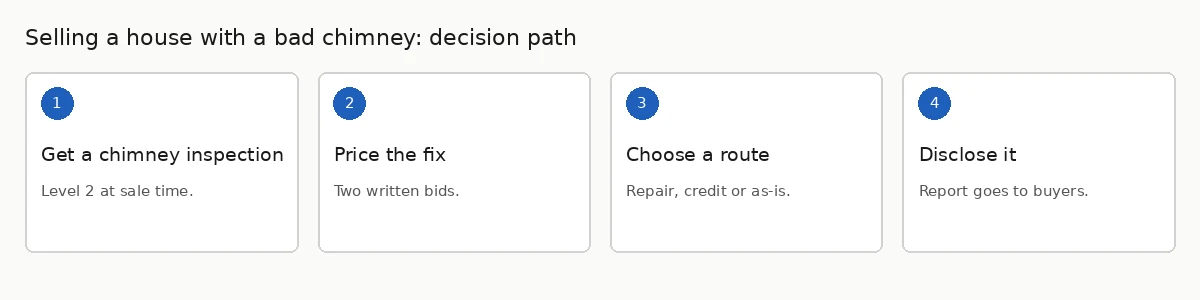
Inspect, price, then decide.
Repaired, the house might list at $300,000. Unrepaired, buyers would likely discount by more than the bid to cover risk. In this example, the seller repairs for $14,000, sells at $300,000 and pays about $24,000 in commission and closing costs, netting about $262,000 before the mortgage. An as-is offer of $255,000 with lower costs could land close to that, with no contractor schedule to manage.
Removing the chimney instead
Some owners never use the fireplace. Taking the stack down can be cheaper than rebuilding.
Removal above the roofline, capping the flue and patching the roof can make sense when the fireplace is decorative or the house has another heat source. Check local permit rules, and disclose that the fireplace is no longer usable.
Disclose what you know
Most states expect sellers to disclose known material defects. A chimney report you received is something you know.
The Cornell overview of disclosure explains the general legal idea. State forms often ask directly about fireplaces, chimneys and roof leaks. Our seller disclosure guide covers the common questions. Disclosing early prevents a buyer from walking away late in escrow.
Insurance and lender questions
Insurers may ask about wood-burning appliances, and lenders may require safety repairs. Plan for both.
Government-backed loans often require that hazards be fixed before closing. If a buyer's appraiser flags the chimney, the lender may set a repair condition. A cash buyer is not bound by those conditions.
Questions to ask a chimney contractor
A few questions separate a solid bid from a vague one. Ask them before you sign.
- Does the price include the flue liner, crown, cap and flashing, or only the stack?
- Is a permit needed, and who pulls it?
- What warranty comes with the work, and is it transferable to a buyer?
- Will you provide before and after photos for my disclosure file?
When a cash sale may not be your best option
A bad chimney does not require a cash sale. If the repair is small and the rest of the house shows well, fixing it and listing usually nets more.
A cash sale helps when the chimney is part of a larger list, such as roof, foundation or electrical problems, or when you need a firm date. Compare a cash offer with listing after pricing the repair.
Key takeaways
- Chimney defects are common inspection findings and safety concerns.
- Get a written sale-time inspection before pricing the house.
- Collect two bids; repair small items, credit or sell as-is for large ones.
- Removal can beat rebuilding if you never use the fireplace.
- Disclose known chimney defects.
The bottom line
Turn the chimney into a priced decision: inspect, bid, then repair, credit or sell as-is. Visit the structural issues hub for related guides, or request a written cash offer to compare; SilverCrest Estates can close in as little as 21 days.
Frequently asked questions
Can you sell a house with a bad chimney?
Yes. You can repair it, give the buyer a credit, or sell as-is with full disclosure. Lenders may require repairs when the chimney is a safety hazard, which often pushes sellers toward a credit or a cash buyer.
Should I get a chimney inspection before selling?
Usually yes. The U.S. Fire Administration recommends having chimneys cleaned and inspected each year by a professional, and a written report gives buyers and you the same facts before negotiations.
Do I have to disclose a cracked chimney?
Most states require sellers to disclose known material defects. A cracked flue, leaning stack or known leak is the kind of condition buyers and disclosure forms typically ask about.
Sources & further reading
Primary sources we consulted for this article. Rules vary by state and change over time — always confirm against the original source.
- 1
- 2
- 3

About the author
Michael Thompson
Home Selling Expert
Michael Thompson works with the SilverCrest Estates acquisitions team, helping homeowners across 50+ US markets understand their options and close on their own timeline.
Disclaimer: This article is for general information only and is not legal, tax, or financial advice. Real estate rules vary by state and change over time. Consult a licensed attorney, tax professional, or financial advisor about your specific situation before acting.