Start here: this article is part of our selling your home collection. For the full picture, read our complete guide, How to Sell Your House Fast: The Complete Homeowner's Guide.
Quick answer: Selling a house with a shared driveway starts with confirming legal access, not estimating a discount. Gather the deed, recorded easement, survey and maintenance records. SilverCrest Estates can compare an as-is option, but cash does not cure title defects. Check four things before signing: access, future-owner rights, maintenance and closing conditions.
| Document | What to confirm |
|---|---|
| Deed and easement | Who can use the driveway |
| Survey or site plan | Where the driveway crosses boundaries |
| Maintenance records | Who pays and how decisions work |
| Title review | What must be resolved before closing |
Selling a house with a shared driveway: verify access first
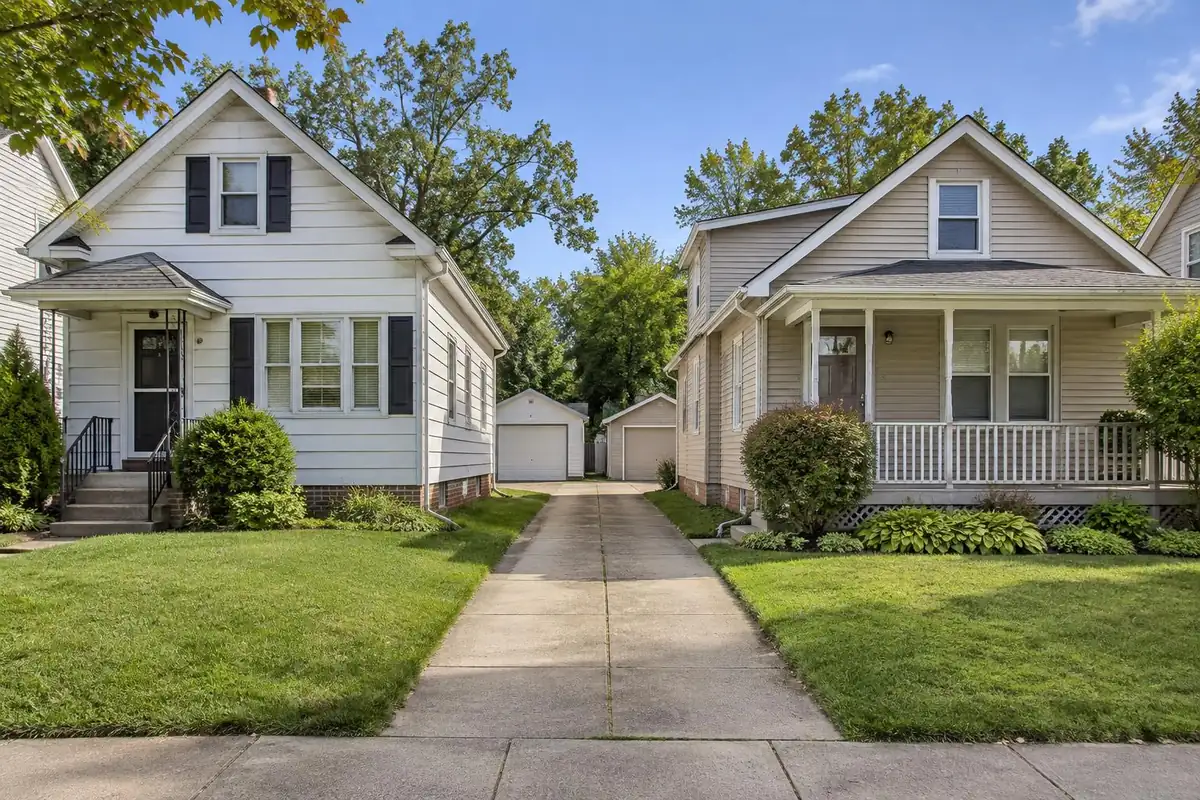
A shared driveway can be workable when the rights and responsibilities are clear. Its appearance alone does not tell a buyer whether the next owner will have enforceable access.
Start with your deed and any recorded agreement. Does the driveway sit on your parcel, the neighbor's parcel, or both? Does an easement describe access across land you do not own? Is the route shown on the available survey consistent with the driveway actually used?
Keep those questions separate from whether you and your current neighbor get along. A friendly arrangement can make daily life easy without answering what happens after either property changes hands. Buyers need documents they can review, not just a promise that nobody has complained. Do not call a handshake arrangement a recorded right unless the records support it.
Build a document file before accepting an offer
Collect existing records first, then ask a title professional which gaps require investigation. Avoid paying for a new survey before learning what the transaction actually needs.
Your file should include the deed, relevant easements, available survey, maintenance agreement, repair invoices and correspondence about access. Label originals, copies and unanswered questions. If a document references an exhibit or earlier instrument, obtain that referenced material rather than handing over an incomplete page.
The CFPB's title-services guidance distinguishes title insurance, a title search and related closing services. Those are useful parts of a transaction, but a general explanation is not a determination that your driveway rights are adequate. Ask who will review the actual documents and whether survey or other specialist input is needed.
Does a shared driveway automatically prevent financing?
No blanket rule follows from the driveway being shared. The lender and title review depend on the actual access rights and applicable loan requirements.
Fannie Mae's title exceptions guidance identifies mutual easement agreements establishing joint driveways as a possible minor title impediment when all future owners have unlimited and unrestricted use. That condition matters. It does not approve every driveway, guarantee a mortgage, or replace the lender's review of the transaction.
Separate access rights from maintenance obligations
A right to drive across land and an obligation to repair pavement are different questions. Ask the reviewer to identify which documents address each issue.
Check who pays for resurfacing, snow removal, drainage repairs and damage. Does the agreement explain cost allocation or approval of work? Does it address parking or obstruction? Record what it actually says; do not fill in missing terms from how the neighbors currently behave.
Fannie Mae's site-appraisal guidance discusses adequate vehicular access and separately describes private-street maintenance requirements and exceptions. A private street is not automatically the same thing as your shared driveway. Do not assume every shared driveway nationwide legally requires the identical maintenance agreement.
If a buyer requests a new agreement, establish the exact issue, who must sign and whether recording is needed before agreeing to a deadline. A seller cannot promise a neighbor's cooperation on the neighbor's behalf.
A four-part checklist for shared-driveway sale decisions
Resolve the document questions before comparing headline offer prices. This checklist helps you distinguish an ordinary shared feature from an unresolved access issue.
Shared driveway: access before price
- 1
Gather
Collect the deed, easement and survey.
- 2
Verify
Review access and future-owner rights.
- 3
Clarify
Identify maintenance responsibilities.
- 4
Compare
Check written sale conditions.
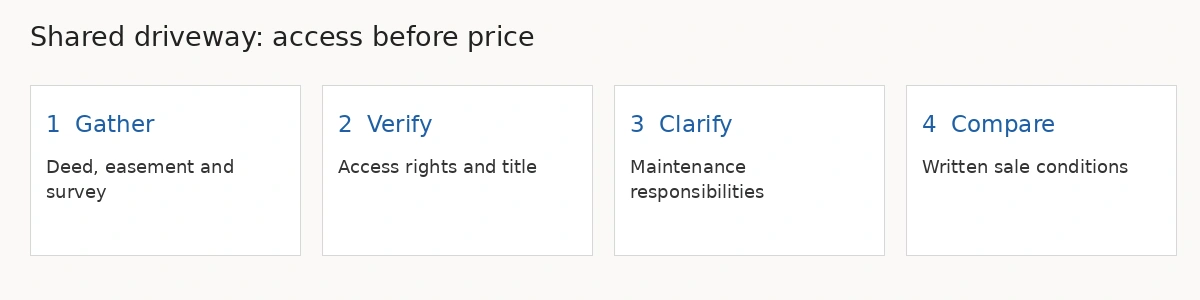
Access rights and maintenance responsibilities belong in separate parts of the document review.
- Can the reviewer identify the access right and its scope?
- Does the documentation address future owners rather than only named current neighbors?
- Are repair responsibilities understandable and documented?
- Does the offer state what remains unresolved and who handles it?
For wider closing preparation, use our seller's guide and closing-day guide. Keep the actual review findings with the offer rather than treating the checklist as a legal conclusion.
Suppose a listing offer is $310,000, expected selling expenses are $19,000 and agreed driveway work is $4,000.
Explain known driveway problems without guessing
Give buyers accurate records and a clear account of known conditions. State and local disclosure obligations vary; an as-is clause is not permission to hide an access dispute.
Describe what you know: a blocked route, disagreement about resurfacing, drainage issue, or document the neighbor has challenged. Separate an observed event from your interpretation of legal rights. For example, “the neighbor parked across the entrance twice last month” is different from asserting that the neighbor can permanently revoke access.
Our seller-disclosure guide explains why records matter. If a title issue accompanies the driveway concern, see selling a house with a lien and the liens and judgments hub. A driveway easement itself is not necessarily a lien; these are different items to discuss during title review.
Compare listing and cash offers using actual conditions
There is no supported universal shared-driveway price discount. Compare local sale evidence, written offers and property-specific obligations instead of subtracting a percentage found online.
Ask each buyer what documentation they require, whether an unresolved issue affects their offer and what happens if the review takes longer. A cash buyer may avoid mortgage underwriting, but still needs a transaction that can close with acceptable title and access. Cash payment does not create an easement or settle a dispute.
Use our closing-cost calculator to organize quoted expenses. Keep loan payoff, taxes and any driveway work separate so you can see what changes between offers. Do not add a guessed legal expense or repair allowance simply to make one option look better.
Worked example: why the conditions can change the better offer
These figures illustrate arithmetic, not typical prices or SilverCrest results. Replace every number with your own written offer and quotes.
Suppose a listing offer is $310,000, expected selling expenses are $19,000 and agreed driveway work is $4,000. The example net is $287,000 before mortgage payoff and taxes. A $292,000 cash offer with $2,000 in seller expenses gives $290,000 before the same deductions.
That comparison only works if the cash buyer actually accepts the documented condition and the $4,000 work is genuinely required by the listing transaction. If both transactions need an additional document or repair, include that cost on both sides. Ask whether a delay changes carrying costs, but never assume a promised closing date overrides outstanding title work.
When a cash sale may not be your best option
Listing may suit a well-maintained home with clear access rights, understandable maintenance arrangements and time for market exposure. Sharing a driveway alone is not a reason to abandon that option.
Compare cash offers with listing before making a decision. If documentation is incomplete, focus on defining the problem rather than accepting a steep reduction without explanation. A lower offer is not proof that the buyer has solved the access issue.
Key takeaways
- Verify recorded rights rather than relying on friendly current arrangements.
- Distinguish access from maintenance obligations.
- Financing guidance is conditional, not a guarantee.
- Compare written net proceeds and unresolved conditions.
- Cash does not cure a title defect.
When the survey shows a structure over the line
A survey ordered for a shared driveway can also reveal a fence, shed or paving that crosses the boundary. Our guide to selling a house with an encroachment covers how title companies handle it.
The bottom line
A shared driveway calls for a document-led sale, not an automatic discount. Request a cash offer to compare an as-is option. SilverCrest Estates can close in as little as 21 days when title and other requirements allow; choose a later date when you need more time.
Frequently asked questions
Does a shared driveway automatically prevent financing?
No. Financing depends on the actual access rights, title findings and lender requirements. Fannie Mae guidance describes conditional treatment for qualifying joint-driveway agreements; it does not approve every shared driveway.
Can I sell a house with a shared driveway as-is?
An as-is buyer may accept certain repair responsibilities, but cash payment does not create access rights or cure a title defect. Confirm the documents and any unresolved conditions before agreeing to close.
What documents should I gather for a shared driveway?
Collect your deed, relevant recorded easements, available survey, maintenance agreement and known dispute or repair records. Ask the title reviewer which missing documents require investigation for this transaction.
Sources & further reading
Primary sources we consulted for this article. Rules vary by state and change over time — always confirm against the original source.
- 1Title Exceptions and Impediments
Fannie Mae
Conditional treatment of joint-driveway easements and future-owner use.
- 2Site Section of the Appraisal Report
Fannie Mae
Vehicular access and separate private-street maintenance guidance.
- 3Shop for title insurance and other closing services
Consumer Financial Protection Bureau
Distinguishes title search, title insurance and related closing services.

About the author
Jennifer Martinez
Real Estate Transaction Specialist
Jennifer Martinez works with the SilverCrest Estates acquisitions team, helping homeowners across 50+ US markets understand their options and close on their own timeline.
Disclaimer: This article is for general information only and is not legal, tax, or financial advice. Real estate rules vary by state and change over time. Consult a licensed attorney, tax professional, or financial advisor about your specific situation before acting.