Start here: this article is part of our selling your home collection. For the full picture, read our complete guide, How to Sell Your House Fast: The Complete Homeowner's Guide.
Quick answer: You can sell a house with an oil tank. Federal underground storage tank rules generally exclude home heating oil tanks, but state and local rules, lenders and insurers still care, so buyers usually ask for removal or proper closure plus soil test results. SilverCrest Estates buys homes as-is, buried tanks included, and can close in as little as 21 days.
| Your tank situation | What buyers usually ask for |
|---|---|
| Active tank, still heating the home | Age, condition, any tightness test |
| Abandoned tank, never closed | Removal or closure, with soil samples |
| Tank removed or closed in place | Permits, closure report, soil results |
| Unknown — fill pipe but no records | A tank sweep before the offer firms up |
General education, not legal or environmental advice. Federal rules below come from the EPA and federal regulation pages cited at the end of this article.
Can you sell a house with an underground oil tank?
Yes. A buried tank is a disclosure and negotiation issue, not a legal bar. The hard part is uncertainty: buyers price the worst case unless documents replace guesses.
Older homes in the Northeast and Mid-Atlantic are the most likely to have one, because heating oil was a common fuel there before natural gas lines reached many neighborhoods. If your house was built before the 1970s, our study of the oldest homes by city shows how common that housing age is in many metros.
Are home heating oil tanks regulated?
Federally, generally not. The EPA's underground storage tank FAQ lists "tanks storing heating oil used on the premises where it is stored" among the tanks that do not have to meet federal UST regulations.
The legal basis is the definition section of the federal rule, 40 CFR 280.12, which excludes heating oil tanks for consumptive use on the premises and defines consumptive use as consumed on the premises.
That federal exclusion is not the end of the story. States, counties and towns can set their own rules for residential tanks — removal permits, fire-code closure standards, leak reporting and cleanup oversight. The EPA's UST program page links to state programs, which are the place to confirm what applies at your address.
How do you know if your house has an oil tank?
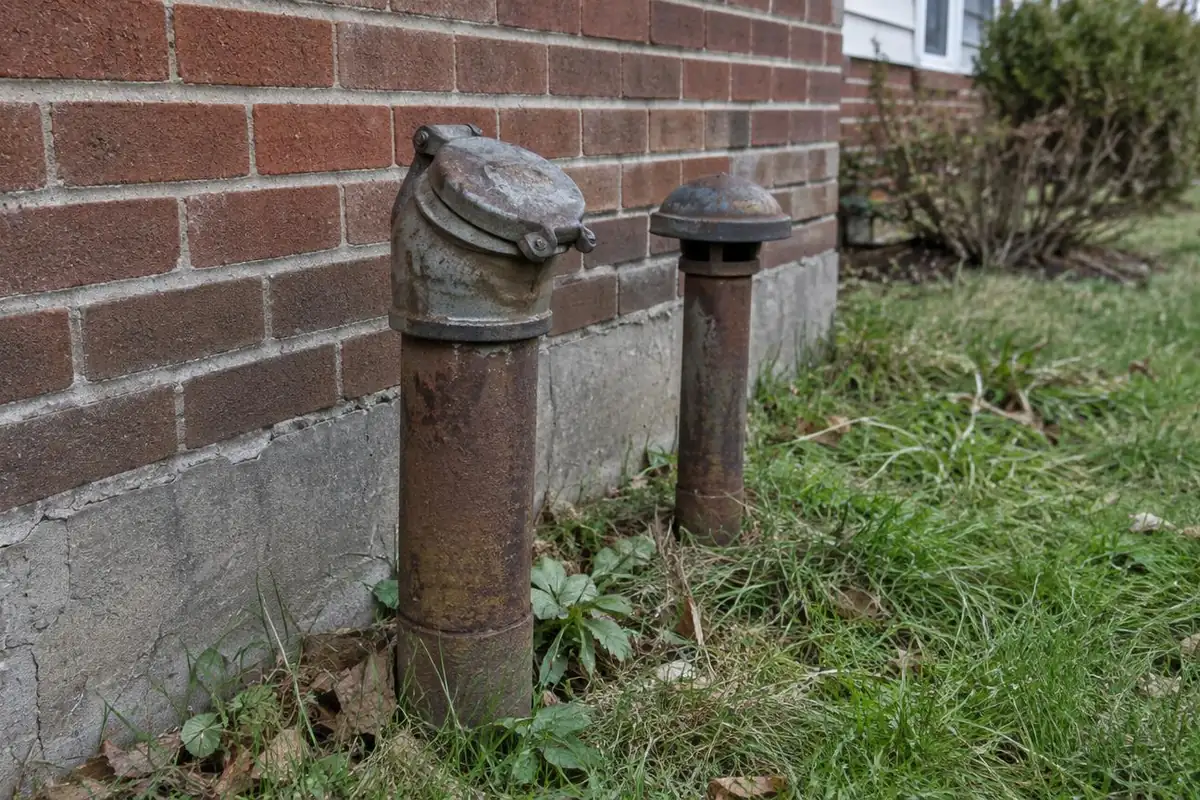
Signs include a fill pipe and vent pipe near the foundation, supply lines through a basement wall, or an old oil burner.
When signs are unclear, a tank sweep settles it. A technician uses a metal detector and sometimes ground-penetrating radar to find buried metal the size of a tank. Ordering your own first means you set the facts.
If your house was built before the 1970s, our study of the oldest homes by city shows how common that housing age is in many metros.
Remove, close in place or sell as-is: compare your options
A buried tank leaves three realistic paths.
Selling a house with an oil tank: decision sequence
- 1
Locate
Records, fill and vent pipes, or a tank sweep.
- 2
Check rules
Local permit and closure requirements.
- 3
Test the soil
Samples during removal or closure show if it leaked.
- 4
Disclose & close
Share permits, closure report and soil results.

A buried heating oil tank is usually given away by a fill pipe and vent pipe near the foundation.
| Path | What it involves | Best when |
|---|---|---|
| Remove the tank | Pump out, excavate, haul away, sample soil | Buyers and insurers in your area expect removal |
| Close in place | Pump out, clean, fill with inert material, sample | Tank sits under a driveway, porch or addition |
| Sell as-is | Disclose what you know and price the unknowns | You lack cash or time, or the tank may have leaked |
What a leak changes
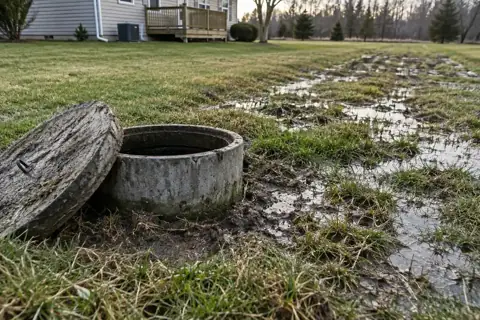
If soil samples show petroleum, the job becomes a cleanup rather than a removal, and the scope depends on how far contamination spread. Some homeowner insurance policies or state funds have historically covered residential tank cleanups, so check your policy and your state program before assuming the full cost is yours.
Worked example: which path nets more?
Illustrative numbers only. A home would list for $295,000. The seller removes the tank with clean soil results (written quote: $2,800) and lists, paying about $20,000 in commission and seller closing costs. Net: $295,000 − $2,800 − $20,000 = $272,200.
If removal finds contamination and the cleanup quote is $18,000, the same listing nets about $257,000, and closing may wait for the cleanup to finish. A direct as-is offer of $262,000 with about $2,000 in seller costs nets $260,000 with no excavation, no soil results and no cleanup risk. Listing wins when the tank is clean; as-is wins when it is an unknown you cannot afford to uncover.
What to disclose about an oil tank when selling
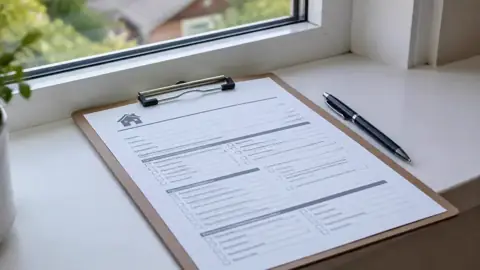
Disclose any tank you know about — active, abandoned, removed or closed in place — along with permits, closure reports and soil results. Most state disclosure forms ask about underground tanks or environmental conditions directly, and "as-is" wording limits repair promises without erasing a duty to disclose known material facts where your state requires it.
Include the contractor's report and any town sign-off; if you never confirmed a suspected tank, say so. Our seller disclosure guide covers the rest of the packet.
How an oil tank affects buyers, lenders and insurance
Cash buyers can deal with a tank after closing. Financed buyers face more friction, because lenders and insurers in tank-heavy regions often want it removed or properly closed first.
A tank discovered late in an inspection can undo weeks of work. Documented removal with clean soil results is the fastest way to calm a lender, an insurer and a nervous buyer at the same time. Buried-system problems often come in pairs on older lots; our failed septic system guide covers the other common one.
When a cash sale may not be your best option
A cash sale is not automatically the better choice. If the tank is small and accessible, local removal is routine, and the rest of the house is move-in ready, removing it and listing with an agent will often net more.
A direct sale makes more sense when the tank sits under a structure, when there are signs of a past leak, when you are handling an inherited or vacant home from far away, or when a deadline leaves no room for permits, excavation and lab results. Compare written nets from both paths; our as-is vs fix-up guide walks through it, and the structural and mold situations hub covers related condition issues.
Key takeaways
- A buried oil tank does not legally block a sale; uncertainty about leaks is what costs money
- Federal UST rules generally exclude heating oil tanks used on the premises (40 CFR 280.12), but state and local rules vary
- A tank sweep confirms whether a tank exists; soil samples show whether it leaked
- Removal or closure in place with clean soil results is what buyers and lenders want to see
- Disclose known tanks, permits and test results on your state's form
The bottom line
A buried oil tank is a question that documents can answer. Locate it, check local rules, test the soil and price each path in writing. If you would rather skip the excavation, the permits and the lab wait, SilverCrest Estates buys homes as-is and can close in as little as 21 days. Get a cash offer, or read how it works first.
Frequently asked questions
Can you sell a house with an underground oil tank?
Yes. A buried heating oil tank does not legally prevent a sale, but buyers, lenders and insurers often want to know its condition. Most sellers either remove or properly close the tank, provide test results, give a credit, or sell as-is with full disclosure.
Are home heating oil tanks federally regulated?
Generally no. The EPA's federal underground storage tank rules do not apply to tanks storing heating oil used on the premises where it is stored, under the definitions in 40 CFR 280.12. States and localities can regulate them, so local rules on removal, permits and leak reporting vary.
How do I know if my house has a buried oil tank?
Look for a fill pipe or vent pipe near the foundation, copper supply lines through a basement wall, or an old oil burner. A tank sweep, which uses metal detection and sometimes ground-penetrating radar, can locate a tank when the signs are unclear.
Who pays to remove an oil tank when selling a house?
It is negotiable. Buyers commonly ask the seller to remove the tank and provide soil test results before closing. Sellers can agree, offer a credit, or sell as-is and let the price reflect the unknowns.
Sources & further reading
Primary sources we consulted for this article. Rules vary by state and change over time — always confirm against the original source.
- 1Frequent Questions About Underground Storage Tanks
U.S. Environmental Protection Agency
EPA's answer to whether heating oil tanks are regulated, listing tanks storing heating oil used on the premises among those that do not have to meet federal UST rules.
- 240 CFR § 280.12 — Definitions
Legal Information Institute, Cornell Law School
The federal definition of an underground storage tank and of consumptive use of heating oil on the premises.
- 3Underground Storage Tanks (USTs)
U.S. Environmental Protection Agency
EPA's overview of the underground storage tank program and links to state program contacts.

About the author
Michael Thompson
Home Selling Expert
Michael Thompson works with the SilverCrest Estates acquisitions team, helping homeowners across 50+ US markets understand their options and close on their own timeline.
Disclaimer: This article is for general information only and is not legal, tax, or financial advice. Real estate rules vary by state and change over time. Consult a licensed attorney, tax professional, or financial advisor about your specific situation before acting.