Start here: this article is part of our distressed sales collection. For the full picture, read our complete guide, Can You Sell a House With Foundation Problems? Your Complete Guide.
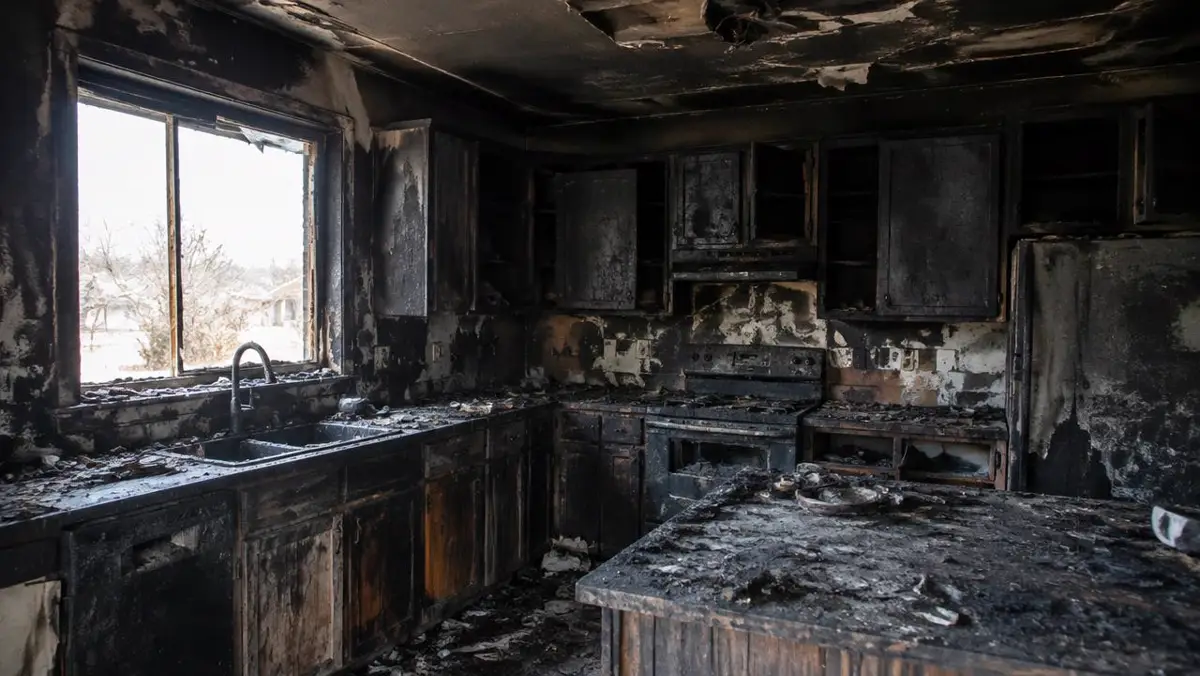
A house with fire damage can absolutely be sold — the question is how, and the right answer depends on the extent of the damage, your budget, and how fast you need to move. Even a partial kitchen fire leaves smoke, soot, and water damage from firefighting, and buyers (and their lenders) treat fire history cautiously. Here's how to understand your options and get the best outcome.
Fire-damaged house: your options
| Option | Insurance role | Time | Best when |
|---|---|---|---|
| Repair with insurance, then list | Pays covered repairs | Months | Claim covers most damage |
| Sell as-is and keep claim proceeds | Check your policy & mortgage | Varies | Ask your insurer first |
| Direct cash sale as-is | Settle claim separately | As little as 21 days | Heavy damage, no time |
First, Assess the Damage and Get the Documentation
Before making any decision, gather the facts a buyer will eventually ask for:
- The fire report from your local fire department
- Your insurance claim file and any adjuster's scope of damage
- A structural assessment — fire and heat can compromise framing, wiring, and the roof even where nothing looks charred
- A written repair estimate from a licensed contractor
Fire damage ranges from cosmetic (smoke and soot in one room) to severe (structural, electrical, and roof damage). That range determines everything below.
Option 1 — Sell As-Is to a Cash Buyer
The fastest path is selling in as-is condition to an investor or direct buyer who specializes in damaged property. You skip repairs, skip the insurance-funded rebuild, and close in days. This is ideal when:
- The damage is significant and you can't fund repairs up front
- You're still dealing with insurance and just want to move on
- The home won't qualify for a traditional buyer's mortgage in its current state
Financed buyers usually can't purchase a fire-damaged home because lenders require the property to be habitable and safe. That single fact pushes most fire-damage sales toward cash buyers. See can I sell my house as-is without repairs.
Option 2 — Repair, Then Sell Traditionally
If the damage is limited and you have insurance proceeds or savings, restoring the home can capture more value. Keep in mind:
- Insurance may pay for restoration, but you'll coordinate contractors and timelines
- Permits and inspections are usually required for electrical and structural work — an unpermitted repair can become a code violation that surfaces at closing
- A post-repair appraisal will reflect the quality of the rebuild
This path takes months but can be worth it for cosmetic or moderate damage in a strong market.
Even a partial kitchen fire leaves smoke, soot, and water damage from firefighting, and buyers (and their lenders) treat fire history cautiously.
Option 3 — Sell With Insurance Proceeds Assigned
In some cases you can sell the home and assign the insurance claim to the buyer, or settle the claim and sell separately. This is complex — involve your insurer and a real estate attorney.
What You Must Disclose
Fire history is a material fact in nearly every state. Even after full restoration, you generally must disclose that the home had a fire and what was repaired. Trying to hide it invites legal liability later. Our guide to required seller disclosures explains the standard. Disclosing upfront also filters for serious buyers and avoids deals collapsing at inspection.
Watch for Liens and Insurance Complications
If you have a mortgage, your lender is named on insurance checks and may control how proceeds are released. Unpaid contractors can file a lien. Order a title check early so nothing surprises you at closing, and keep your mortgage servicer in the loop on any claim.
Pricing a Fire-Damaged Home
Buyers price from after-repair value minus the full cost of restoration and their risk margin. Pull comparable sales of restored homes nearby, then subtract a realistic rebuild budget. Overpricing based on the "fixed" value is the top reason damaged homes sit unsold.
Working With Your Insurance Company
If the fire was recent, your insurance claim and your sale are intertwined, so coordinate them deliberately:
- Understand who controls the money. If you have a mortgage, your lender is typically named on insurance checks and may require proceeds go toward repairs rather than to you directly.
- Decide: restore or settle? You can use insurance proceeds to rebuild and then sell restored, or in some cases settle the claim and sell the damaged home with the claim resolved. Each has tax and timing implications — ask your insurer and a real estate attorney.
- Keep every document. The fire report, adjuster's scope, receipts, and any completed-repair paperwork all become part of what a buyer (and their lender) will want to see.
- Don't let the claim stall the sale indefinitely. Claims can drag on; if you need to move forward, an as-is sale that accounts for the open situation may beat waiting months for a rebuild.
Choosing Your Path With Confidence
Line up the two realistic routes side by side. Restoring and selling traditionally can capture more value when damage is cosmetic to moderate and you have the time and funding. Selling as-is for a cash offer ends the process in about a week with no rebuild, which is often the only workable path when damage is severe enough that financing is off the table. Price either route from realistic comparable sales minus the true restoration cost, disclose the fire history honestly, and choose based on your timeline and appetite for managing contractors.
When a cash sale may not be your best option
If the repairs are small (paint, fixtures, a minor roof patch) and you have the cash and time to finish them, fixing up and listing can return more than the repair cost. That's also true when the house is in a neighborhood where updated homes sell quickly at a premium. A cash, as-is sale makes the most sense when repairs are large, uncertain, or you'd have to borrow for them. Compare an as-is cash offer with listing using real contractor bids — not guesses — before you decide.
Smoke and soot: the damage you can't always see
Even a small fire can spread smoke residue through the entire home via the HVAC system. Soot is acidic and can etch surfaces, and odor can linger in insulation, ductwork, and framing. Buyers' inspectors and insurers know this. If you're repairing, make sure the scope includes duct cleaning, sealing of affected framing, and professional odor treatment, not just the visibly burned room.
Safety before anything else
Don't let anyone, including buyers, enter until the fire department or a qualified inspector says the structure is safe. Have the utility companies check gas and electrical service before restoring them. Board up openings to prevent further weather damage and trespassing, and keep receipts; many policies reimburse emergency mitigation.
Keep a paper trail
Store the fire report, every insurance letter, adjuster estimates, and contractor bids in one folder. Buyers making an as-is offer will price more accurately, and often more favorably, when they can see the documented scope instead of guessing.
Mortgage company and insurance checks
If you have a mortgage, insurance checks for fire damage are often made out to both you and your lender. The lender may hold the money and release it as repairs are completed. If you sell instead of repairing, talk to your insurer and lender about how the claim proceeds will be handled at closing.
What to do this week
Get the fire report, contact your insurer, secure the property, and collect repair estimates. Then compare repairing against an as-is sale with your documentation in hand.
Key points to remember
- Make sure the home is safe before anyone enters.
- Document everything for your insurer and buyers.
- Smoke damage often extends beyond the burned area.
- Insurance checks may be payable to you and your lender.
- Selling as-is avoids months of rebuilding.
The Bottom Line
If the damage is cosmetic and you have time and funding, restoring and selling traditionally may net the most. If the damage is significant, financing is off the table, or you simply want to be done, an as-is cash offer ends the process in about a week with no repairs and no showings. SilverCrest Estates buys fire-damaged homes in any condition — request a free, no-obligation offer and compare your net proceeds against a rebuild.
Frequently asked questions
Do I need to make repairs before selling?
Not for a direct sale — we buy as-is and price the condition into the offer. For a traditional listing it's a judgment call: cosmetic work like paint and landscaping usually returns more than it costs, while major systems (roof, foundation, sewer) rarely return their full cost and can take months to schedule. Run the numbers before you spend.
What do I have to disclose about the property's condition?
Nearly every state requires sellers to disclose known material defects, and federal law requires a lead-based paint disclosure for homes built before 1978. Selling as-is limits your obligation to repair — it does not remove the duty to disclose what you know. When in doubt, disclose it in writing and keep a copy.
Will a low appraisal or inspection kill my sale?
It can in a financed sale: if the appraisal comes in under contract price the lender will only fund to the appraised value, and inspection findings often reopen negotiations. A cash purchase removes the lender from the equation, so the condition affects the offer up front rather than derailing the deal three weeks in.
Can I sell a house that's uninhabitable?
Yes, but not to most retail buyers — conventional, FHA, and VA financing all require the property to meet minimum condition standards. That leaves cash purchasers, who price the rehab into the offer. Disclosure obligations still apply, and open code violations usually have to be resolved or credited at closing.
Sources & further reading
Primary sources we consulted for this article. Rules vary by state and change over time — always confirm against the original source.
- 1Home improvement and energy-savings guidance
U.S. Department of Energy
Which upgrades actually reduce operating costs, useful when weighing pre-sale repairs.
- 2Lead-based paint disclosure requirements
U.S. Environmental Protection Agency
Federal disclosure obligations for homes built before 1978.
- 3Flood risk and disaster resources
Federal Emergency Management Agency
Official flood-zone maps that affect insurability, disclosure, and property value.

About the author
Lisa Anderson
Homeowner Advocate
Lisa Anderson works with the SilverCrest Estates acquisitions team, helping homeowners across 50+ US markets understand their options and close on their own timeline.
Disclaimer: This article is for general information only and is not legal, tax, or financial advice. Real estate rules vary by state and change over time. Consult a licensed attorney, tax professional, or financial advisor about your specific situation before acting.