Start here: this article is part of our selling your home collection. For the full picture, read our complete guide, How to Sell Your House Fast: The Complete Homeowner's Guide.
Quick answer: Yes, you can sell a house with knob and tube wiring — it is legal in every state, and no law forces you to rewire first. The real friction comes from insurance companies and lenders, not inspectors. SilverCrest Estates buys homes with original wiring as-is, so you can skip the $8,000–$15,000 rewire and close in as little as 21 days.
- Knob and tube (K&T) was standard from the 1880s through the 1940s
- No federal or state law requires replacement before a sale
- Insurance refusal — not code — is what usually kills financed deals
- You can replace it, certify it, or sell as-is
General education, not legal or electrical advice.
Why knob and tube wiring worries buyers
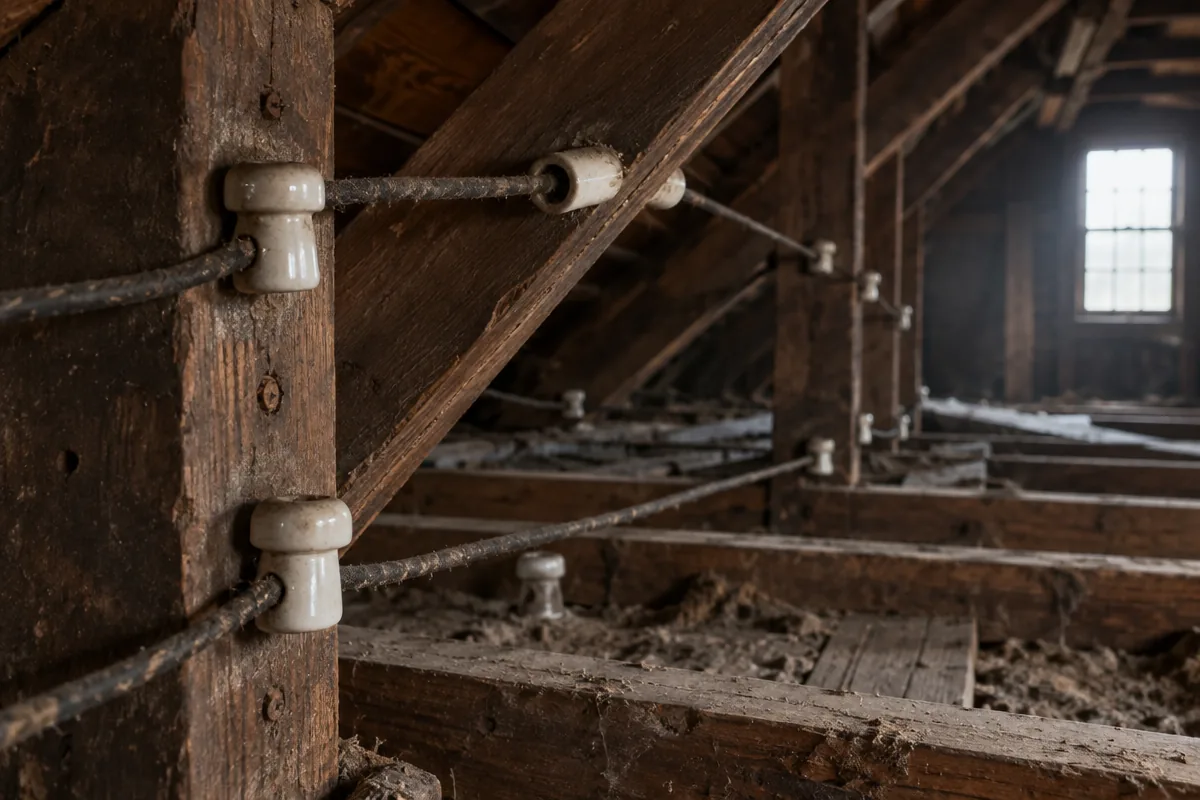
Knob and tube wiring gets its name from the white porcelain knobs that hold individual wires along framing members and the ceramic tubes that protect wires passing through joists. Unlike modern cable, it runs hot and neutral wires separately, has no ground wire, and relies on cloth and rubber insulation that is now 80 to 100 years old.
The system was well engineered for its era — an age of a few lights and maybe a radio per room. It was never designed for air conditioners, microwaves, computers and space heaters. That mismatch, plus a century of well-meaning modifications by previous owners, is what makes modern buyers nervous.
Can you sell a house with knob and tube wiring?
Yes. There is no federal or state law that bans selling a home with active knob and tube wiring, and the National Electrical Code does not require existing K&T to be ripped out — it restricts new installations and modifications. Your legal obligation is disclosure: most state seller disclosure forms ask about the electrical system, and answering honestly protects you after closing.
The real obstacle is insurance, not the law
Here is the part most articles bury: the reason knob and tube kills deals is almost never the wiring itself — it's the buyer's insurance. Many major carriers refuse to write a new homeowner policy on a house with active K&T, or they write it only with a surcharge, an electrician's certification, or a requirement to rewire within 30–60 days of closing.
No insurance means no mortgage. Lenders require a bound policy before they fund, so a financed buyer who can't get coverage simply cannot close — even if they love the house and the wiring passes inspection. This is why K&T homes so often end up selling to cash buyers: cash removes the insurance-and-lender bottleneck entirely.
If you want to keep the financed-buyer pool open, call two or three insurance agents before you list and ask what they'd need to bind coverage. Sometimes a licensed electrician's written safety certification is enough.
What inspectors and electricians look for
A home inspector will note the presence of knob and tube and recommend evaluation by a licensed electrician — inspectors don't pass or fail wiring. The electrician's visit is what matters, and they focus on four things:
- Condition of the insulation — brittle, cracked or missing cloth insulation on the conductors
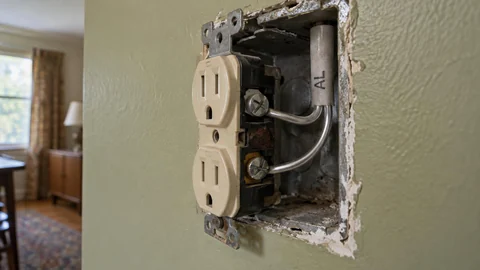
- Improper splices — modern cable twisted onto K&T without a junction box is the most common defect
- Insulation contact — K&T is designed to dissipate heat in open air; blown-in attic insulation buried over it is a genuine fire risk and a code violation in states like Washington
- Overloaded circuits — too few circuits carrying modern loads, often with oversized fuses
A clean bill of health on all four makes the house far easier to insure and sell.
Unlike modern cable, it runs hot and neutral wires separately, has no ground wire, and relies on cloth and rubber insulation that is now 80 to 100 years old.
Your three options before you sell
You have three realistic paths, and the right one depends on your timeline and how much of the cost you'd recover:
Three ways to handle knob and tube when selling
- 1
Replace it
Full rewire plus new panel. Example cost: $8,000–$15,000 for a typical home. Best when you have time and the local market rewards updated systems.
- 2
Certify and disclose
Electrician inspects, repairs defects, and writes a safety certification. Example cost: $300–$800. Keeps some insurers and financed buyers in play.
- 3
Sell as-is
Disclose the wiring, price accordingly, and let the buyer rewire after closing. Fastest path; cash buyers expect older systems.

Decision paths for K&T homes; state rules and insurers can add steps.
The math often favors doing less. If a full rewire costs $12,000 but only adds $8,000 to your sale price in your neighborhood, you paid $4,000 for the privilege of waiting two extra months.
What replacement actually costs
For a typical 1,500–2,000 square foot home, licensed electricians commonly quote roughly $8,000–$15,000 for a full rewire including a new 200-amp panel. Smaller homes with open basements and attics sometimes come in near $5,000; large homes with finished plaster walls can exceed $20,000 because fishing wire through closed walls is slow, destructive work. These are example ranges, not quotes — always get two or three written estimates.
Add the hidden costs: patching and repainting walls after the rewire, and the weeks of scheduling. Sellers under time pressure — a relocation, an estate, a looming tax bill — rarely come out ahead by rewiring first.
Disclosure rules when you sell as-is
Selling as-is does not mean staying silent. Most states require a written seller disclosure covering the electrical system, and knob and tube wiring is exactly the kind of known material fact those forms ask about. In California, the Transfer Disclosure Statement asks directly about electrical problems; Washington's seller disclosure statement (Form 17) does the same. Our California and Washington selling guides walk through each state's form.
Answer honestly, attach the electrician's report if you have one, and keep copies. Honest disclosure is what makes an as-is sale stick. For the full picture, see our guide to what disclosures are required when selling a house and how home inspections affect your sale.
When a cash sale may not be your best option
A direct as-is sale is not the right answer for every house. If your home is otherwise updated, you're in no rush, and local buyers pay a clear premium for modern electrical, a $10,000 rewire might return more than it costs — run the numbers with your agent first. Likewise, if an electrician certifies your K&T as sound and a local insurer will cover it, the wiring may barely matter to your sale at all.
Where as-is wins: the house needs several big-ticket repairs at once, the estate or relocation timeline is tight, or the rewiring quote came back at the top of the range.
Key takeaways
- Knob and tube wiring is legal to sell; no code forces removal of an existing system
- Insurance refusal is the real deal-killer for financed buyers — check insurability before you list
- A licensed electrician's certification (example cost $300–$800) can keep insurers and buyers in play
- Full rewires commonly run $8,000–$15,000 and rarely pay for themselves dollar-for-dollar
- Disclose the wiring honestly on your state's form, whatever path you choose
The breaker panel gets its own look
Inspectors check the panel as well as the wiring. If yours is labeled Federal Pacific or Stab-Lok, see selling a house with a Federal Pacific panel for what the federal record says.
The bottom line
Knob and tube wiring makes a house harder to sell the traditional way, not impossible. If you have time and the local market rewards updates, certify or rewire. If you'd rather skip the estimates, the wall patching and the insurance phone calls, SilverCrest Estates buys older homes exactly as they sit — original wiring and all. Close in as little as 21 days when title and transaction requirements allow. Get a cash offer and see your numbers, or read how it works first. Dealing with other older-home issues? See our guides to aluminum wiring, lead paint and unpermitted work, or browse property condition situations.
Frequently asked questions
Can you sell a house with knob and tube wiring?
Yes. No federal or state law requires you to replace knob and tube wiring before selling. You must disclose it honestly where your state's disclosure form asks about electrical systems, and you should expect buyers, inspectors and insurers to raise it. Many sellers either get an electrician's safety certification, negotiate a credit, or sell as-is to a cash buyer who handles the rewiring after closing.
Does knob and tube wiring have to be replaced to sell?
Not by law. Replacement is usually driven by the buyer's side: many insurance companies refuse to write a new policy on a home with active knob and tube, and without insurance the buyer's lender won't fund the loan. If your buyer pays cash or you sell to a direct buyer, replacement is negotiable rather than mandatory.
How much does it cost to replace knob and tube wiring?
For a typical 1,500–2,000 square foot home, licensed electricians commonly quote roughly $8,000–$15,000 for a full rewire including a new panel, with small houses sometimes coming in near $5,000 and large or finished-wall homes exceeding $20,000. These are example ranges, not quotes — get two or three written estimates from licensed electricians in your area.
Is knob and tube wiring dangerous?
Original, unmodified knob and tube that has been well maintained is not automatically a fire hazard — the ceramic insulators themselves are durable. The risk comes from age and modification: brittle cloth insulation, improper splices made over the decades, circuits buried under attic insulation, and modern loads the system was never designed to carry. A licensed electrician can tell you which situation you have.
Sources & further reading
Primary sources we consulted for this article. Rules vary by state and change over time — always confirm against the original source.
- 1Electrical Basics for Home & Business Owners
Washington State Department of Labor & Industries
State electrical program guidance on permits, inspections and safety evaluations for older wiring systems, including existing knob and tube.
- 2Office of Lead Hazard Control and Healthy Homes
U.S. Department of Housing and Urban Development
The federal healthy-homes program covering safety hazards in older housing, including aging electrical systems.
- 3National Electrical Code (NEC)
National Fire Protection Association
The model electrical code adopted in some form by every state; its concealed knob-and-tube article governs modifications to existing systems.

About the author
Emily Roberts
Property Acquisition Specialist
Emily Roberts works with the SilverCrest Estates acquisitions team, helping homeowners across 50+ US markets understand their options and close on their own timeline.
Disclaimer: This article is for general information only and is not legal, tax, or financial advice. Real estate rules vary by state and change over time. Consult a licensed attorney, tax professional, or financial advisor about your specific situation before acting.