Start here: this article is part of our selling your home collection. For the full picture, read our complete guide, How to Sell Your House Fast: The Complete Homeowner's Guide.
Quick answer: Yes, you can sell a house with aluminum wiring. No federal law requires you to replace it first, but most state disclosure forms ask about wiring, and some, like Texas's, list aluminum wiring by name. Homes wired between 1965 and the mid-1970s are the likely candidates. SilverCrest Estates buys aluminum-wired houses as-is, with no rewiring first.
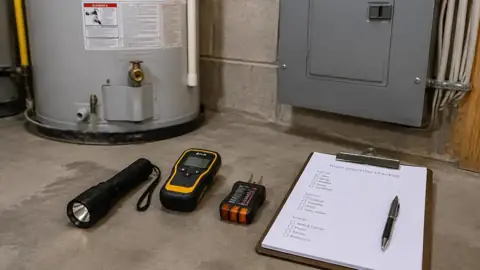
- Confirm whether the branch circuits (the 15- and 20-amp outlet and light circuits) are aluminum, not just the service cable.
- Gather any electrician reports, repair invoices or insurance letters you already have.
- Disclose what you know, then compare repairing, crediting the buyer or selling as-is.
General education, not legal or electrical advice. State disclosure rules are flagged for attorney review; any electrical work belongs to a licensed electrician.
Can you sell a house with aluminum wiring?
Yes. Aluminum wiring is a condition to disclose and price, not a legal barrier to selling. The concern is safety at the connections, which is why buyers, inspectors, lenders and insurers ask about it.
The U.S. Consumer Product Safety Commission's Publication 516, Repairing Aluminum Wiring, explains the risk. A national survey by the Franklin Research Institute for the CPSC found that homes built before 1972 and wired with aluminum were 55 times more likely to have one or more outlet connections reach "fire hazard conditions" than homes wired with copper.
When was aluminum wiring used in houses?
A copper shortage in the mid-1960s pushed builders to use aluminum beyond large appliance circuits, such as ranges and dryers, and into ordinary 15- and 20-amp branch circuits. CPSC says homes built before 1965 are unlikely to have aluminum branch wiring, while cables installed between 1965 and the mid-1970s, in new homes, additions or rewired circuits, may contain it.
How to tell if a house has aluminum wiring
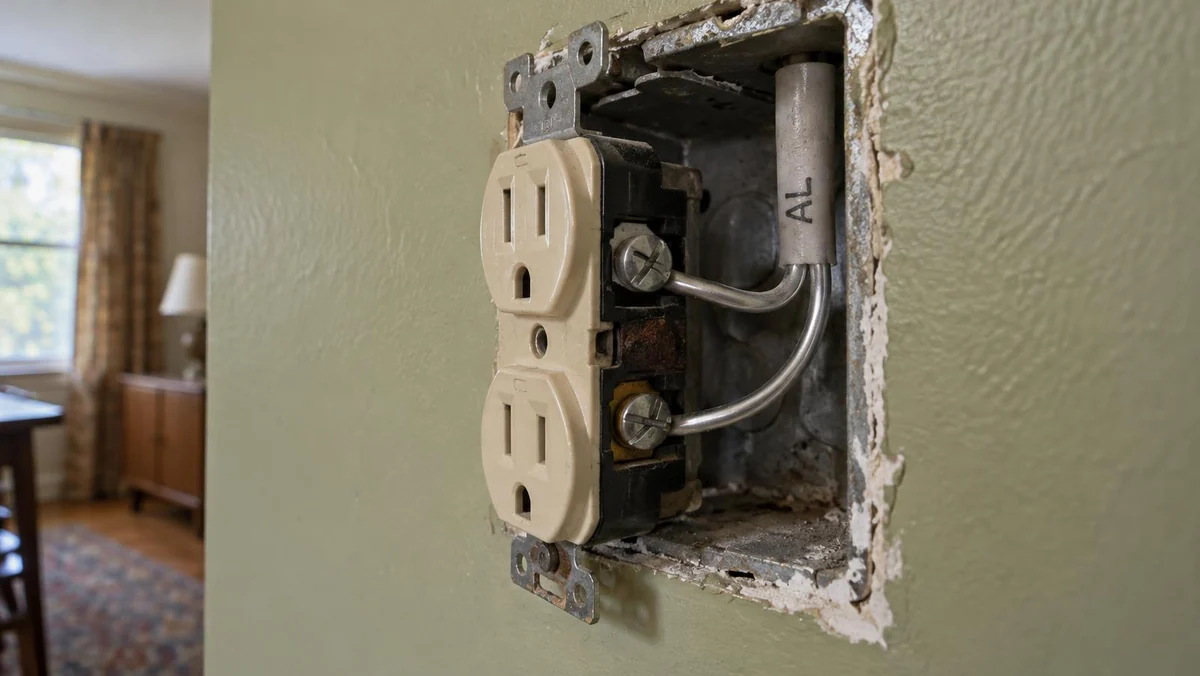
Start with the year built and any additions. Then look, safely, where cable is exposed: an unfinished basement, attic or garage. The sheathing on aluminum cable is often printed with "AL" or "ALUMINUM," and the conductor itself looks silver rather than copper-colored. The City of Tacoma fire department's aluminum wiring flyer lists warning signs: warm cover plates, a burning-plastic smell at outlets or switches, flickering lights and dead circuits.
Never open live boxes yourself. A licensed electrician can confirm what's in the walls and how the connections were made.
| What you see | What it may mean | Seller next step |
|---|---|---|
| "AL" printed on branch-circuit cable | Aluminum outlet and light circuits | Get an electrician's written evaluation |
| Aluminum only on the main service or range cable | Common heavy-gauge use, a different issue | Note it; ask the electrician to confirm |
| Warm plates, burning smell, flicker | Possible failing connection | Stop using the circuit; call an electrician now |
| Old repair invoices for crimp connectors | Prior remediation | Add the invoices to your disclosure file |
Do you have to disclose aluminum wiring when selling?
Usually, yes, if you know about it. Disclosure rules are state law, and most state forms ask about known electrical defects. Texas is explicit: the Texas Real Estate Commission's Seller's Disclosure Notice (TREC No. 55-1), the form used for disclosures required by Section 5.008 of the Texas Property Code, asks sellers whether they are aware of "Aluminum Wiring" alongside items like radon and previous fires. If you're selling in Texas, see our Texas page.
As-is does not cancel disclosure. Write down what you know, attach reports you have, and don't guess. Our seller disclosure guide covers the rest of the seller disclosure packet.
Is it illegal to sell a house with aluminum wiring?
No. Concealing a known defect is the risk, not the wiring itself. If you've already had an electrician's report, it's a record a buyer will reasonably expect to see.
A copper shortage in the mid-1960s pushed builders to use aluminum beyond large appliance circuits, such as ranges and dryers, and into ordinary 15- and 20-amp branch circuits.
How aluminum wiring affects buyers, inspections and insurance
Home inspectors commonly note aluminum branch wiring and recommend an electrician's evaluation. That note can become a repair request, a price negotiation or a financing condition after the home inspection.
Insurance is the other pressure point. Underwriting rules vary by company and state, and some insurers ask about wiring type or want proof of repair. Encourage serious buyers to get an insurance quote early so it doesn't surface days before closing.
Can you insure a house with aluminum wiring?
Often, yes, but it depends on the insurer. Ask the buyer's carrier what it requires, such as an electrician's letter or completed repairs, rather than assuming either way. A cash buyer still insures the house but isn't working against a lender's insurance deadline.
Repair options: what CPSC recognizes
CPSC describes three permanent repairs: rewiring with copper, or professionally installing COPALUM crimp connectors or AlumiConn connectors at each connection. In a 2011 vote on Publication 516, the Commission recognized COPALUM and AlumiConn as the only connector products meeting the agency's standards for preventing aluminum wire fire hazards.
Selling a house with aluminum wiring: decision sequence
- 1
Confirm the wiring
Electrician checks branch circuits.
- 2
Collect records
Reports, invoices and quotes.
- 3
Disclose
State form, in writing, before signing.
- 4
Choose a path
Repair, credit or sell as-is.
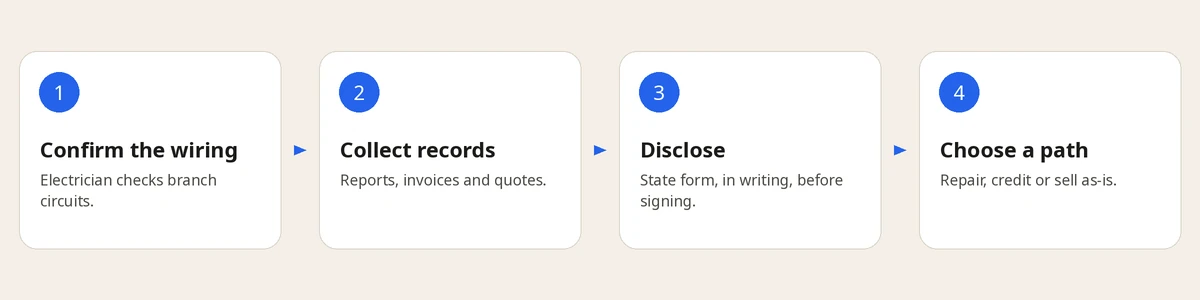
Decision sequence for aluminum-wired homes; state rules and insurers can add steps.
Get at least two written quotes that say which method will be used and whether permits and inspections are included. Rewiring opens walls and ceilings; connector repairs work device by device. Either way, the paperwork is worth as much as the work when you sell.
Worked example: repair, credit or sell as-is?
Illustrative numbers only. A 1970 ranch would list at $280,000. An electrician quotes $3,500 for connector repairs at every outlet and switch, holding costs add $2,500 while the work and listing happen, and 6% selling costs total $16,800. Net before mortgage payoff: $257,200.
Listing as-is with a $5,000 repair credit nets $258,200 on paper, but a buyer's insurer may still want the work done first. An as-is cash offer of $252,000 with $1,500 in costs nets $250,500. Repairing or crediting wins by roughly $7,000 here. The trade-off is time, scheduling an electrician and the risk that an insurance or inspection issue reopens the price.
Related older-home issues to check
A house from the late 1960s can carry more than one era-specific issue. If it was built before 1978, the federal lead paint disclosure applies. Older electrical changes made without permits raise their own questions; see selling a house with unpermitted work. Our property condition page explains how we buy older homes with several issues at once, and what not to fix when selling a house helps you decide which repairs pay back.
When a cash sale may not be your best option
A cash sale is not always the better choice. If an electrician has already completed and documented connector repairs, the house is otherwise move-in ready, and you have time to list, an open-market sale with full disclosure may net more.
Consider listing when the wiring is the only issue and repair paperwork is in hand. Compare written numbers using our cash offer vs listing guide.
SilverCrest Estates buys aluminum-wired houses in as-is condition, with no rewiring or connector work required first, and you still complete your state's disclosure. Close in as little as 21 days when title and transaction requirements allow. Request a no-obligation cash offer and compare it with your repair-and-list net.
Key takeaways
- Aluminum wiring doesn't stop a sale; disclosure and pricing do the work.
- Homes wired from 1965 to the mid-1970s are the likely candidates; check additions too.
- CPSC recognizes rewiring, COPALUM crimps and AlumiConn connectors as permanent repairs.
- Texas's TREC form names aluminum wiring; check your own state's form.
- Keep electrician reports and invoices; they help any buyer, cash or financed.
Frequently asked questions
Can you sell a house with aluminum wiring?
Yes. No federal law requires rewiring before a sale. Disclose what you know on your state's form, share any electrician reports, and price the house with repair, credit or as-is options.
When was aluminum wiring used in houses?
CPSC says homes built before 1965 are unlikely to have aluminum branch wiring, while cables installed between 1965 and the mid-1970s, in new homes, additions or rewired circuits, may contain it.
Is it illegal to sell a house with aluminum wiring?
No. The risk is concealing a known defect. Disclose aluminum wiring you know about and provide reports you have; Texas's TREC form lists aluminum wiring by name.
Can you insure a house with aluminum wiring?
Often, but it depends on the insurer. Some ask about wiring type or want proof of repair, so buyers should request a quote early in the sale.
Sources & further reading
Primary sources we consulted for this article. Rules vary by state and change over time — always confirm against the original source.
- 1Repairing Aluminum Wiring (Publication 516)
U.S. Consumer Product Safety Commission
The 55-times outlet survey finding, the 1965 to mid-1970s window and permanent repair methods.
- 2Record of Commission Action: republication of Publication 516 (2011)
U.S. Consumer Product Safety Commission
COPALUM and AlumiConn recognized as the connectors meeting CPSC standards.
- 3Seller's Disclosure Notice (TREC No. 55-1)
Texas Real Estate Commission
Texas form for Property Code 5.008 disclosures; lists aluminum wiring.
- 4Texas Property Code, Chapter 5 (Section 5.008, seller's disclosure)
Texas Legislature
The statute behind the Texas seller's disclosure notice.

About the author
Emily Roberts
Property Acquisition Specialist
Emily Roberts works with the SilverCrest Estates acquisitions team, helping homeowners across 50+ US markets understand their options and close on their own timeline.
Disclaimer: This article is for general information only and is not legal, tax, or financial advice. Real estate rules vary by state and change over time. Consult a licensed attorney, tax professional, or financial advisor about your specific situation before acting.