Start here: this article is part of our selling your home collection. For the full picture, read our complete guide, How to Sell Your House Fast: The Complete Homeowner's Guide.
Quick answer: You can sell a house with radon. The EPA recommends fixing any home that tests at 4 picocuries per liter (pCi/L) or higher, so a buyer's high result usually leads to a request for mitigation, a credit or a lower price — not a cancelled sale. SilverCrest Estates buys homes as-is, including homes with high radon, and can close in as little as 21 days.
| Radon result | EPA guidance | What buyers usually do |
|---|---|---|
| Under 2 pCi/L | No action suggested | Nothing |
| 2 to 3.9 pCi/L | Consider fixing | Sometimes ask, rarely insist |
| 4 pCi/L or higher | Fix the home | Request mitigation or a credit |
General education, not legal, medical or environmental advice. Thresholds come from the EPA pages cited at the end of this article.
Can you sell a house with radon?
Yes. Radon is a natural soil gas, and no federal law stops you from selling a home that has it. It changes the inspection period: a buyer's result at or above 4 pCi/L puts a repair request on the table.
What radon level is a problem when selling?
The EPA's line is 4 pCi/L. Its risk tables say "fix your home" at 4 pCi/L and above, and suggest considering a fix between 2 and 4 pCi/L.
In practice, 4 pCi/L is the trigger buyers and their agents use. Purchase contracts with a radon contingency typically let the buyer ask for mitigation if the test lands at or above it, and walk away if the seller refuses.
Most home-sale tests are short-term tests run for a few days under closed-house conditions; if a result is borderline, a second test can confirm it before anyone spends money.
Should you test for radon before selling?
Usually, yes. A seller test lets you choose your plan — fix, credit or as-is — before a buyer's deadline forces it.
Use a qualified tester rather than a kit placed by someone with a stake in the result. The EPA's guide to finding a test kit or professional points to state radon programs and national certification bodies. Keep the full report — dates, device location, conditions and result — for your disclosure packet.
The EPA map of radon zones gives county context, but any home in any zone can test high.
Mitigate, credit or sell as-is: compare your options
Sellers with a high result have three realistic paths.
Selling a house with radon: decision sequence
- 1
Test
Qualified short-term test under closed-house conditions.
- 2
Read the number
Under 4 pCi/L: document it. 4 or higher: plan a response.
- 3
Price the paths
Written mitigation quote vs credit vs as-is offer.
- 4
Disclose & close
Share results, system details and retest reports.
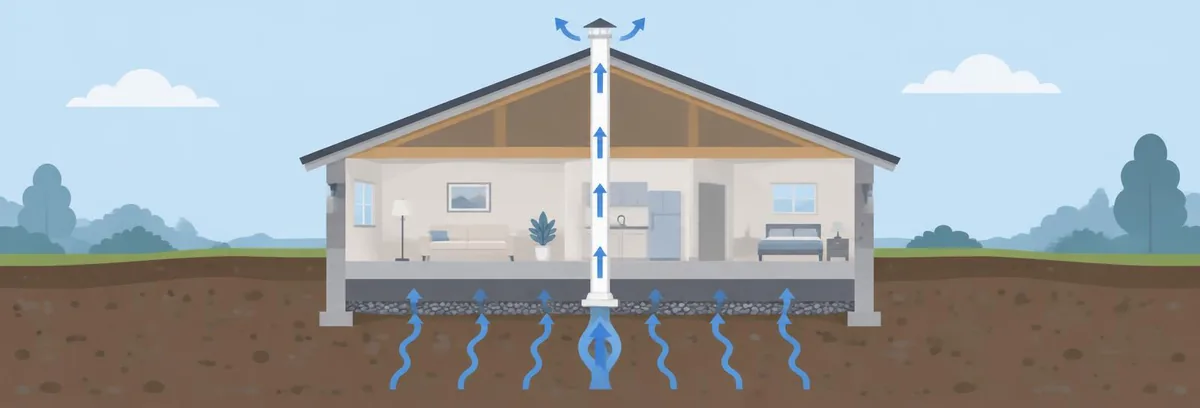
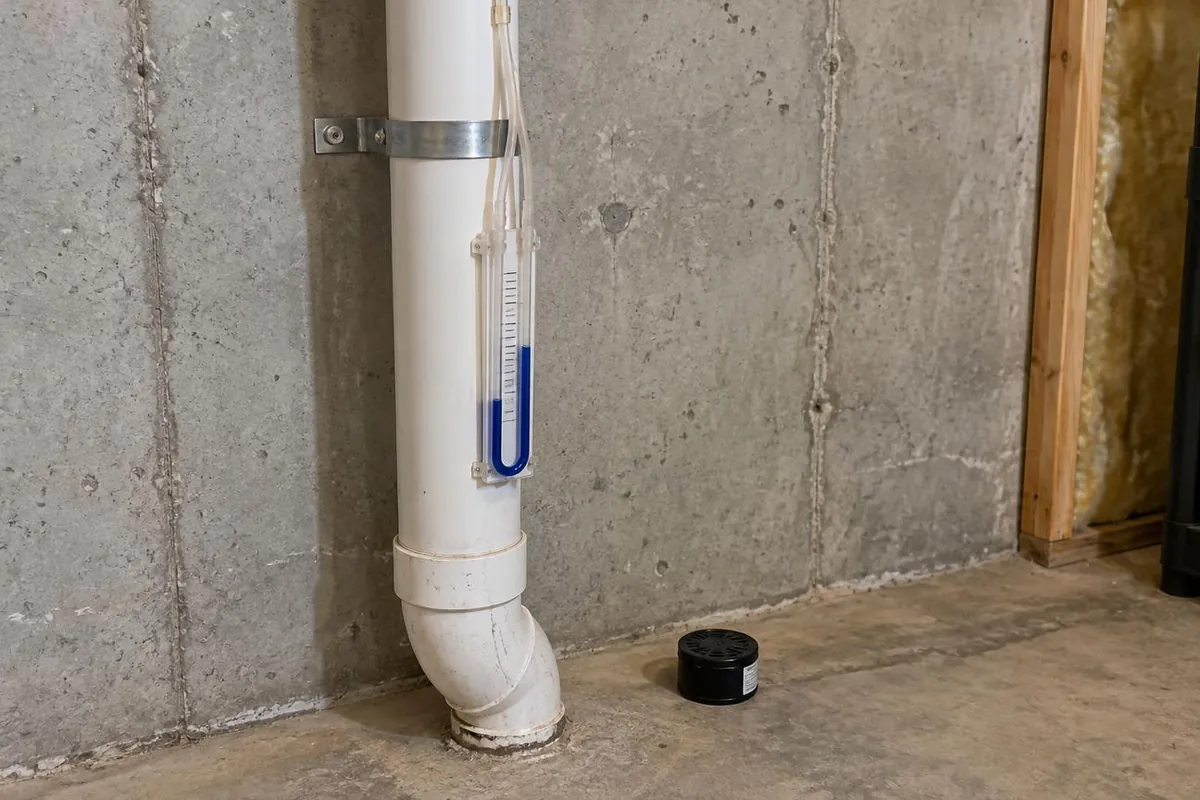
A sub-slab vent pipe draws radon from beneath the foundation and releases it above the roofline.
| Path | What it involves | Best when |
|---|---|---|
| Install mitigation | A contractor installs a vent system and you retest | You have time and want the cleanest listing |
| Give a credit | Price or closing credit; buyer installs after closing | Buyer prefers to choose the contractor |
| Sell as-is | Disclose the result and price the condition | You want no repairs, showings or retest delays |
How mitigation works
The most common system is sub-slab depressurization: a contractor drills through the slab, runs a sealed PVC pipe to above the roofline and adds a fan that pulls soil gas out before it enters the home. A post-installation retest confirms the new level — buyers will ask for it. Get two written quotes from certified mitigators.
Worked example: which path nets more?
Illustrative numbers only. A listing is expected to sell for $310,000, and the buyer's test comes back at 7.4 pCi/L. The seller pays a certified mitigator (quote: $1,800), waits a week for the retest, and the deal closes. After commission and seller closing costs of about $21,000, the net is $310,000 − $1,800 − $21,000 = $287,200.
A direct as-is offer of $281,000 with about $2,000 in seller costs nets $279,000 with no repair, retest or relisting risk. Run these with your own quotes.
It changes the inspection period: a buyer's result at or above 4 pCi/L puts a repair request on the table.
What to disclose about radon when selling
Disclose any radon test result you know about, any mitigation system and any retest reports. Most state seller disclosure forms ask about radon or environmental hazards directly, and an "as-is" clause limits repair promises — it does not erase a duty to disclose known material facts where your state requires it.
There is no single federal radon disclosure form for home sales, unlike the federal lead-based paint disclosure for most homes built before 1978. Some states add radon-specific language or pamphlets, so use your state's current form. The EPA's radon and real estate resources page links its Home Buyer's and Seller's Guide to Radon, which many agents hand to buyers. Our seller disclosure guide covers the rest of the packet.
If you never tested, say so rather than guessing.
How radon affects buyers and financing
Cash buyers can fix a high result on their own schedule. Financed buyers are where friction shows up, because a radon contingency gives them a clean exit.
The EPA's real estate page also notes that HUD's FHA 203(k) program can finance repairs, including radon fixes, when eligible repairs total at least $5,000 — relevant when radon is one item in a larger list like those in our major-repairs guide.
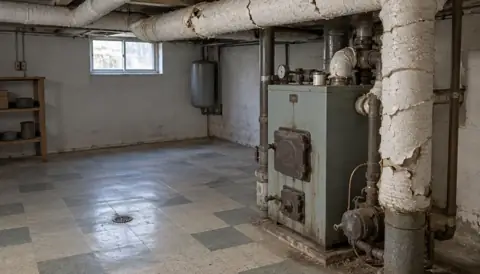
Radon often travels with other older-home findings. If inspectors also flag asbestos on basement pipes or a damp foundation, those need separate professionals and separate quotes.
When a cash sale may not be your best option
A cash sale is not automatically the better choice. If your home is otherwise move-in ready, your local market is strong and you have time for a mitigation install and retest, listing with an agent will often net more — radon is one of the cheapest major inspection items to resolve.
A direct sale makes more sense when radon is one of several problems, when you are selling a vacant or inherited home from out of state, or when a deadline leaves no room for contractor scheduling and a second test. Compare written nets from both paths. Our as-is vs fix-up guide walks through that comparison step by step, and the structural and mold situations hub covers related condition issues.
Key takeaways
- Radon does not legally block a sale; it changes the inspection negotiation
- The EPA recommends fixing a home at 4 pCi/L or higher and considering a fix between 2 and 4 pCi/L
- Test before listing with a qualified tester so you choose the plan, not the buyer's deadline
- Mitigation is usually a sub-slab vent system, confirmed by a retest
- Disclose known results, systems and retests on your state's form
The bottom line
Radon is a number, not a verdict. Test early, read the result against the EPA's 4 pCi/L line, and price your options in writing before a buyer's deadline does it for you. If you would rather skip the contractor, the retest and the renegotiation, SilverCrest Estates buys homes as-is and can close in as little as 21 days. Get a cash offer, or read how it works first.
Frequently asked questions
Can you sell a house with high radon levels?
Yes. Radon is a common, fixable condition and does not legally prevent a sale. What changes is the negotiation: buyers whose test comes back at or above the EPA's 4 pCi/L action level usually ask the seller to install a mitigation system, give a credit or lower the price.
What radon level is acceptable when selling a house?
The EPA recommends fixing a home at 4 picocuries per liter (pCi/L) or higher and suggests considering a fix between 2 and 4 pCi/L. Most buyer inspection contingencies and relocation companies use 4 pCi/L as the line that triggers a repair request.
Do I have to disclose radon when selling my house?
If you know about a radon test result or a mitigation system, most state disclosure forms ask about it and you should disclose it honestly. Some states require radon-specific disclosure language. There is no single federal radon disclosure form for home sales.
Should the seller pay for radon mitigation?
It is negotiable. Sellers commonly pay for mitigation or give a credit when the buyer's test is high, because the alternative is a renegotiation late in the deal. A seller who prefers no repairs can sell as-is and let the price reflect the condition.
Sources & further reading
Primary sources we consulted for this article. Rules vary by state and change over time — always confirm against the original source.
- 1Health Risk of Radon
U.S. Environmental Protection Agency
EPA's risk tables, including the recommendation to fix a home at 4 pCi/L or higher and to consider fixing between 2 and 4 pCi/L.
- 2Radon and Real Estate Resources
U.S. Environmental Protection Agency
EPA's real estate page, including the Home Buyer's and Seller's Guide to Radon and HUD FHA 203(k) information on financing radon fixes.
- 3Find a Radon Test Kit or Measurement and Mitigation Professional
U.S. Environmental Protection Agency
How to find qualified radon testers and mitigation contractors through state programs and national certification bodies.
- 4EPA Map of Radon Zones
U.S. Environmental Protection Agency
County-level radon potential zones and state radon contacts.

About the author
Emily Roberts
Property Acquisition Specialist
Emily Roberts works with the SilverCrest Estates acquisitions team, helping homeowners across 50+ US markets understand their options and close on their own timeline.
Disclaimer: This article is for general information only and is not legal, tax, or financial advice. Real estate rules vary by state and change over time. Consult a licensed attorney, tax professional, or financial advisor about your specific situation before acting.