Start here: this article is part of our seller questions collection. For the full picture, read our complete guide, Can You Sell a House With a Mortgage? Everything You Need to Know.
Quick answer: You can sell a house with hurricane damage by repairing it first or selling as-is, but start by documenting the damage and filing every insurance claim. SilverCrest Estates suggests photographing everything, filing both wind and flood claims if you have them, checking FEMA and SBA aid, and comparing a repaired sale with an as-is offer before you commit.
| Damage type | Usually covered by |
|---|---|
| Wind and roof damage | Homeowners or windstorm policy |
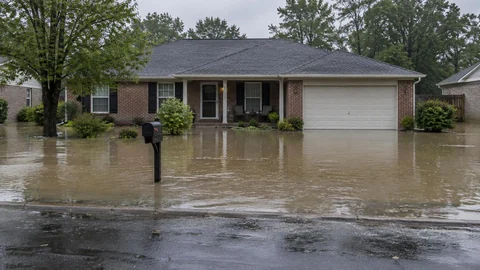
| Rising water and storm surge | Separate flood policy |
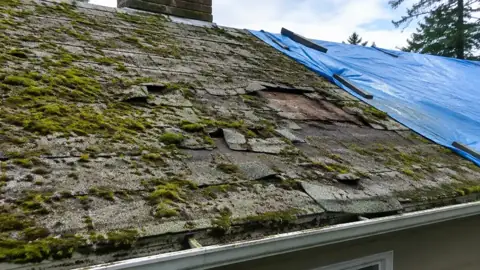
| Temporary repairs like tarps | Often reimbursed by policy |
| Uninsured losses | FEMA or SBA aid may help |
First: secure the house and document the damage
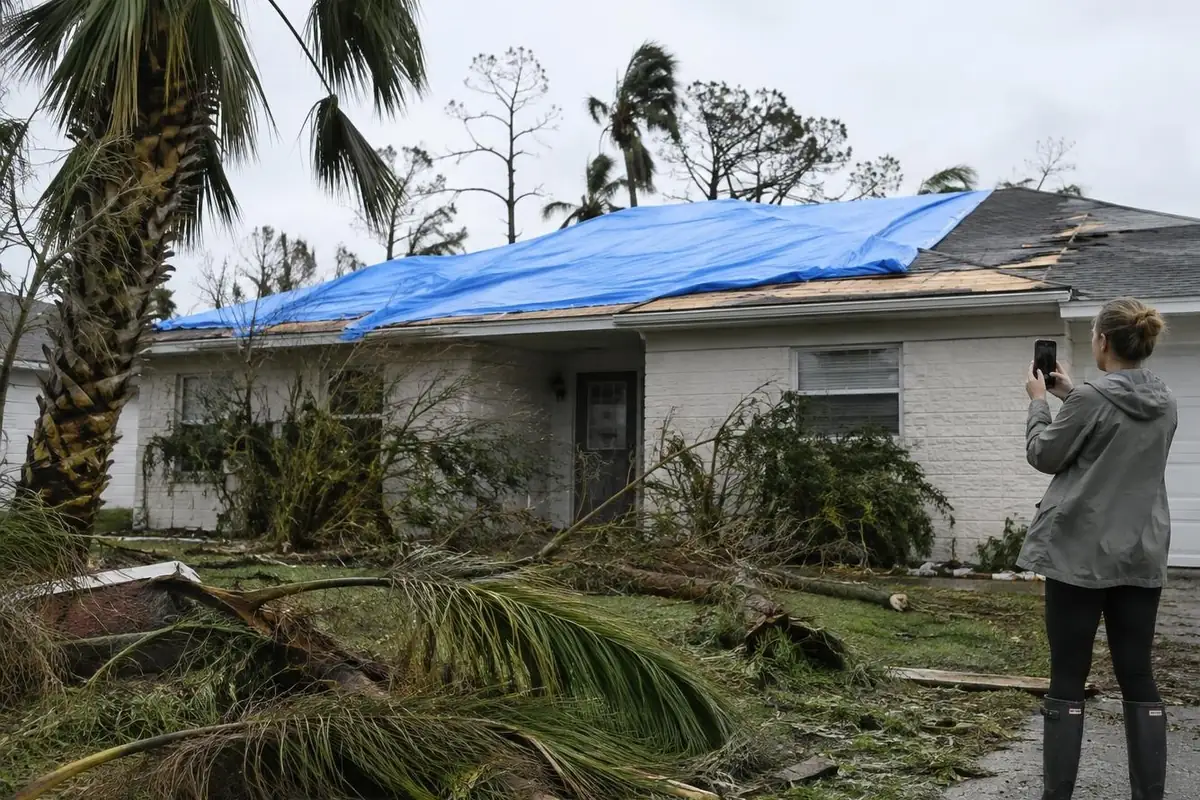
Insurance claims depend on proof. Take photos before you clean up.
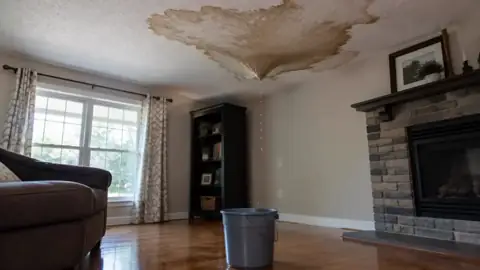
Ready.gov's hurricane guidance tells homeowners to document property damage with photographs and contact the insurance company. Photograph every room, the roof, the yard and the waterline. Then take reasonable steps to prevent more damage, such as a tarp on the roof, and keep every receipt.
Keep a simple log of calls, claim numbers, adjuster names and dates. You will need it later, whether you repair or sell.
Step 1: file every claim that applies
Hurricanes often cause two kinds of damage covered by two different policies. File both.
Wind and homeowners claims
Roof, window and wind-driven rain damage usually goes through the homeowners or windstorm policy. Coastal states often have separate wind pools or hurricane deductibles stated as a percentage of the dwelling coverage. Read the declarations page for your exact deductible.
Flood claims
Standard homeowners policies generally exclude flood. FloodSmart, the FEMA site for the National Flood Insurance Program, explains that flood coverage is a separate policy. If rising water or storm surge entered the house, file with the flood carrier too. Our guide to selling a house in a flood zone covers flood insurance for buyers.
The mortgage servicer and claim checks
Insurance checks are often made out to you and the mortgage servicer. The servicer may hold funds and release them as repairs progress. If you plan to sell rather than repair, tell the servicer early and ask how claim funds are handled at payoff.
Step 2: check disaster assistance
When a disaster is federally declared, more help may be available. Rules depend on whether you repair.
FEMA individual assistance can help with uninsured needs for disaster survivors. The SBA disaster assistance page says homeowners may apply for up to $500,000 to replace or repair their primary residence. Because these programs are tied to repair or replacement, ask the agency how a sale would affect any aid you received or applied for.
Step 3: decide whether to repair or sell as-is
Once claim amounts are known, you can compare options with real numbers. Do not guess.
Repair, then sell
Repairs can restore full market value, but post-storm contractor demand drives up prices and wait times. Use licensed contractors, pull permits, and keep invoices for buyers.
Sell as-is
Selling as-is lets a buyer handle repairs. The price reflects the damage, but you avoid months of contractor scheduling. Some sellers keep the claim proceeds, while others transfer them to the buyer as part of the deal; settle that in writing with the buyer and your servicer.
A Gulf Coast house worth $340,000 before the storm loses part of its roof, and rain soaks two bedrooms.
Worked example: roof and interior water
These numbers are an example only, not a SilverCrest Estates case. A Gulf Coast house worth $340,000 before the storm loses part of its roof, and rain soaks two bedrooms. The insurer approves $58,000 after a $13,600 hurricane deductible. The mortgage payoff is $190,000.
Selling a house with hurricane damage: sequence
- 1
Secure and document
Photos, tarp, receipts.
- 2
File every claim
Wind and flood policies.
- 3
Check disaster aid
FEMA and SBA.
- 4
Repair or sell as-is
Compare the nets.
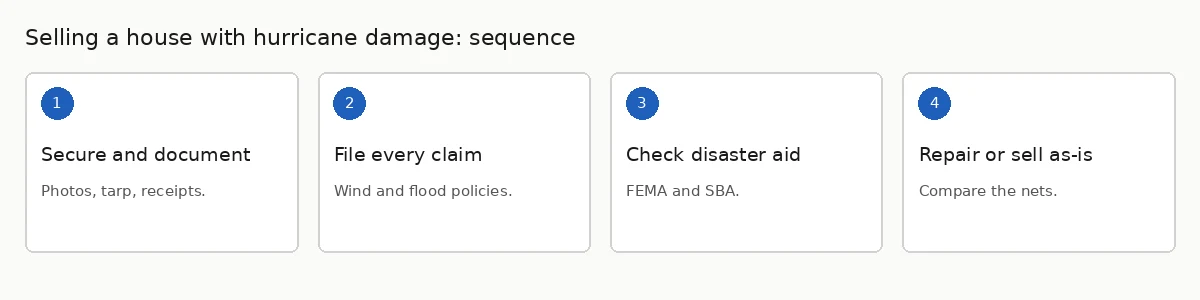
Document, claim, then decide.
Repairs bid at $72,000 with a four-month wait. Repaired, the house might sell for $340,000; the seller covers the $14,000 gap plus carrying costs and pays selling costs. Alternatively, an as-is buyer offers $255,000 while the seller keeps the $58,000 claim payment after the servicer releases it. In this example, the two paths land within a few thousand dollars, but the as-is route closes months sooner.
Watch for mold and code issues
Water left in walls for days often leads to mold. Local rules may also change what repairs require.
Remove wet drywall and insulation quickly, and keep moisture readings. Our water damage guide covers drying and disclosure. After major storms, some communities apply substantial damage rules that require bringing a heavily damaged house up to current flood elevation standards. Ask the local building department before you price repairs.
Disclose the damage and repairs
Buyers will ask about storm history. Answer with documents.
Disclose the damage, claims, repairs, permits and any remaining issues. Share the adjuster's estimate and contractor invoices. Our seller disclosure guide explains state forms.
Avoid storm-chaser scams
After hurricanes, door-to-door offers and contractors appear quickly. Slow down.
Verify contractor licenses, never pay large deposits in cash, and get every buyer offer in writing with proof of funds. Our guide to protecting sale proceeds from wire fraud covers closing-day risks.
Common mistakes after a storm
Storm sales go wrong in a few predictable ways. Avoiding them protects both the claim and the sale.
- Cleaning up before photographing. Adjusters need to see the damage as it was.
- Signing over claim rights without reading. Some contractors ask you to sign over insurance benefits directly to them; understand what you give up.
- Accepting the first adjuster estimate without question. You can ask for a reinspection or provide contractor bids.
- Ignoring the servicer. Claim checks often need the servicer's endorsement before funds can be used or applied to payoff.
- Skipping permits. Unpermitted storm repairs can create problems at a later sale.
Keep copies of every estimate, invoice and permit in one folder. Buyers, appraisers and their insurers will ask for them, and a complete file often shortens the inspection period and reduces last-minute price requests.
When a cash sale may not be your best option
Storm damage does not require a cash sale. If the claim covers most repairs, contractors are available and you can wait, repairing and listing may net more.
A cash sale helps when the gap between claim and repair cost is large, you have already moved, or carrying two housing costs is unaffordable. Compare a cash offer with listing using the claim amount in both.
Key takeaways
- Photograph damage before cleanup and keep every receipt.
- File wind and flood claims separately.
- Talk to the servicer about claim checks and payoff.
- FEMA and SBA aid is tied to repair; ask before selling.
- Compare repaired and as-is nets with real bids.
The bottom line
Document, claim and price before deciding, so you choose between real numbers. Visit the fire, storm and water damage hub for related guides, or request a written cash offer; SilverCrest Estates can close in as little as 21 days.
Frequently asked questions
Can you sell a house with hurricane damage?
Yes. You can repair it, sell it as-is to a buyer who will repair it, or sell after settling your insurance claim. Disclose the damage and any repairs, and coordinate insurance proceeds with your mortgage servicer.
Does homeowners insurance cover hurricane flooding?
Standard homeowners policies generally exclude flood. Flood damage is usually covered only under a separate flood policy, such as one through FEMA's National Flood Insurance Program.
Can I still get disaster assistance if I sell?
Possibly, but aid is tied to repairing or replacing your primary residence. SBA disaster home loans of up to $500,000 are for repairing a primary residence, so talk to the agency before selling.
Sources & further reading
Primary sources we consulted for this article. Rules vary by state and change over time — always confirm against the original source.
- 1
- 2
- 3
- 4

About the author
Lisa Anderson
Real Estate Advisor
Lisa Anderson works with the SilverCrest Estates acquisitions team, helping homeowners across 50+ US markets understand their options and close on their own timeline.
Disclaimer: This article is for general information only and is not legal, tax, or financial advice. Real estate rules vary by state and change over time. Consult a licensed attorney, tax professional, or financial advisor about your specific situation before acting.