Start here: this article is part of our selling your home collection. For the full picture, read our complete guide, How to Sell Your House Fast: The Complete Homeowner's Guide.
Quick answer: Selling a house with polybutylene pipes is usually possible without re-piping first. Confirm the pipe type, gather leak and repair records, and get one written re-pipe quote. SilverCrest Estates can make an as-is offer, so you can compare it with a repaired listing. Check four things: identification, history, disclosure and net proceeds.
| Step | What to confirm |
|---|---|
| Identify | Gray or blue plastic supply lines, often stamped PB2110 |
| History | Past leaks, repairs and insurance claims |
| Disclosure | What your state form asks about known defects |
| Compare | Re-pipe quote versus a written as-is offer |
Selling a house with polybutylene pipes: confirm what you have
Polybutylene is a flexible plastic water-supply pipe that was widely installed in homes for roughly two decades before falling out of use. Confirm the material before you price any repair.
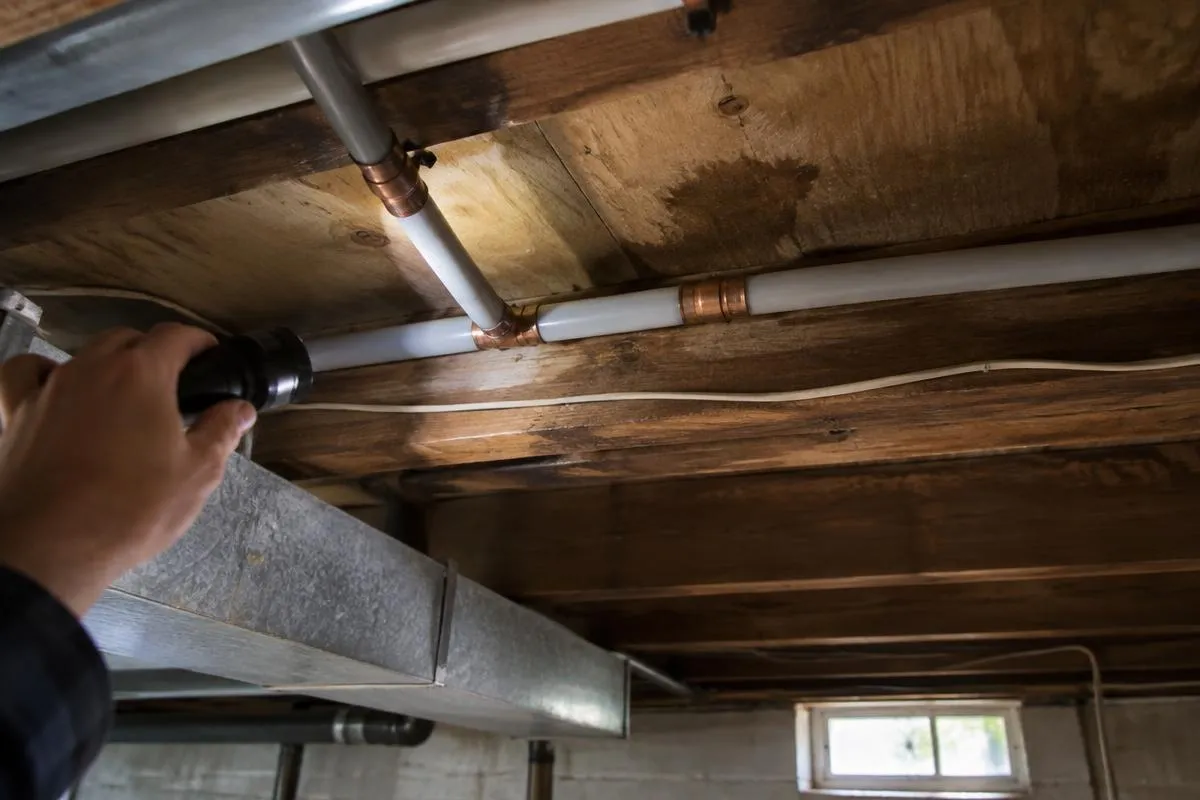
Look where supply lines are visible: at the water heater, under sinks, near the main shutoff and along exposed basement or crawl-space joists. Polybutylene is usually gray, sometimes blue or black, and is often printed with a code such as PB2110. Fittings may be plastic or metal crimp rings. Do not confuse it with PEX, a newer plastic pipe that is commonly white, red or blue and printed with "PEX".
If you cannot tell, ask a licensed plumber or your home inspector to identify it in writing. A short note naming the material and where it was observed is more useful to a buyer than your best guess. It also prevents an argument later about whether the pipe was ever there.
Gather the plumbing history before talking to buyers
Records matter more than the pipe label. A buyer wants to know whether this particular system has leaked, been patched or partly replaced.
Collect repair invoices, plumber notes, any partial re-pipe paperwork and insurance claims involving water damage. Note the date and location of each leak, what was replaced and whether a permit was pulled. If part of the house was already re-piped, write down which fixtures still run on the original lines.
The North Carolina Real Estate Commission's bulletin on polybutylene says its study found that not all, or even most, polybutylene piping with insert fittings commonly fails, and that a defect is typically not readily visible. That is why the history of your specific system carries so much weight. Our home inspection guide explains how an inspector's notes can shape the negotiation.
Do I have to disclose polybutylene pipes when selling?
It depends on your state's rules and what you know. Known leaks and probable defects are the key disclosure items.
The North Carolina commission concluded that the mere presence of polybutylene is not a material fact for its licensees, but it becomes one when the licensee knows or should know of a probable defect, for example from water stains or a history of failures. Other states use their own seller disclosure forms and standards. Read the form your state requires, answer each question accurately, and attach records rather than summarizing from memory. Our seller disclosure guide covers the general approach.
Price a re-pipe with written quotes, not online averages
There is no reliable national re-pipe price. The cost depends on the home's size, fixture count, access and the wall or ceiling repairs that follow.
Ask for at least one written quote that lists the pipe material, fixture count, permit, pressure test and drywall patching. Ask whether patching and painting are included or left to you. A cheap quote that excludes wall repair can look better on paper than it is.
Re-pipes often need a permit and an inspection. Washington's Department of Labor & Industries publishes a polybutylene re-pipe pre-inspection checklist for manufactured homes that includes an alteration permit, contractor verification and a water-piping pressure test at 100 psi for 15 minutes. It cites the federal manufactured-home plumbing standard in 24 CFR Part 3280, Subpart G. Site-built homes follow state and local codes instead, so ask your local building department which permit applies.
Polybutylene is usually gray, sometimes blue or black, and is often printed with a code such as PB2110.
Decision tree: re-pipe, credit or sell as-is
Work through the options in order. The goal is a written net figure for each path, not a guess about what buyers might think.
Polybutylene: records before repairs
- 1
Identify
Confirm the pipe type in writing.
- 2
Document
Gather leak and repair records.
- 3
Price
Get a written re-pipe quote.
- 4
Compare
Weigh net proceeds per option.
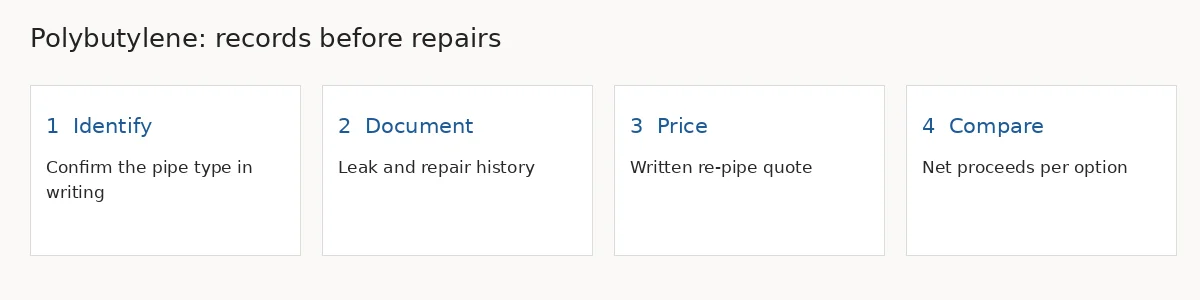
Each path should end in a written net number you can compare.
- Active leak or water damage: fix the leak first so damage does not spread, whichever path you choose.
- No leak history and time to list: price the listing both with and without a re-pipe.
- Buyer asks for a repair: compare a closing credit with the quoted work before agreeing.
- No time or cash for repairs: request a written as-is offer and compare it with the repaired-listing figure.
Our sell as-is or fix up first guide walks through the same trade-off for other repairs.
Worked example: comparing a re-pipe with an as-is sale
These figures are labeled examples, not typical prices or SilverCrest results. Replace every number with your own quotes and offers.
Suppose a re-piped home could list at $285,000, with $17,000 in expected selling costs and a $9,500 written re-pipe quote including drywall. The example net is $258,500 before mortgage payoff. An as-is offer of $262,000 with $2,000 in seller costs leaves $260,000 before the same payoff.
In this example the as-is path is slightly higher, but it changes if the listing price rises or the quote falls. Add carrying costs for the extra weeks a repair and listing would take. Use our closing-cost calculator to organize the numbers.
Talk to buyers with records, not reassurance
Buyers and their inspectors will form their own view. Give them facts they can verify and avoid predictions about the pipes' future.
Share the identification note, repair history and any quote you obtained. Avoid phrases such as "never had a problem" unless your records support them for the whole ownership period. If you have not had a plumber inspect the system, say so rather than implying it was checked.
If a buyer's inspector raises the pipes, ask what the buyer is actually requesting: a price change, a credit, a partial repair or a full re-pipe. Each has a different cost. Get the request in writing before you respond.
When a cash sale may not be your best option
Listing may suit a well-kept home with no leak history, a current inspection and time to wait for the right buyer. Polybutylene alone is not a reason to accept a steep discount.
If your written figures show a repaired listing nets more after carrying costs, that is a legitimate choice. Compare cash offers with listing and ask any buyer to explain how the plumbing affected their number. A low offer without an explanation does not mean the buyer has priced the risk accurately.
Key takeaways
- Confirm the pipe material in writing before pricing anything.
- Leak and repair history matters more than the pipe label.
- Disclosure rules vary; known defects are the central issue.
- Get a written re-pipe quote that includes permits and wall repairs.
- Compare written net proceeds for each path.
Supply lines and drain lines are different systems
Polybutylene affects the water coming in; the sewer lateral carries waste out. If a camera inspection found roots or cracks, see selling a house with sewer line problems.
Older steel pipe raises different questions
Homes built before about 1960 often have galvanized steel pipe instead. Our guide to selling a house with galvanized pipes explains the utility service line inventory and how to test the water.
The bottom line
Polybutylene pipes call for documentation and a clear comparison, not panic. Request a cash offer to see an as-is figure beside your repair quote, or browse the structural and mold hub for related guides. SilverCrest Estates can close in as little as 21 days when title and other requirements allow; choose a later date when you need more time.
Frequently asked questions
Do I have to disclose polybutylene pipes when selling?
Disclosure rules vary by state. North Carolina's Real Estate Commission has said the mere presence is not a material fact for its licensees, but known leaks or probable defects must be disclosed. Check your own state's seller disclosure form.
Can I sell a house with polybutylene pipes as-is?
Yes. An as-is buyer can accept the existing plumbing without a re-pipe. Ask each buyer to state in writing whether the offer depends on an inspection or plumbing quote, so you can compare offers on equal terms.
Should I re-pipe before listing?
Only if written quotes and local sale evidence show the work is likely to pay back for you. Re-piping can require a permit and wall or ceiling repairs, so compare the full quoted cost with an as-is offer before deciding.
Sources & further reading
Primary sources we consulted for this article. Rules vary by state and change over time — always confirm against the original source.
- 1Polybutylene Pipes: Is the mere presence material?
North Carolina Real Estate Commission
Commission position on presence versus known defects.
- 2Alteration polybutylene re-pipe pre-inspection checklist
Washington State Department of Labor & Industries
Example of permit and pressure-test items for a manufactured-home re-pipe.
- 324 CFR Part 3280 Subpart G — Plumbing Systems
Legal Information Institute, Cornell Law School
Federal manufactured-home plumbing standard referenced by re-pipe inspections.

About the author
Emily Roberts
Property Acquisition Specialist
Emily Roberts works with the SilverCrest Estates acquisitions team, helping homeowners across 50+ US markets understand their options and close on their own timeline.
Disclaimer: This article is for general information only and is not legal, tax, or financial advice. Real estate rules vary by state and change over time. Consult a licensed attorney, tax professional, or financial advisor about your specific situation before acting.