Start here: this article is part of our seller questions collection. For the full picture, read our complete guide, Can You Sell a House With a Mortgage? Everything You Need to Know.
Quick answer: You can sell a house with a mechanic's lien, but the title company will usually require the lien to be paid, released, bonded off or disproved before closing. SilverCrest Estates recommends checking whether the lien was filed on time, whether the contractor sued to enforce it within the state deadline, and what a negotiated release would cost compared with a court fight.
| Option | When it fits |
|---|---|
| Pay from proceeds | The amount is correct and modest |
| Negotiate a release | Work was partly done or disputed |
| Record a release bond | You need to close while disputing |
| Challenge the lien | It was late, unenforced or invalid |
What a mechanic's lien is
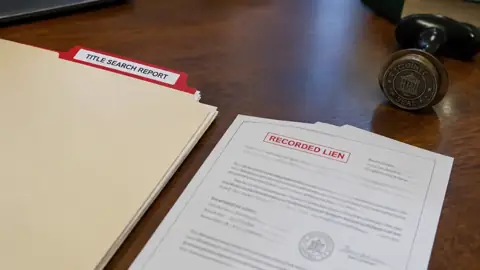
A mechanic's lien is a claim against the property by someone who supplied labor or materials and was not paid. It secures the debt with the house itself.
The Cornell Legal Information Institute explains that these liens protect contractors, subcontractors and suppliers who improve real property. Because the claim attaches to the home, a buyer's title insurer will treat it like any other recorded lien. Our glossary entry for mechanic's lien gives the short definition, and the general lien guide covers other lien types.
Liens often appear after an unfinished renovation, a disputed bill or a general contractor who did not pay a subcontractor. In that last case, the owner can face a lien even after paying the general contractor in full.
Check the deadlines first
Mechanic's liens are creatures of statute, and the deadlines are strict. A lien recorded late, or never enforced in court, may be invalid.
California is a clear example. Under Civil Code section 8412, a direct contractor generally must record a claim within 90 days after completion of the work, with shorter windows when the owner records a notice of completion or cessation. Under section 8460, the claimant generally must sue to enforce the lien within 90 days after recording, or the lien becomes unenforceable.
Texas sets its own notice and filing rules in Property Code chapter 53, with additional requirements for homestead property. Other states differ again, so check the statute where the house sits.
What to pull from the record
Order a copy of the recorded lien and check the court docket. Note four facts:
- The recording date and the date work stopped.
- The amount claimed and what it is for.
- Whether preliminary notices required by state law were sent.
- Whether an enforcement lawsuit and lis pendens were filed.
If a lawsuit was filed, our guide to selling a house with a lis pendens explains how the recorded notice affects closing.
Four ways to clear the lien
Choose the route that matches the strength of the claim. Paying a weak claim in full and fighting a strong one in court are both expensive mistakes.
1. Pay the correct amount at closing
If the work was done and the bill is right, paying from proceeds is often simplest. The title company collects a signed lien release before disbursing.
Ask the contractor for a final, unconditional lien release in the form your state requires. Many states, including California, use statutory release forms.
2. Negotiate a reduced payoff
Disputed or partly finished work often leads to a negotiated number. Put the agreement in writing, with the release attached.
Document what was done and what was not. Photos, the original contract, change orders and payment records give you leverage.
3. Record a release bond
A bond can move the lien off the house and onto the bond, so the sale can close while the dispute continues. Costs and rules vary by state.
In California, a lien release bond is generally set at 125 percent of the claim under Civil Code section 8424. The premium is usually a percentage of the bond amount and is not refunded.
4. Challenge an invalid lien
If the claim was recorded late or never enforced, you may be able to have it released by court order. Some states provide a fast petition process.
A title company may also accept proof that the enforcement deadline passed without a lawsuit. Ask what documentation it needs.
The seller has a $250,000 offer and a $150,000 mortgage payoff.
A worked example: unfinished addition
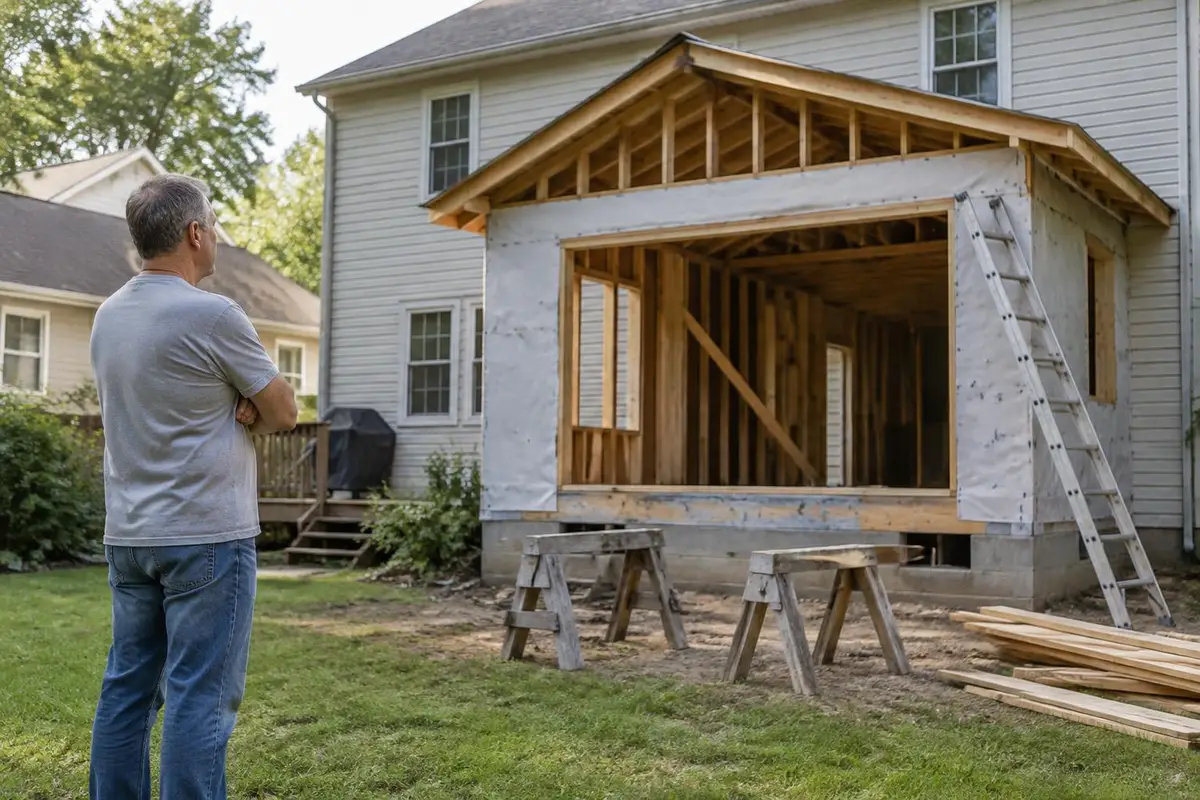
These numbers are an example only, not a SilverCrest Estates case. A homeowner fired a contractor halfway through a rear addition. The contractor recorded a $38,000 lien. The seller has a $250,000 offer and a $150,000 mortgage payoff.
Selling a house with a mechanic's lien: decision path
- 1
Pull the record
Lien, dates and docket.
- 2
Test the deadlines
Recorded, enforced on time.
- 3
Pick a route
Pay, negotiate, bond, challenge.
- 4
Record the release
Title insures the sale.
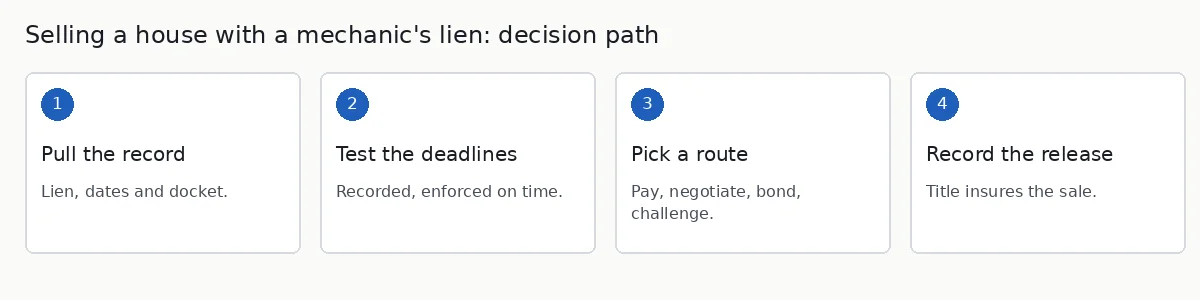
Check the deadlines before paying anything.
Photos and invoices show about $22,000 of completed work. The seller offers $20,000 and the contractor accepts $23,000 in exchange for a recorded release. With an assumed $7,000 in other closing charges, the example seller nets about $70,000. Fighting the full claim could have delayed the sale for months.
Protect yourself if you paid the general contractor
Owners who paid in full can still face liens from unpaid subcontractors or suppliers. Paper trails matter.
Ask the general contractor for conditional and unconditional releases from each subcontractor and major supplier that sent a preliminary notice. If a subcontractor's lien appears anyway, your payment records and the general contractor's contract are your starting evidence, and the general contractor may be obligated to defend or remove the claim. Some states also limit a homeowner's exposure when the owner paid the general contractor in good faith, so check your state's rules before negotiating. Keep every invoice, cancelled check and release with your closing file, because the title company will ask for them.
Disclose the lien and the project
Disclose the recorded lien and any unfinished or unpermitted work. The title search will find the lien anyway.
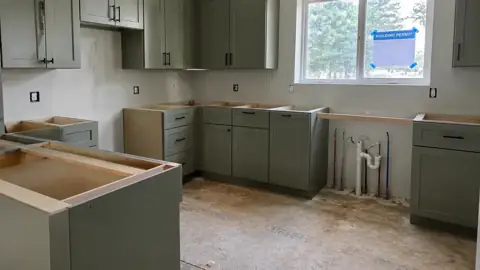
Unfinished work may also have open permits that need final inspection or closing out. Our guides to selling with an unfinished renovation and selling with unpermitted work explain those steps. State disclosure rules vary; our seller disclosure guide covers the general framework.
When a cash sale may not be your best option
A mechanic's lien does not itself require a cash buyer. If the lien is cleared cheaply and the project is finished, listing may net more.
A cash sale helps most when the project is half-done, permits are open and you do not want to hire a second contractor. Compare cash offers with listing after pricing what it would cost to finish.
Key takeaways
- A mechanic's lien secures an unpaid construction bill against the house.
- Recording and enforcement deadlines are strict and state-specific.
- Pay, negotiate, bond off or challenge, depending on the claim.
- Get a recorded release before closing.
- Disclose the lien and any unfinished or unpermitted work.
The bottom line
Test the lien against the statute first, then choose the cheapest reliable way to clear it. Visit the liens and judgments hub for related guides, or request a written cash offer to compare; SilverCrest Estates can close in as little as 21 days when title is ready.
Frequently asked questions
Can you sell a house with a mechanic's lien on it?
Usually yes, but the title company will normally require the lien to be paid, released, bonded off or shown to be invalid before closing. Payment from sale proceeds is common when the amount is correct.
How long does a mechanic's lien last?
It depends on the state. In California, a claimant generally must sue to enforce the lien within 90 days after recording or the lien becomes unenforceable. Other states set different deadlines.
Can a subcontractor put a lien on my house if I paid the contractor?
In many states, yes. Unpaid subcontractors and suppliers may have lien rights even after the owner paid the general contractor, which is why collecting lien releases during a project matters.
Sources & further reading
Primary sources we consulted for this article. Rules vary by state and change over time — always confirm against the original source.
- 1Mechanic's lien
Cornell Legal Information Institute
Defines lien rights for those who improve real property.
- 2California Civil Code section 8412
California Legislative Information
Recording deadline for direct contractors.
- 3California Civil Code section 8460
California Legislative Information
90-day enforcement deadline after recording.
- 4
- 5

About the author
Marcus Johnson
Seller Solutions Director
Marcus Johnson works with the SilverCrest Estates acquisitions team, helping homeowners across 50+ US markets understand their options and close on their own timeline.
Disclaimer: This article is for general information only and is not legal, tax, or financial advice. Real estate rules vary by state and change over time. Consult a licensed attorney, tax professional, or financial advisor about your specific situation before acting.